Two towns, one coastline, and a story from the Odyssey
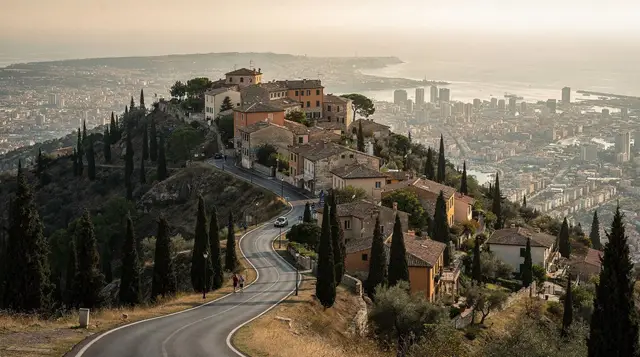
Acireale and Aci Trezza sit on the same short stretch of coast just north of Catania, close enough together that most visitors treat them as a single half-day trip rather than two separate destinations. Acireale is the larger inland town, known for baroque architecture built in the same post-1693 earthquake wave as Catania and the Val di Noto towns, plus one of Sicily’s most elaborate carnival celebrations. Aci Trezza is the small fishing village directly on the water, famous for the Faraglioni dei Ciclopi — a cluster of dark basalt sea stacks just offshore, tied in local legend to the episode in Homer’s Odyssey where the blinded Cyclops Polyphemus hurled boulders at Ulysses’ fleeing ship.
Whether or not the legend has any literal geological basis (it doesn’t — the stacks are volcanic in origin, remnants of undersea lava flows, not thrown rocks), the story has stuck for centuries and gives Aci Trezza’s otherwise modest waterfront a genuine sense of place. The two towns together make an easy, low-effort addition to a Catania-based stay, reachable in 20-30 minutes by car or bus, without needing to restructure a whole day around them.
Acireale’s baroque center, and why it gets overlooked
Acireale’s Piazza Duomo and the streets around it are built in the same lava-and-limestone baroque style as Catania, but on a smaller, quieter scale, with noticeably fewer visitors than Catania’s own center on an average day. The Basilica dei Santi Pietro e Paolo and the Duomo itself both reward a slow look at their facades, and the town’s overall density of well-preserved 18th-century buildings is higher, relative to its size, than most stops on this coast. A private guided tour focused on the baroque center and its carnival history is a reasonable way to get context on buildings that are easy to walk past without appreciating on a self-guided pass.
Acireale’s carnival (Carnevale di Acireale), held in the weeks before Lent, is considered one of the most elaborate in Sicily, with allegorical floats covered in flowers and papier-mâché figures — worth knowing about for travelers whose dates happen to overlap, since it draws crowds well beyond the town’s normal size.
Aci Trezza and the Faraglioni dei Ciclopi
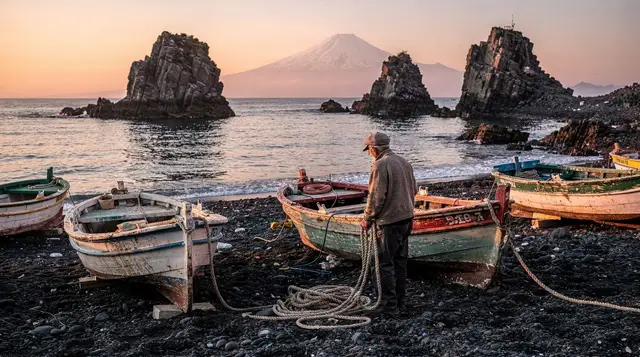
The Faraglioni sit a short distance offshore from Aci Trezza’s small harbor and are protected as a marine reserve, with clear water that makes the area popular for snorkeling despite the town’s otherwise unassuming waterfront. A guided snorkeling tour through the marine protected area is the most direct way to see the stacks from the water and below the surface in the same outing.
For a broader look at the coastline without getting in the water, a boat excursion past the Faraglioni with a swimming stop covers the same stretch at a gentler pace, and a shorter coastal boat tour with drinks and snacks works as a half-day option from either Aci Trezza or Catania.
The village itself is small and unpretentious — a handful of seafood trattorie along the harbor, most serving whatever came in that morning, and noticeably lower prices than the Taormina coast further north. This is a place to eat simply and well rather than to shop or sightsee extensively beyond the waterfront and the stacks.
Aci Castello, the town in between
Between Catania and Aci Trezza sits Aci Castello, named for the Norman-Swabian castle perched directly on a dark outcrop of lava rock at the water’s edge — one of the more striking small fortifications on this coast, built from the same volcanic stone it stands on, giving it an almost camouflaged look against the cliff. The castle’s interior houses a small museum, and the surrounding rock platform is a popular, informal spot for locals to swim directly off the volcanic shelf rather than from sand.
Aci Castello sits close enough to both Catania and Aci Trezza to be folded into the same half-day trip, and several boat tours departing this stretch of coast include a pass by the castle en route to the Faraglioni further along, alongside dedicated diving trips for certified divers exploring the underwater lava formations just offshore.
Literary Aci Trezza: the village Verga made famous
Long before it became a stop on Catania day-trip itineraries, Aci Trezza was made famous within Italy by Giovanni Verga’s 1881 novel I Malavoglia (later translated as The House by the Medlar Tree), which is set in the village and follows a local fishing family through hardship tied directly to the sea the town still depends on.
Verga, one of the founders of the Italian verismo literary movement, drew heavily on Aci Trezza’s real fishing community for the novel’s texture, and the book remains a staple of Italian secondary-school reading — meaning many Italian visitors arrive with a literary association to the village that most foreign travelers miss entirely. The harbor and the modest fishing boats still working it today are recognizably the same world Verga described, which adds a layer of context worth knowing even without having read the novel.
Getting there from Catania
Both towns are a straightforward drive or bus ride of 20-30 minutes from central Catania, making them one of the easiest half-day additions to a Catania-based stay without a rental car. Local buses (AST or similar regional operators) connect Catania to both towns, though timetables are sparser on Sundays and holidays — checking current schedules before planning a day trip without a car is worth the five minutes it takes. For visitors with a car staying in Catania, note that Catania’s own ZTL restrictions apply to leaving and re-entering the city center; see the ZTL and parking guide for how that affects timing.
The area also appears as a natural add-on in day trips from Catania and pairs well with a broader look at the whole Ionian coast in the Catania destination page and the eastern Sicily in 5 days itinerary.
Diving among the volcanic reefs
Beyond snorkeling, this stretch of coast has a genuine following among certified scuba divers, drawn by the underwater topography created by the same lava flows responsible for the Faraglioni above the surface — submerged basalt formations, small caves and a marine reserve that has protected the area from the fishing pressure found along less regulated stretches of the Sicilian coast.
Dive sites around Aci Castello and the waters off Aci Trezza suit divers already holding an open-water certification rather than complete beginners, since entry points involve rock rather than a sand beach, and several local dive centers run trips specifically for certified divers wanting to explore these formations rather than a resort-style introductory dive. This is a niche activity relative to the boat tours and snorkeling that dominate visitor numbers here, but it’s a genuine option for anyone traveling with certification and gear, or willing to rent locally.
A market day and a slower pace than Catania
Acireale holds a regular local market in the streets around its center, smaller and far less touristed than Catania’s Pescheria, selling produce, household goods and clothing primarily to residents rather than visitors — worth a wander for anyone who’s already seen Catania’s market and wants a quieter, more everyday version of the same tradition. The overall pace in both towns is noticeably slower than Catania: fewer visitors, longer lunches, and a general absence of the hustle that builds up around Catania’s most-photographed corners. This is arguably the main case for the detour beyond the sights themselves — a version of coastal Sicily that hasn’t been fully reorganized around tourism, at least not yet.
Practical notes: parking and timing the visit around the market and boat schedules
Parking in Acireale’s center is more straightforward than in Catania, with several free or low-cost lots at the edge of the historic core within a short walk of the Duomo. Aci Trezza’s harborside parking is more limited and fills up on summer weekends, when day-trippers from Catania overlap with boat tour departures; arriving before mid-morning avoids competing for the closest spaces. Boat excursions departing from Aci Trezza generally run on a morning and afternoon schedule rather than continuously throughout the day, so checking specific departure times in advance is worth doing rather than assuming a boat will be available immediately on arrival, particularly outside peak season when frequency drops.
Eating in Acireale and Aci Trezza
Acireale is known regionally for its granita and for a strong pastry tradition tied to its carnival calendar, alongside the wider Sicilian granita-and-brioche breakfast habit covered in the granita and brioche guide. Aci Trezza leans entirely on seafood — swordfish, anchovies and whatever the small local fleet brought in — served simply, without much of the price inflation seen closer to Taormina. Neither town requires reservations for a casual lunch outside peak August weekends, though a well-known harborside spot in Aci Trezza can fill up on a warm Sunday.
Sunset at the Faraglioni, and the best vantage points without a boat
For visitors who’d rather not book a boat at all, the harborside promenade at Aci Trezza offers a genuinely good land-based view of the Faraglioni, particularly in the hour before sunset, when the low light picks out the texture of the dark basalt against the water. A handful of small restaurants along the harbor have outdoor seating angled toward exactly this view, making an evening meal here a reasonable substitute for a boat trip on a tighter budget or schedule. Aci Castello’s fortress platform, a short drive up the coast, offers a second, higher vantage point looking back toward Aci Trezza and the stacks, worth combining with the castle visit itself rather than treating as a separate stop.
When to visit
Spring and autumn give the most comfortable temperatures for walking Acireale’s baroque streets, which offer little shade at midday. Summer is the natural season for the Aci Trezza boat and snorkeling side of the trip, though weekends bring noticeably more day-trippers from Catania. Acireale’s carnival, usually in February, is its own distinct high season with different logistics entirely — worth planning around rather than stumbling into unprepared.
Frequently asked questions about Acireale and Aci Trezza
Can you visit both towns in a single half-day trip?
Yes — they sit close enough together that most visitors combine a walk through Acireale’s baroque center with a boat trip or seafood lunch in Aci Trezza in a single afternoon.
Is the Cyclops legend based on anything real?
No, geologically — the Faraglioni are volcanic sea stacks, not thrown boulders. But the Homeric association is centuries old and genuinely part of the area’s identity, referenced throughout local tour names and signage.
Do you need a boat trip to appreciate the Faraglioni, or is the view from land enough?
The view from Aci Trezza’s harbor is worthwhile on its own, but a boat trip or snorkeling excursion gets considerably closer and reveals the marine reserve beneath the surface, which land views miss entirely.
Is Acireale worth visiting outside carnival season?
Yes — the baroque center and cathedral are worth seeing any time of year, and carnival season (usually February) brings large crowds and different, event-driven logistics rather than being a prerequisite for a worthwhile visit.
How do you get to Acireale and Aci Trezza without a car?
Regional buses connect both towns to Catania in 20-30 minutes, though schedules thin out on Sundays and holidays. An organized half-day tour from Catania is the more reliable option if timing matters.
Are prices lower here than in Taormina or central Catania?
Generally yes, particularly for seafood in Aci Trezza, which runs noticeably below Taormina’s coastal pricing for a comparable meal.
What is Aci Castello, and is it worth adding to the trip?
A small Norman-Swabian castle built directly on a lava outcrop between Catania and Aci Trezza, with a modest museum inside and a popular volcanic-rock swimming spot below. It fits easily into the same half-day trip as the other two towns.
Is there a literary connection to Aci Trezza worth knowing about?
Yes — the village is the setting of Giovanni Verga’s 1881 novel I Malavoglia, a foundational work of Italian literary realism still widely read in Italian schools, and the harbor today still recognizably resembles the fishing community it describes.