Driving the Etna wine road
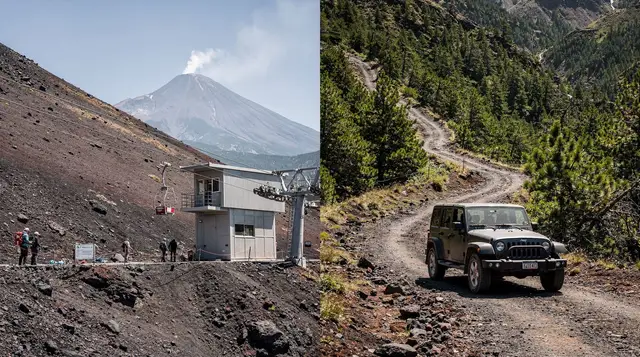
I’d driven wine roads before — Tuscany, briefly the Douro — and expected Etna’s version to feel like a smaller-scale copy. It doesn’t. Nothing about a wine region built on the working slope of an active volcano, where a producer will casually mention that their previous parcel is now under a lava flow from a decade or two back, reads like anywhere else I’ve been.
The contrade system, and why it matters
Etna wine is organized around contrade — named parcels, similar in spirit to Burgundy’s climats, each tied to a specific elevation, aspect and soil composition on the volcano’s slopes. A Nerello Mascalese from a north-facing contrada at 900m tastes genuinely different from one grown at 600m on the east side, and producers here talk about these differences with the same precision Burgundy growers apply to a few hundred meters of hillside. Our Etna wine guide breaks down the DOC zones and grape varieties in more depth than I can manage from one day of driving and tasting.
Starting on the north side, near Randazzo
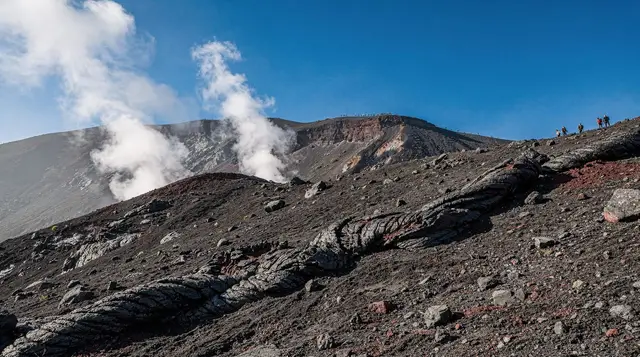
I began near Randazzo on Etna’s quieter north slope, where the vineyards run through a landscape that alternates between neat rows and stretches of black, broken lava rock that nothing grows on at all — a visible reminder, every few hundred meters, that this entire region sits on a mountain that reshapes its own geography every few decades. Book an Etna wine tour with a culinary experience if you’d rather have a driver and a guide handle the tastings while you actually enjoy them, since driving and serious wine tasting don’t mix well here any more than anywhere else.
The cellar built into a lava cave
The most memorable stop of the day was a small producer whose cellar occupies a natural lava tube — a cave-like tunnel formed by cooling lava centuries ago, now used for barrel aging at a stable, cool temperature without any mechanical climate control at all. The owner explained this with a shrug, as if using a volcanic cave for wine storage were the most practical decision in the world rather than a genuinely unusual one, which on reflection it is: the temperature stability these tunnels provide naturally is exactly what a modern cellar tries to engineer at cost.
Nerello Mascalese, and why comparisons to Burgundy keep coming up
Etna Rosso, made primarily from Nerello Mascalese, gets compared to Burgundian Pinot Noir often enough that I went in skeptical of the comparison as marketing shorthand. Tasting several side by side across different contrade did make the comparison feel earned rather than lazy — pale color, high acidity, a red-fruit and mineral character that shifts meaningfully with elevation and volcanic soil composition in exactly the way growers describe. Whether it’s fair to call any wine “the Burgundy of Sicily” is a separate question from whether the wine itself is genuinely good, and on the evidence of one long day of tasting, it is.
Etna Bianco and the grape most visitors haven’t heard of
Carricante, the main white grape here, was new to me entirely, and it makes a leaner, more mineral wine than most visitors expect from a Sicilian white — closer in structure to a cooler-climate white wine than the richer, warmer-climate whites Sicily is generally known for. One producer poured a Carricante aged partly in the lava-tube cellar I mentioned earlier, and the contrast between that bottle and a stainless-steel version of the same grape from the same vintage was more pronounced than I expected any single winemaking choice to produce.
Lunch, and the pistachio detour
Midday, most tours (mine included) route through or near Bronte, famous for its DOP-protected pistachios rather than wine, and a short detour to a pistachio grove or tasting stop is a natural, non-competing pairing with a wine day rather than a distraction from it — the Bronte pistachio guide covers what’s genuine versus what’s marketed opportunistically under the Bronte name elsewhere in Sicily.
The altitude problem, practically speaking
One thing nobody mentioned to me before the trip: driving this route means real elevation changes on narrow, occasionally poorly marked roads, with temperature swings of several degrees between stops at different altitudes on the same volcano. Layer accordingly even in summer, and don’t assume a road that looks minor on a map is necessarily slow — some of the connecting routes between contrade are surprisingly well maintained, while others are exactly the rutted farm tracks they look like.
Why a driver makes more sense than doing this solo
I drove the first half of the day myself and arranged a driver for the return leg, and in hindsight I’d book a driver for the whole route next time. Serious tastings at three or four producers in a day adds up faster than it feels like it should, and Sicily’s drink-driving limits are strict and enforced. A wine-tour operator or a private driver removes that calculation entirely and lets you actually taste rather than sip performatively and spit out what you’d rather drink.
What I’d tell a first-time visitor to this region
Don’t treat Etna wine as a quick add-on to a volcano day trip — the two experiences don’t combine well in a single day if you want to take either seriously, since a proper crater excursion and a proper wine day both deserve unhurried attention on their own terms. Book a specific day for the contrade, ideally with a guide who can explain why a wine from 700m tastes different from the same producer’s bottle grown 300m higher, and go in expecting a wine region that behaves less like a scenic backdrop and more like what it actually is: agriculture practiced, with real ongoing risk, on the slopes of one of Europe’s most active volcanoes.
Etna and volcano tours on GetYourGuide
Verified deep-linked GetYourGuide tours. Book through these links and we earn a small commission at no cost to you.
Photo: our own image of the location, not the operator’s product photo.