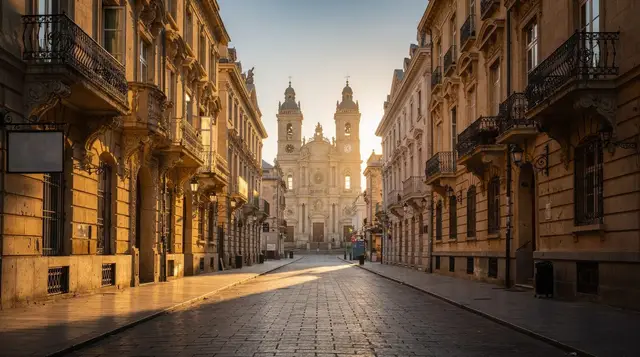
A Sicilian food and wine week
Built around meals, not sightseeing gaps
This itinerary treats food and wine as the actual point of the trip rather than something you fit in between sights. It moves from Palermo’s street food, to Marsala and Trapani’s wine and salt-pan cuisine, across to Etna’s volcanic wine slopes, and finishes with a Baroque coda in Noto and Syracuse — a wider geographic spread than most week-long trips, but justified by how differently Sicilian food and wine culture varies by region. If you’d rather keep this focused purely on the west, Western Sicily in 5 days covers the Trapani-Marsala wine stretch alone at a more relaxed pace.
| Best for | Food and wine travellers, cooking-class enthusiasts, slower-paced trips |
| Getting around | Rental car — required for the wineries and for the Palermo-to-Trapani-to-Catania cross-island stretch |
| Total budget guide | Around 900-1,300 € per person for a week, tastings and one or two proper tasting-menu dinners included, excluding flights |
| Car needed | Yes — and arrange a driver for the winery days specifically, given Sicily’s strict drink-driving limits |
Day 1 — Palermo, street food
Morning: Land in Palermo and head straight to Ballarò market — still a genuine working produce and fish market in the mornings. Join a guided street food tour through Ballarò market.
Afternoon: Work through Palermo’s signature street foods — panelle, arancine (cone-shaped here), sfincione, and pane e panelle — from stalls across Ballarò and Capo. Our Palermo street food guide names specific stalls worth seeking out over the more visible, pricier ones.
Evening: A proper sit-down dinner in the old town to contrast against the day’s street food — Palermo’s fine-dining scene increasingly reinterprets these same street classics at a slower pace.
Day 2 — Palermo to Trapani, and couscous alla trapanese
Morning: Drive from Palermo to Trapani, about an hour. Trapani’s cuisine leans on its Tunisian trade history — couscous alla trapanese, a genuine local dish rather than a tourist invention, pairs fish couscous with a spiced tomato-based fish broth.
Afternoon: Walk Trapani’s old town and its salt pans just south of the city, working windmills and shallow pink-tinged pools that still supply the sea salt used across much of the region’s cooking.
Evening: Join a Sicilian cooking class in Trapani if your schedule allows an evening session — a good way to actually learn the couscous technique rather than just eating it.
Day 3 — Marsala’s wine cellars
Morning: Drive to Marsala, about 30 minutes from Trapani. Marsala is Sicily’s best-known fortified wine internationally, though most visitors only know the sweet, cooking-grade version — the drier styles made by serious producers are a genuine surprise if you’ve only encountered supermarket Marsala before.
Afternoon: Tour the Florio winery cellars with a wine tasting, the best-known historic Marsala producer, running proper cellar tours through barrel rooms dating back over a century. Our Marsala wine guide explains the different aging classifications (fine, superiore, vergine) if you want to buy intelligently rather than guess.
Evening: Drive back toward Trapani or overnight in Marsala itself before the long cross-island drive tomorrow.
Day 4 — The cross-island drive to Catania
Morning: Drive from Trapani/Marsala to Catania, a genuinely long haul — budget around 3 hours via the A19/A29 motorways. Treat this as a travel day; there’s no efficient way to sightsee en route without adding significant time.
Afternoon: Settle into Catania and walk La Pescheria, the fish market a block from Piazza Duomo — worth catching before it winds down in early afternoon if your drive gets you in on time.
Evening: Catania’s food culture centers on pasta alla Norma (fried eggplant, tomato, ricotta salata, named for Bellini’s opera) — worth trying here specifically, in the city where the dish originated.
Day 5 — The Etna wine road
Morning: Drive up toward Etna’s wine country on the north or east slope, about 45 minutes to an hour from Catania depending on which contrade you’re visiting. Book an Etna wine tour with a culinary experience if you’d rather have a driver handle the tastings while you actually enjoy them.
Afternoon: Etna wine is organized by contrade — named parcels tied to specific elevation and soil — and a Nerello Mascalese from one contrada can taste meaningfully different from the same grape a few hundred meters higher or lower. Our Etna wine guide and Sicilian wine explained by grape and region both go deeper into this than a single day of tasting can.
Evening: A short detour toward Bronte, if timing allows, adds the region’s DOP pistachios to the day — a legitimate savory-and-sweet counterpoint to an afternoon of wine.
Day 6 — Syracuse and Noto, a Baroque food finish
Morning: Drive from Catania to Syracuse, about an hour, and settle into Ortigia. Syracuse’s fish market, a block back from the water, is worth an early visit before it winds down.
Afternoon: Drive to Noto, about 40 minutes from Syracuse, and walk the Corso — worth pairing with lunch at one of the town’s own pasticcerie, which have their own distinct almond-pastry tradition separate from Palermo’s.
Evening: A final proper dinner back in Ortigia — Syracuse’s seafood-forward menus, built on the same Ionian coast catch as Catania’s but prepared with noticeably different regional touches.
Day 7 — Slow morning and departure
Morning: Use a final morning for a slower coffee and pastry in Ortigia before departing via Catania, about an hour away. Join an arancini and cannoli cooking class with wine tasting if you’d rather spend the last morning learning one more technique than simply eating.
Practical notes
Sicily’s coperto (a small per-person cover charge, usually 1-3 €) is standard at sit-down restaurants and isn’t a billing error. Tipping isn’t obligatory, though rounding up for good service is appreciated. If the cross-island drive on Day 4 feels like too much for one trip, consider splitting this itinerary across two separate visits — the west (Palermo, Trapani, Marsala) and the east (Catania, Etna, Syracuse, Noto) both stand on their own.
Food and wine tours on GetYourGuide
Verified deep-linked GetYourGuide tours. Book through these links and we earn a small commission at no cost to you.
Photo: our own image of the location, not the operator’s product photo.