Cefalù as a day trip
Is Cefalù a good day trip?
From Palermo, yes — around an hour by train each way, with enough left in the day for the cathedral, the old town, the beach and the climb up La Rocca. From Catania or Taormina it is a much longer haul, closer to two and a half to three hours each way, which makes it a marginal choice unless combined with an Etna stop.
Cefalù works brilliantly as a day trip from one direction, and poorly from most others
Cefalù sits on Sicily’s north coast, roughly halfway between Palermo and Messina, which means how good an idea a Cefalù day trip is depends heavily on where you are starting from. From Palermo, it is one of the best short excursions on the island. From Catania or Taormina, on the Ionian side of Sicily’s coastal rail network, it is a genuinely long day that most visitors are better off skipping in favour of closer options.
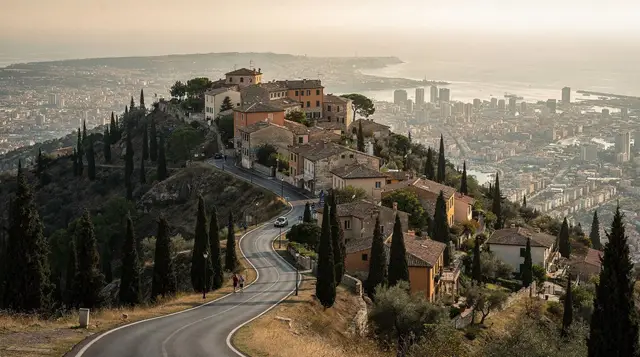
The town itself is instantly recognisable even to visitors who have never been to Sicily before — a Norman cathedral rising directly above a fishing harbour, medieval houses built out over the water on wooden stilts, and the flat-topped Rocca looming behind the whole scene. That combination of coastline, medieval architecture and dramatic backdrop is precisely why Cefalù shows up on so many Sicily itineraries in the first place, and why getting the logistics of visiting it right matters as much as knowing what to see once you arrive.
This guide is built around that honesty: the specific travel times from each direction, what a day in Cefalù actually covers, and when staying a night makes more sense than trying to cram the town into a single day.
Cost-wise, a Palermo-based day trip is genuinely cheap — a regional train ticket each way costs only a few euros, and the town’s main sights (the old town, the beach, the climb up La Rocca) cost nothing beyond the cathedral’s modest entrance fee. From Catania, Taormina or Messina, the added train changes and longer overall journey push the cost up only slightly, which makes the honest case against the trip about time rather than money — the distance simply is not worth what you get back in a single day from those directions.
From Palermo: around an hour, and worth every minute
The regional train from Palermo to Cefalù takes around an hour along the coastal line, with trains running frequently enough through the day that this is one of the few Sicilian rail connections you do not need to plan carefully around. This makes Cefalù the single best full-day trip from Palermo; see Day trips from Palermo for how it compares with Monreale, Segesta and Agrigento as options from that base.
Arriving by mid-morning gives a full day: the Norman cathedral, the old town, the beach, and the climb up La Rocca, covered below. Departing on a late-afternoon or early-evening train gets you back to Palermo comfortably, without the rush that trips from further afield require.
Buy your tickets on arrival at the station, or through the Trenitalia app, rather than assuming you can decide on the spot in the evening — regional tickets are inexpensive and need validating before boarding, and the small ticket machines at Cefalù’s station can see a short queue build up around the last couple of trains back to Palermo on a busy summer evening.
From Messina, Taormina or Catania: possible, but think twice
From Messina, the journey runs around an hour and 45 minutes to two hours by train. From Catania or Taormina, Cefalù sits on the Tyrrhenian side of Sicily’s coastal rail network, which means the trip typically involves a change and runs closer to two and a half to three hours each way — five to six hours of travel for what would likely be a single afternoon in the town itself.
This is the point where the honest answer changes: for travellers based on the east coast, Cefalù is rarely worth a dedicated day trip. The exception is travellers who are already relocating their base along the coast — say, moving from Taormina toward Palermo — for whom a stop in Cefalù along the way makes far better use of the same hours than a there-and-back excursion. See Day trips from Messina and Day trips from Taormina for closer alternatives from those bases.
The reason Cefalù sits so awkwardly from the east coast comes down to how Sicily’s rail network is laid out: the Tyrrhenian line (Palermo to Cefalù to Messina) and the Ionian line (Messina to Taormina to Catania to Syracuse) meet only at Messina, with no direct interior connection between them on this stretch. Travelling from Catania or Taormina to Cefalù means routing via Messina at the island’s northeastern tip rather than cutting across the middle, which is what stretches the journey out. See Day trips you can do by train for how this junction shapes several other Sicilian day-trip routes in similar ways.
What a day in Cefalù actually covers
The Norman cathedral, built in the 12th century and decorated with Byzantine mosaics comparable in craft to Monreale’s, if smaller in scale, anchors the old town and is worth an hour on its own. From there, the medieval streets wind down past the Lavatoio — a covered medieval wash-house fed by a natural spring, still in something like working order — to the harbour and the long stretch of beach that sits directly below the historic centre, unusual for a Sicilian old town of this size.
The cathedral was reportedly built following a vow made by the Norman king Roger II after surviving a storm at sea, and its twin towers dominate the view of the old town from almost every angle, including from the beach itself — a genuinely rare case of a Sicilian cathedral remaining the visual centrepiece of its town from the water as much as from the streets around it.
Cefalù: Cathedral Complex Guided Tour covers the cathedral in more depth than a self-guided visit typically catches, including details of the mosaic program that are easy to miss without context. Afterwards, Boat Excursions in Cefalù with Snorkeling and Aperitif is a good way to see the coastline and its sea caves from the water, a genuinely different perspective on the town than the streets and cathedral alone provide.
The beach itself splits into a busier stretch directly below the old town, popular for its proximity to cafés and restrooms, and quieter sections further along toward the harbour breakwater. Sun loungers are available to rent along the busier section in season; the quieter stretches are free to use with your own towel, a detail worth knowing if budget matters on an otherwise inexpensive day trip.
La Rocca: worth the climb, if you have the time
Above the old town, La Rocca — the rocky headland Cefalù is built beneath — carries the ruins of a Temple of Diana and a Byzantine-era castle, reached by a marked path that takes 45 minutes to an hour round trip. There is little shade for most of the ascent, so this is best attempted in the morning or the late afternoon rather than at midday in summer heat, and it is the first thing worth cutting if your day-trip schedule is genuinely tight. The view from the top — the old town’s rooftops, the curve of the beach, and on a clear day the coast in both directions — is the payoff for the effort. Full detail on the climb and the beach below is in Cefalù beach and the Rocca.
The path is stepped and uneven in places rather than a smooth trail, so proper shoes matter here more than at most stops on a typical Cefalù day — flip-flops or beach sandals are genuinely unsuitable for the ascent. A small entrance fee applies to the fortified section near the top, and the gate sometimes closes earlier than the rest of the site in the off-season, worth checking before you commit the better part of an hour to the climb.
Combining Cefalù with Monreale, or with the Madonie
Some Palermo-based tours pair Cefalù with Monreale in a single day, given both are common Palermo day trips in different directions. Full Day Private Tour of Monreale Cefalù and Castelbuono covers exactly this combination, extending into nearby Castelbuono as well — workable with an early start, though independent travellers generally get more out of each place by keeping the two trips separate, since Monreale alone needs two to three hours and Cefalù most of a full day on its own.
Castelbuono, a Madonie hill town known for its manna production and a striking medieval castle, adds a genuinely different character to the day compared with Monreale’s cathedral or Cefalù’s coastline — worth the extra stop if your schedule and energy allow a third destination, though most independent travellers find that Monreale plus Cefalù alone already makes for a full and varied day without adding a third stop on top.
For travellers with slightly more time, Cefalù also works as the launch point for the Madonie mountains behind it, rather than only as a coastal stop. Cefalù: Madonie Park Jeep Adventure heads up into that terrain, a genuinely different kind of day from the coastal town below — worth knowing about if you are staying a night rather than passing through. See The Madonie and Nebrodi parks for more on that inland option.
Eating in Cefalù between stops
Cefalù’s harbour keeps a genuine fishing fleet, and the seafood served in restaurants along the waterfront and in the old town generally reflects that — swordfish, sardines and whatever else came in that morning feature heavily on menus through the warmer months. A coperto (cover charge) of a few euros per person is standard at sit-down restaurants across Sicily, Cefalù included, and worth expecting rather than being surprised by on the bill. For a day trip, a mid-afternoon lunch after the cathedral and before the beach or the climb up La Rocca tends to work better than an early one, avoiding the busiest lunchtime seating around the main piazza.
When to go and common mistakes
April through June and September into October offer the most comfortable temperatures for the walk up La Rocca and for wandering the old town’s narrow streets without the midday heat that builds across July and August. Those two peak summer months also bring the heaviest crowds — both to the beach directly below the cathedral and to the trains themselves, which can run genuinely full on the busiest weekends, worth booking or arriving early for if you are visiting at the height of summer. Ferragosto in mid-August is one of the single busiest days of the year here, given how popular Cefalù is with Sicilians as well as visitors from further afield.
The most common mistake is treating Cefalù as a quick two-hour stop rather than the full-day destination it actually rewards — the cathedral alone deserves an hour, and rushing means skipping either the beach, the climb up La Rocca, or both. A second is underestimating how differently the distance from Cefalù reads depending on your starting point: a quick glance at a map of Sicily’s north coast makes Palermo and Catania look similarly close, when in practice the travel time differs by a factor of two or three.
Cefalù is one of the few Sicilian coastal towns genuinely built for an overnight stay rather than just a passing visit: a beach worth an evening swim after the day-trippers have left, a harbour that changes character at dusk, and Madonie access that a same-day return trip simply does not have time for. If your itinerary has any flexibility, one or two nights in Cefalù — either as its own stop or as a slower alternative to a rushed Palermo day trip — tends to leave visitors with a better impression of the town than a compressed six-hour visit does.
The difference is most obvious in the evening: once the last day-trip trains have pulled out in the late afternoon, the old town noticeably empties out, and the beach and the streets around the cathedral take on a considerably calmer character than they have at any point during the day.
A sunset view from the harbour breakwater or from partway up La Rocca, timed for an evening rather than a rushed late-afternoon dash for the train, is one of the more understated rewards of staying rather than day-tripping. Accommodation options in the old town itself range from small guesthouses in converted historic buildings to more standard hotels along the newer part of town closer to the station, giving reasonable flexibility whether you are travelling on a tighter or more generous budget.
A realistic hour-by-hour day from Palermo
Catching a mid-morning train from Palermo Centrale puts you in Cefalù within about an hour, with the whole day still ahead. Start with the cathedral before the midday heat and the coach-group crowds build — its Byzantine mosaics reward a slow look rather than a rushed one, and an hour is a reasonable allowance. From there, work down through the old town’s narrow streets toward the Lavatoio and the harbour, breaking for lunch somewhere with a visible local crowd rather than the first terrace facing the cathedral square.
Early-to-mid afternoon is the natural window for the climb up La Rocca, ideally before the heat peaks in summer or as it eases in the late afternoon in other seasons; the beach works either before the climb, for a cooling swim beforehand, or after, as a reward once the legs have done the work. A train back to Palermo in the early evening rounds out a full but unrushed day, with enough slack in the schedule that missing one specific departure on this frequent line costs a short wait rather than a real problem.
Parking and access if you’re driving instead of taking the train
Driving from Palermo is also realistic, roughly the same order of time as the train once you account for parking, but Cefalù’s old town itself is largely closed to private cars, protected by a ZTL like most Sicilian historic centres — automatic cameras issue fines to unauthorised vehicles without a permit. Visitors driving in should plan to park in one of the paid lots or marked areas at the edge of the old town and walk in, rather than attempting to drive toward the cathedral or the harbour directly. In peak summer, these car parks fill up by mid-morning, which is one more reason the train is the easier option for a day trip specifically, even for visitors who have a rental car for the rest of their stay.
What the town feels like by season
Cefalù’s character shifts considerably across the year in a way that’s worth knowing before picking a date. April through June and September through October bring comfortable temperatures for both the La Rocca climb and a full day of walking, with the beach still swimmable and noticeably less crowded than peak summer.
July and August bring the heaviest crowds — cruise-adjacent coach groups and the busiest version of the beach below the cathedral — alongside heat that makes the shadeless stretch of the Rocca climb genuinely demanding around midday. Winter thins the crowds dramatically and keeps the cathedral and old town fully accessible, though the beach itself and any boat excursions become a much smaller part of a winter day, and some seasonal restaurants and rental kiosks close outside the main season.
What not to bother with on a rushed day
Visitors trying to pack too much into a single Cefalù day sometimes attempt the climb up La Rocca, a full swim, a boat excursion and a sit-down lunch all in the same six or seven hours available — that combination is unrealistic without cutting corners on at least one element.
If time is genuinely tight, the cathedral and the old town walk are the non-negotiable core of a Cefalù day; the Rocca climb is worth sacrificing before the cathedral is, and a boat excursion is better treated as a reason to stay overnight rather than squeezed into an already full day trip. Overpriced, identikit seafront restaurants directly facing the cathedral square are also worth skipping in favour of streets one or two blocks back, where prices are generally more reasonable and the clientele more mixed between visitors and locals.
The honest bottom line
Cefalù as a day trip is close to ideal from Palermo — about an hour each way on a reliable train line, for a town that rewards a full day of walking, swimming and one solid uphill climb. From Catania, Taormina or even Messina, it asks considerably more of your schedule than it gives back as a single-day round trip, and is better treated as a stop along a longer route, or postponed until you can give it a night rather than a rushed afternoon.
For anyone weighing whether Cefalù deserves a place in a Sicily itinerary at all, the answer is almost always yes — the question is simply how it gets there. A Palermo-based day trip is the easiest route in; a night or two of your own is the version that gets the most out of the town. Either way, the hour-long train ride from Palermo remains one of the most dependable, least stressful journeys on the whole island, worth building an itinerary around rather than treating as an afterthought.
Best day trips in Sicily on GetYourGuide
Verified deep-linked GetYourGuide tours. Book through these links and we earn a small commission at no cost to you.
Photo: our own image of the location, not the operator’s product photo.