The Madonie and Nebrodi parks
What is the difference between the Madonie and Nebrodi parks?
The Madonie, inland from Cefalù, hold Sicily's second-highest peak, Pizzo Carbonara, and a well-developed network of trails and mountain villages like Castelbuono. The Nebrodi, further east toward Messina, are larger, wilder and considerably less visited, with fewer marked trails and a more remote feel.
Two mountain parks most itineraries skip entirely
Sicily’s coastline gets almost all the attention, which means the island’s interior mountains stay quiet even in high season. The Madonie and the Nebrodi are Sicily’s two largest regional parks, sitting back to back across the north of the island between Cefalù and Messina, and between them they hold beech forest old enough to carry UNESCO recognition, the island’s second-highest peak, and a scattering of stone mountain villages that feel closer to inland Abruzzo or Calabria than to the Sicily most visitors photograph. Neither park requires more than a rental car and a free day to reach, and both reward that day considerably.
The Madonie: Sicily’s most developed mountain park
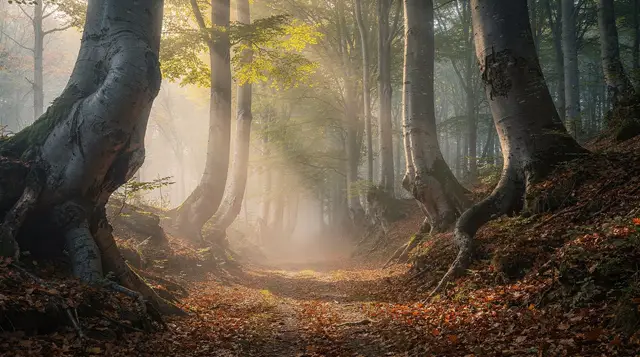
The Madonie regional park centres on a cluster of peaks reaching over 1,900 m, the highest of which — Pizzo Carbonara — is Sicily’s second-highest point after Etna itself. What makes the Madonie distinctive botanically is its beech forest: pockets of ancient, untouched beech woodland here are part of the UNESCO-listed network of Europe’s primary beech forests, meaning trees and forest structure that predate significant human management, a rarity on a Mediterranean island shaped by millennia of agriculture and grazing.
Castelbuono is the park’s best-known gateway village — a compact medieval town with a well-preserved castle, worth a stop on its own even without the surrounding park — and Petralia Sottana, often listed among Italy’s most beautiful villages, sits higher up with views across the range. Piano Battaglia, at altitude, doubles as a modest ski and snowshoe area in winter and a hiking base in the warmer months.
Trekking in the Heart of the Madonie Park from Castelbuono is a guided trek based out of Castelbuono, a reasonable entry point if you want the forest and the peaks without navigating unmarked junctions solo.
Climbing Pizzo Carbonara
Reaching the summit of Pizzo Carbonara is a genuine mountain day — several hours round trip with real elevation gain on the way — rather than a casual afternoon stroll. The route does not demand technical climbing, but it does demand proper boots, more water than instinct suggests, and a realistic read of your own fitness, since the terrain thins from clear forest track to a less obvious path the higher you climb. Waymarking away from the main trail can be sparse, which is exactly the kind of situation where paying for a local guide changes the day from a frustrating search for the right ridge line into a straightforward, well-paced climb.
On the Roof of the Madonie Hike to the Summit of Pizzo Carbonara covers this exact route with a guide, worth the money for first-time visitors unfamiliar with the terrain.
Manna: a disappearing tradition worth seeing up close
One of the more unusual things the Madonie preserves is the traditional harvesting of manna — the dried, crystallised sap of the ash tree (Fraxinus ornus and Fraxinus angustifolia), collected by hand through small incisions in the bark during the hottest weeks of summer. It is a practice that has all but vanished from the rest of Europe, and Castelbuono and nearby Pollina remain among the last places where a handful of producers keep it going, largely for use in traditional Sicilian confectionery, where it appears as a natural sweetener, and historically as a mild natural laxative. It is a niche interest, but a genuinely rare one — few places in the world let you meet someone who still does this by hand.
Castelbuono: Manna Meeting with One of the Last Producers arranges exactly that meeting, with one of the remaining producers explaining and demonstrating the harvest.
The Nebrodi: Sicily’s largest and wildest park
East of the Madonie, stretching toward Messina and overlapping with the area around The Nebrodi and Tindari, the Nebrodi park is Sicily’s largest protected area by size, and its least developed for tourism. Where the Madonie has invested in hiking infrastructure, signposted trails and village-based tourism around Castelbuono, the Nebrodi remains noticeably wilder: denser forest cover, fewer visitor facilities, and a real sense of remoteness even close to main roads. This is the park to choose if the Madonie’s (still modest) visitor numbers feel too busy, or if the appeal is genuinely getting away from any tourist infrastructure at all.
Because trail signage and services are thinner here, guided 4x4 tours are a more common way to see the Nebrodi’s interior than independent hiking, particularly for visitors without extensive local knowledge.
4X4 Night Tour in the Nebrodi Park from Cesaro is a guided option that gets into the park’s interior after dark, when wildlife activity picks up and the forest feels considerably more atmospheric than a daytime drive-through.
What else lives in these parks
Beyond the forests and peaks, both parks support wildlife rarely seen on the Sicilian coast: birds of prey circling above the ridgelines, and — in the Nebrodi specifically — semi-wild horses and the local sanfratellano breed, along with wild boar in the denser woodland. Neither park guarantees sightings on a single visit, and this guide won’t promise more than the possibility.
Where to stay for each park
For the Madonie, Castelbuono is the easiest base — small enough to explore on foot, with a genuine choice of places to eat and stay, and central to most of the park’s main trailheads. Petralia Sottana offers a quieter, higher-altitude alternative with its own character, useful if Castelbuono’s (still modest) visitor traffic feels like too much. For the Nebrodi, there is no single obvious gateway town in the way Castelbuono anchors the Madonie; most visitors base themselves in Messina, Cefalù or one of the coastal towns like Milazzo and drive in for the day, which suits the park’s more exploratory, less structured character anyway.
Combining both parks with the rest of a trip
Few itineraries have room for a dedicated multi-day mountain stint, so most visitors treat the Madonie or the Nebrodi as a single detour day within a longer coastal trip. A Madonie day works cleanly from a Cefalù base, alongside beach time and the Rocca di Cefalù hike. A Nebrodi day fits naturally into time spent around Messina or as a stop between day trips from Taormina and the north coast. Travellers assembling a full route around the island — see The full Sicily road-trip loop — can build a mountain day into the itinerary without much disruption to the coastal legs either side of it.
Planning a visit
Both parks work best as a full day trip from a coastal base rather than a rushed half-day detour. From Cefalù, the Madonie’s gateway villages are under an hour’s drive; from Messina or the north coast, the Nebrodi is a similar distance. A rental car is close to essential — public transport barely serves either park’s interior — and mountain roads here are narrower and slower than the coastal highways, so budget more driving time than the raw distance suggests. Layers matter even in summer: altitude keeps both parks noticeably cooler than the coast, and mornings and evenings can be genuinely cold outside the height of summer.
For the broader hiking picture across Sicily, including how these two parks compare to coastal options like the Zingaro reserve, see Hiking in Sicily: the routes that are worth it and Sicily’s parks and nature reserves. Cyclists will find the Madonie’s forest roads among the best terrain on the island in Cycling in Sicily, and drivers heading into either park should read Driving in Sicily: what nobody warns you about beforehand for the realities of Sicilian mountain roads.
Frequently asked questions about the Madonie and Nebrodi parks
Are the Madonie and Nebrodi parks worth visiting?
Yes, for a completely different side of Sicily than the coast — cooler air, dense beech and oak forest, mountain villages, and hiking that has nothing in common with the island’s temples and beaches. They reward travellers who have already done a first Sicily trip and want to see what’s inland.
How do you get to the Madonie park?
By car, generally from Cefalù or Palermo, both under two hours away. Public transport into the park’s interior is limited, so a rental car is close to essential for exploring beyond the main gateway town of Castelbuono.
What is manna and where can you see it made?
Manna is the dried sap of the ash tree, traditionally harvested by hand in a handful of villages around Castelbuono and Pollina in the Madonie — one of the last places in Europe where the practice survives. It is used in traditional Sicilian sweets and, historically, as a natural laxative.
Which is more remote, the Madonie or the Nebrodi?
The Nebrodi. It is Sicily’s largest protected area, with fewer visitor facilities, thinner trail signage, and noticeably lower tourist numbers than the Madonie, which has invested more in hiking infrastructure and village tourism around Castelbuono and Petralia Sottana.
Is Pizzo Carbonara a difficult hike?
It is a genuine mountain day — several hours round trip with real elevation gain — rather than a casual walk. It does not require technical climbing skill, but proper boots, water and a realistic fitness level matter, and thin waymarking away from the main track makes a guide worth considering for first-timers.
What is the best time of year to visit the Madonie or Nebrodi?
Spring (April–June) and autumn (September–October) for hiking and cooler temperatures. Winter can bring snow to Piano Battaglia in the Madonie, which becomes a modest ski and snowshoe area; summer is hot but more bearable here than on the coast thanks to altitude.
Do you need a car to visit either park?
Effectively yes. Both parks cover large, hilly, sparsely served areas where public transport is thin at best, and the villages, trailheads and viewpoints worth reaching are spread out enough that walking between them from a single base is not realistic.
Hiking and outdoor activities on GetYourGuide
Verified deep-linked GetYourGuide tours. Book through these links and we earn a small commission at no cost to you.
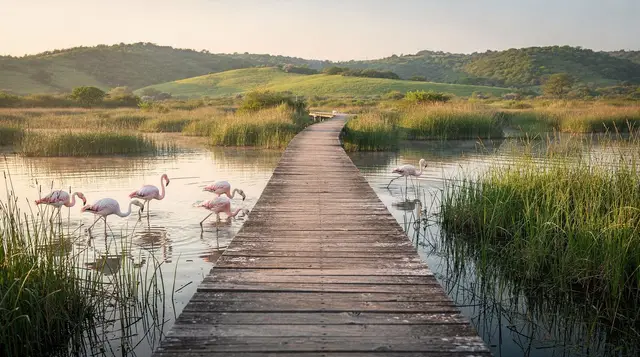
Photo: our own image of the location, not the operator’s product photo.