An interior capital built on sulfur, not tourism
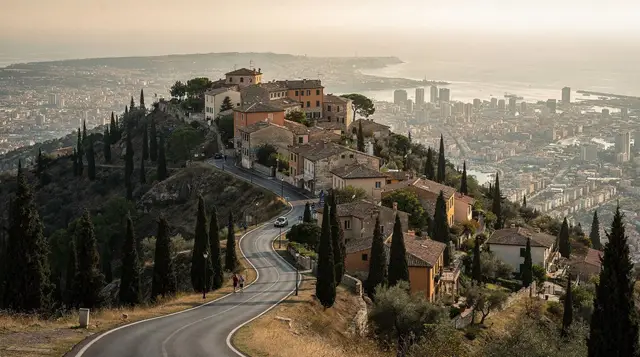
Caltanissetta sits roughly in the middle of Sicily’s interior, between Enna and Agrigento, at a lower elevation than Enna but still firmly within the island’s dry, hilly hinterland rather than the coastal strip that dominates most travel content about Sicily. Unlike almost every other destination covered on this site, it has never developed a significant tourism economy — there is no equivalent here of Baroque staircases, Greek temples, or a beach worth planning a day around.
What Caltanissetta does have is a genuine 19th and early 20th-century industrial history, largely unknown to visitors focused on Sicily’s coast, built around sulfur mining, and a provincial capital’s worth of ordinary civic and religious architecture that has had little reason to accommodate tourist expectations. For visitors specifically interested in the parts of Sicily that mass tourism has not reshaped, or simply passing through the interior between better-known stops, Caltanissetta rewards a few honest hours far more than a rushed detour driven by a checklist would suggest.
Sicily’s sulfur capital, briefly explained
Through much of the 19th century and into the early 20th, Sicily was the world’s dominant supplier of sulfur, a mineral essential to the gunpowder and, later, fertilizer and chemical industries, and Caltanissetta sat at the center of the province that produced most of it.
Mines including Trabia-Tallarita and Gessolungo, both within the wider Caltanissetta area, employed thousands of workers, many of them children, in conditions that later became a significant reference point in Italian labor history and reform movements — the carusi, child laborers who carried sulfur ore up from the mine shafts, are a specifically documented and grim chapter of this industry’s history, referenced in Sicilian literature including the work of Luigi Pirandello, who drew on the region’s mining conditions for some of his writing.
The industry collapsed relatively quickly in the early 20th century once cheaper extraction methods developed elsewhere, particularly the Frasch process used on sulfur deposits in the United States, undercut Sicilian sulfur’s competitiveness on the world market. Caltanissetta’s economy never fully recovered an equivalent replacement industry, and this economic history is directly visible in the town today — a provincial capital whose 19th-century civic architecture reflects a period of real industrial wealth, standing alongside the more ordinary, sometimes worn fabric of a town that has not had a comparable economic engine since.
A walking tour covering Caltanissetta’s history, art and Sicilian heritage is a sensible way to have this context explained directly, since the significance of much of what is visible in the town center is not obvious without it.
The mineralogical museum and the sulfur mines up close
For visitors specifically interested in the mining history beyond a walking tour’s overview, Caltanissetta’s mineralogical museum (Museo Mineralogico, Paleontologico e della Zolfara) holds mineral samples, mining equipment and documentation specifically tied to the sulfur industry’s peak, giving a more concrete sense of the extraction process than the town’s civic architecture alone conveys.
Some of the former mine sites themselves, including remains at Trabia-Tallarita, survive in varying states of preservation and occasionally host organized visits or events tied to industrial heritage tourism, though this is a niche and inconsistently available offering rather than a standard visitor attraction with fixed opening hours — checking current access through the museum or a local guide is worth doing before planning a visit specifically around seeing a former mine site.
The Duomo and the town center
Caltanissetta’s Duomo, dedicated to Santa Maria la Nova, is a substantial Baroque cathedral at the heart of the historic center, with a notable painted ceiling and a bell tower that anchors views across the town — one of relatively few individual buildings in Caltanissetta that would not look out of place among the more celebrated Baroque architecture of the coast, worth the few minutes it takes to step inside.
The surrounding streets, centered on Corso Vittorio Emanuele, hold a mix of civic buildings from the sulfur-era prosperity and later, more modest construction — a genuine working town center rather than a preserved historic district, with ordinary shops and offices occupying buildings that in a more tourism-oriented town might have been converted into boutiques or restaurants.
Settimana Santa and the Vare
As in Enna, Caltanissetta’s Holy Week (Settimana Santa) is a major event on the town’s calendar, organized around the Real Maestranza, a historic guild-based confraternity, and centered on the procession of the Vare — elaborate wooden and papier-mâché sculptural groups depicting scenes from the Passion of Christ, some dating back generations and considered significant works of folk religious art in their own right.
Outside of Holy Week itself, a permanent exhibition space, the Sala Espositiva delle Vare, displays a selection of these sculptures year-round, giving visitors a chance to see the craftsmanship up close without needing to time a visit around Easter. A guided tour of the Sala Espositiva delle Vare is a worthwhile stop specifically for this reason, and gives a genuine sense of the town’s religious and artistic traditions beyond its industrial history.
The Holy Week processions themselves, when they occur, rival Enna’s in scale and local significance, and the two towns’ traditions are sometimes compared directly by Sicilians familiar with both — worth knowing about specifically if planning a trip around Easter, since both towns’ events reshape their normal quiet pace substantially for the duration. See the Easter and Holy Week in Sicily guide for the wider context.
Caltanissetta’s other sights
Beyond the Duomo, the Palazzo del Carmine and the adjoining Chiesa del Carmine hold their own significance in the town’s religious life, particularly during Holy Week, when several of the Vare processions originate from or pass through this part of the historic center.
The Badia (abbey) and a handful of smaller churches scattered through the surrounding streets round out a town center that, while not curated for visitors in the way Sicily’s Baroque showpieces are, holds a genuine density of civic and religious architecture reflecting several centuries of continuous settlement. None of these individually justify a special trip, but together they make a reasonable hour or two of unhurried walking for anyone already in town for the mining history or the Holy Week traditions.
Local produce: cheese, wine and the interior’s table
Caltanissetta’s surrounding countryside produces cheese, wine and other agricultural products typical of Sicily’s pastoral interior rather than the coast’s seafood-driven cuisine.
A local produce tasting and manufacturing tour gives a hands-on introduction to how these products are made, a reasonable way to spend an afternoon beyond the town’s historical sights and one that connects directly with the same interior agricultural economy that surrounds Enna and Piazza Armerina as well. See the wider where to eat in Sicily, city by city guide for how the interior’s food culture compares to the coast’s.
Visiting with children
Caltanissetta is not designed around family tourism, and there is little in the way of dedicated children’s activities beyond what the town’s ordinary civic life offers. The local produce tasting and manufacturing tour is the most naturally hands-on option for children among the town’s offerings, giving a tangible, participatory activity rather than a purely historical walk.
Families with a specific interest in industrial or labor history may find the mineralogical museum a genuinely engaging stop for older children, though younger visitors are likely better served by the more purpose-built family attractions found in Sicily’s coastal destinations. See the wider Sicily with kids guide for family-oriented options better suited to a broader range of ages.
An honest note on what to expect
Caltanissetta does not offer the polished visitor experience of Sicily’s Baroque towns or coastal destinations, and travel content that oversells it as a hidden gem on par with Noto or Ortigia is setting up unrealistic expectations. This is a genuine, moderately worn provincial capital with real, specific historical interest — the sulfur mining legacy chief among it — rather than a broadly photogenic town suited to a leisurely wander. Visitors specifically interested in industrial history, Sicilian labor history, or the Vare’s religious folk art will find real substance here; visitors purely chasing Instagram-friendly streetscapes are better served spending the same hours in Enna, Piazza Armerina or further afield.
Literature and the sulfur mines: Pirandello’s connection
Luigi Pirandello, the Nobel Prize-winning writer born near Agrigento, drew directly on the sulfur-mining economy of interior Sicily for parts of his work, most notably in stories addressing the exploitation of the carusi and the broader hardship of the mining communities that Caltanissetta’s province depended on for generations.
Reading even a little of this context before visiting adds real weight to what otherwise might read as fairly ordinary 19th-century civic architecture — the wealth on display in some of Caltanissetta’s grander buildings from that period sits directly alongside the well-documented human cost of the industry that funded it, a tension that a good local guide will generally address rather than gloss over. For visitors with a broader interest in Pirandello, his birthplace and a small museum dedicated to him are located near Agrigento, covered briefly on the separate Agrigento destination page.
Combining Caltanissetta with Enna and the wider interior
Caltanissetta sits roughly 35 minutes from Enna, making the two a reasonable combined half-day for visitors exploring Sicily’s interior rather than sticking to the coast — see the separate Enna destination page for the fuller picture of that town’s own castle and hilltop views.
Piazza Armerina and the Villa Romana del Casale mosaics are about 45 minutes east, and Agrigento’s Valley of the Temples roughly an hour southwest, making Caltanissetta a workable, if secondary, stop on a longer loop through the island’s center and south rather than a standalone destination in its own right. See the separate Piazza Armerina and Agrigento destination pages, and the wider day trips from Agrigento guide.
Getting there and getting around
Caltanissetta has train connections, though as with much of Sicily’s interior, service is limited and a car is the more practical option for most visitors, particularly for anyone combining the town with Enna, Piazza Armerina or the surrounding countryside in a single day.
The town sits just off the A19 motorway connecting Palermo and Catania, making it an easy, if optional, stop for anyone driving between the two — a reasonable stretch-your-legs detour on a long interior drive rather than a destination requiring a dedicated trip of its own. See the driving in Sicily guide and Sicilian trains guide for the wider practicalities of reaching and moving through the interior.
When to come
April through June and September through October give the most comfortable conditions for walking the town center, though Caltanissetta’s interior location means summers run hot and dry without the coast’s moderating sea breeze — closer to Enna’s climate profile than to the coastal towns, if generally somewhat warmer given Caltanissetta’s lower elevation. Holy Week, timed to the moveable Christian calendar each year, is the town’s single most significant event and worth planning around specifically for visitors with a genuine interest in the Vare processions. See the best time to visit Sicily guide for the wider seasonal picture across the island.
Frequently asked questions about visiting Caltanissetta
Is Caltanissetta worth visiting if you have limited time in Sicily?
Not as a priority stop for most itineraries — it is more of a worthwhile detour for visitors with a specific interest in sulfur-mining history or Holy Week traditions, or those already passing through the interior between Enna, Piazza Armerina and Agrigento, than a destination to plan a trip around from scratch.
What is the sulfur-mining history Caltanissetta is known for?
Sicily was the world’s dominant sulfur producer through much of the 19th and early 20th centuries, and Caltanissetta’s province was the center of that industry. The trade collapsed once cheaper extraction methods developed elsewhere, and the town’s 19th-century civic architecture reflects that earlier period of industrial wealth.
What are the Vare?
Elaborate wooden and papier-mâché sculptural groups depicting scenes from the Passion of Christ, carried in Caltanissetta’s Holy Week processions and displayed year-round in the Sala Espositiva delle Vare. They are considered significant works of Sicilian folk religious art.
How does Caltanissetta’s Holy Week compare to Enna’s?
Both are among the most significant in Sicily, organized around historic confraternities, and are sometimes compared directly by Sicilians familiar with both towns. Caltanissetta’s centers on the Real Maestranza guild and the Vare sculptures; Enna’s involves a different set of confraternities and its own distinct procession traditions.
Do you need a car to visit Caltanissetta?
Effectively yes, given limited train service and the town’s position in the interior away from the main coastal routes. Most visitors combine it with Enna or a wider interior loop by car rather than visiting it in isolation by public transport.
Is Caltanissetta safe to visit?
Yes — it is an ordinary Italian provincial capital with no particular safety concerns beyond standard urban awareness. Its lack of tourism polish reflects economic history rather than any current safety issue.
What is the “carusi” reference sometimes mentioned with Caltanissetta?
The carusi were child laborers who worked carrying sulfur ore in the mines around Caltanissetta and elsewhere in Sicily during the industry’s peak, under conditions that later became a documented and significant chapter in Italian labor reform history, referenced in the work of Sicilian writers including Luigi Pirandello.
Can you visit a former sulfur mine near Caltanissetta?
Some former mine sites, including remains at Trabia-Tallarita, survive and occasionally host organized visits tied to industrial heritage tourism, though access is inconsistent rather than a standard fixed attraction. The town’s mineralogical museum is the more reliable way to engage with this history on any given day.
How many hours should you budget for Caltanissetta?
Half a day covers the Duomo, the town center, and either the mineralogical museum or the Sala Espositiva delle Vare at a comfortable pace. It is not a destination that rewards a full day on its own for most visitors, and works best as one stop within a wider interior loop.
Is Caltanissetta connected to the Val di Noto’s Baroque towns?
Not directly — it sits well to the west of the Val di Noto region and was not part of the shared 1693 earthquake rebuilding that produced Noto, Ragusa, Modica and the other UNESCO-listed towns. Its architectural character and historical significance come from a different period and a different economic story entirely.
Does Caltanissetta have good restaurants?
It has a modest number of genuine local trattorie serving interior Sicilian cooking at prices well below the coast’s tourist towns, rather than a curated dining scene built for visitors. Expect straightforward, honest food rather than a memorable culinary destination in its own right.