Sicily’s first Greek colony, now a beach town below Taormina
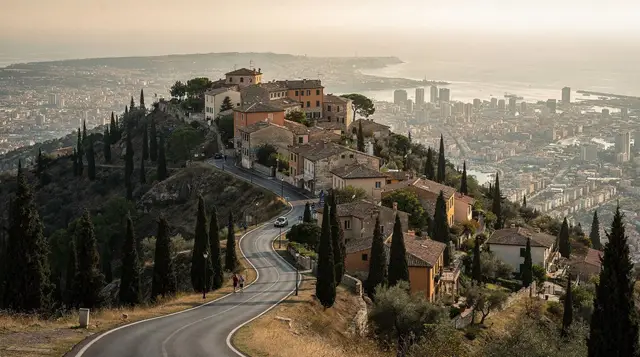
Giardini Naxos sits at sea level on the bay directly beneath Taormina, and the two are often treated as a single destination even though they have distinct identities and, notably, distinct price points. Naxos was the first Greek colony founded on Sicilian soil, in 734 BC, predating even Syracuse — a fact that surprises visitors who assume Taormina’s hilltop position made it the area’s original settlement. The ancient city was later abandoned, and Taormina grew on the clifftop above partly as a defensive response, which is why the archaeological remains of Naxos itself sit at the modern town’s edge, at sea level, rather than up on the hill.
Today Giardini Naxos functions primarily as a beach resort town with a long sand-and-pebble waterfront, considerably more affordable accommodation than Taormina, and a straightforward bus or taxi connection up to Taormina’s old town in 15-20 minutes. For travelers who want Taormina’s sights without Taormina’s room rates, staying here is a genuinely practical choice, not a compromise.
Why the colony fell and the hilltop rose
The history behind Taormina and Naxos’s reversed fortunes is more specific than a simple “ancient city declined” story. Naxos was destroyed in 403 BC by Dionysius I of Syracuse, who saw the colony as a rival power on the Ionian coast, and its surviving population was relocated inland — some eventually resettling on the more defensible clifftop that became Taormina.
This means Taormina’s founding is directly tied to Naxos’s destruction, rather than the two towns developing independently side by side, a detail that gives context to why Taormina’s ancient theatre feels architecturally younger and more Roman-influenced than Naxos’s older Greek-only remains. Visitors interested in the fuller sweep of Greek colonization across the island, not just this one site, will find the broader context in Greek Sicily explained: who built what, and when.
The archaeological park: older than Taormina’s own theatre
The Parco Archeologico di Naxos preserves the remains of the original Greek colony — city walls, a sacred area and foundations of what was once a substantial settlement, along with an on-site museum displaying pottery and artifacts recovered from the site. It draws far fewer visitors than Taormina’s ancient theatre a short distance up the hill, despite being, in a real sense, the origin point for Greek settlement in this part of Sicily.
A combined ticket covering the archaeological park and museum is the straightforward way to visit, and for a different angle on the same site, a sunset tour of the park paired with a Greek-style aperitif makes for a quieter, more atmospheric visit than the midday version.
The beach, and how it compares to Taormina’s
Giardini Naxos has one continuous sand-and-pebble beach running the length of the town, considerably longer and easier to access than Taormina’s smaller coves at Isola Bella and Mazzarò. Much of it is organized into lidi (paid beach clubs with sunbeds and umbrellas), alongside some free stretches, following the same lidi-versus-free-beach pattern found across Sicily — see Isola Bella and the Taormina beaches for how the two towns’ waterfronts compare directly.
The beach’s gentler slope and lack of the rocky, narrow entry points found at Isola Bella make it noticeably easier for swimmers of all ages and comfort levels, and the wider stretch of sand means it doesn’t reach the same visible capacity crowding that Isola Bella does on a peak August afternoon, even though total visitor numbers to the area overall are high. Beach club prices here run below Taormina’s cove-side pricing for a comparable sunbed-and-umbrella setup, another part of the broader cost gap between the two towns.
Practical timing: how a stay here actually structures a day
A typical day based in Giardini Naxos splits fairly cleanly: mornings at the beach or archaeological park while the temperature is manageable, a bus or taxi up to Taormina in the early afternoon for sightseeing and a Corso Umberto wander, and a return down the hill for a lower-cost dinner along the Giardini Naxos waterfront in the evening. This pattern works well precisely because the connection between the two towns is quick and frequent enough not to feel like a chore, unlike some base-and-day-trip pairings elsewhere in Sicily where the connecting transport itself eats a meaningful chunk of the day.
Eating and cooking classes
Giardini Naxos has a genuine local food culture, priced well below Taormina’s Corso Umberto for a comparable meal, and several long-running cooking schools operate here specifically because of the lower overheads relative to the hilltop town. A Sicilian cooking class with a well-known local instructor is a popular half-day activity, particularly for families or groups looking for something other than another archaeological site. For the wider culinary context across the region, see eating in Sicily: hours, coperto and tipping.
Getting here directly from Catania airport
Because Giardini Naxos sits directly on the coastal route between Catania and Taormina, it’s reachable from Fontanarossa airport by direct bus services or a taxi in roughly the same time it takes to reach Taormina itself — worth knowing for travelers who’ve booked a Giardini Naxos stay specifically to avoid Taormina’s higher airport-transfer and taxi pricing at the destination end. Regional trains also stop at the Taormina-Giardini station, which despite its name sits closer to Giardini Naxos than to Taormina’s hilltop center, making rail arrival here marginally more convenient than for Taormina-bound travelers, who still face the connecting bus or taxi up the hill regardless.
Boat trips along the coast toward Taormina
From Giardini Naxos harbor, boat trips run north along the coast toward Isola Bella and the Taormina cliffs, offering a sea-level view of the clifftop town that is genuinely different from looking down at the bay from above. A sunset boat tour along this stretch, often combined with dolphin-spotting is a relaxed way to end a beach day without another walking-heavy itinerary item.
Why the town is called “Giardini” — the citrus gardens that gave it the name
The “Giardini” in Giardini Naxos means “gardens,” a reference to the citrus and olive groves that once covered this stretch of coast before 20th-century tourism development took over much of the waterfront. Pockets of that agricultural landscape survive just inland from the beach strip, and the contrast between the built-up seafront and these quieter groves a few streets back is a reminder that the town’s economy shifted from agriculture to tourism relatively recently, within living memory for some of its older residents. This history also explains the town’s modern layout: a beach-facing hotel and restaurant strip fronting a more residential, garden-dotted interior that most day-tripping visitors never see.
Nightlife and evenings, at a different price point than Taormina
Giardini Naxos has its own, more relaxed evening scene along the waterfront promenade, with bars and restaurants that stay open later and price a drink well below anything comparable up in Taormina. Families and younger travelers on a budget tend to gravitate here specifically for this reason — a paced-out evening walk along the water, dinner at a fraction of Corso Umberto’s prices, without giving up easy access to Taormina’s daytime sights. The town lacks Taormina’s genuine luxury tier entirely, which some visitors count as a downside and others count as the entire appeal.
Getting to Taormina, and why the bus matters here
The bus and taxi connection between Giardini Naxos and Taormina’s old town is frequent and cheap relative to Taormina’s own parking costs, and it is the main reason staying in Giardini Naxos works as a budget strategy — travelers get full access to Taormina’s sights during the day and return to lower-cost lodging and dinner prices in the evening. See the Taormina destination page for the sights this connects to, and the ZTL and parking guide for why driving into Taormina itself is discouraged regardless of where a visitor is staying.
Giardini Naxos also sits within easy reach of Etna and the Alcantara Gorges — see Etna and the Alcantara Gorges — making it a workable single base for several of the region’s main excursions, an approach detailed in the eastern Sicily in 5 days itinerary.
Parking and driving in, for visitors based elsewhere
For travelers staying in Taormina or Catania and visiting Giardini Naxos as a day trip rather than a base, parking near the beach and archaeological park is more straightforward and considerably cheaper than anything in Taormina itself, with several lots directly along the seafront road.
This makes Giardini Naxos a practical stop for drivers heading between Catania and Taormina who want a beach break without dealing with Taormina’s own parking restrictions and ZTL — pulling off at Giardini Naxos, walking the promenade or visiting the archaeological park, and continuing the drive afterward is a realistic way to break up the coastal route. See driving in Sicily for the wider picture on coastal driving between these towns.
Families specifically: what makes this base easier than Taormina
Beyond the beach itself, Giardini Naxos offers practical advantages for families that Taormina’s hilltop layout doesn’t: flat, stroller-friendly streets along the seafront rather than Taormina’s stepped alleys and steep approaches, restaurants generally more accustomed to and relaxed about children, and lower costs across the board for a stay that, with children, tends to run longer than a couple’s city-break pace. The archaeological park is compact and outdoor, manageable for children with some patience for old stones, and the cooking classes offered locally are frequently structured as family activities rather than adults-only culinary tourism.
When to visit
Late spring and September give the best balance of warm sea temperatures and manageable crowds. July and August bring the same regional heat and Ferragosto closures covered in Sicily in August, along with peak beach-club pricing. Winter is quiet and mild but many seasonal beachfront businesses close entirely.
Frequently asked questions about Giardini Naxos
Is Giardini Naxos cheaper than staying in Taormina?
Yes, generally and noticeably — hotels, restaurants and beach access all run below Taormina’s hilltop pricing for a comparable standard.
How do you get from Giardini Naxos up to Taormina?
By local bus or taxi, both running frequently and taking 15-20 minutes; driving into Taormina’s old town itself is impractical due to ZTL restrictions and limited parking.
Is the archaeological park worth visiting if you’ve already seen Taormina’s theatre?
Yes — it’s a genuinely different site, representing the original Greek colony that predates Taormina’s own settlement, and it draws far fewer visitors.
Is Giardini Naxos a good base for families?
Yes — the long, gently sloping beach is more practical for children than Taormina’s smaller coves, and the town’s slower pace and lower prices suit longer family stays.
Can you do Etna or the Alcantara Gorges as day trips from here?
Yes, both are within easy reach by car or organized tour, similarly to departing from Taormina itself.
Is there enough to do in Giardini Naxos for more than a beach day?
The archaeological park, cooking classes and boat trips extend a stay meaningfully, though most visitors treat it as a base for the wider area rather than a multi-day destination on its own.
Where does the name “Giardini Naxos” come from?
“Giardini” refers to the citrus and olive gardens that historically covered this coastal strip before tourism development; “Naxos” refers to the ancient Greek colony whose ruins sit at the town’s edge.
Is Giardini Naxos’s nightlife comparable to Taormina’s?
It’s more low-key and considerably cheaper — a waterfront promenade scene rather than Taormina’s upscale bar and restaurant culture, which suits budget-conscious travelers and families better than anyone seeking a high-end evening out.