Isola Bella and the Taormina beaches
How do you get from Taormina down to Isola Bella?
A cable car (funivia) runs from central Taormina to the coast in a few minutes, from where it is a short walk to the beach and the islet. A steep footpath is the free alternative for anyone who would rather walk down.
An island only some of the time
Isola Bella sits directly below Taormina, a small, wooded rocky islet just offshore, connected to the beach by a narrow strip of pebbles known as a tombolo. Most of the year that strip stays above water, letting visitors walk straight across to the islet itself; during storms or periods of unusually high water, the sea can cover it entirely, turning Isola Bella briefly back into a true island reachable only by swimming or boat. That small detail says something about the whole place: it looks, in every postcard photo, like a fixed and permanent piece of scenery, but it is shaped by the same sea that occasionally reclaims the path across to it.
The islet itself is a managed nature reserve, protecting a small stretch of Mediterranean coastal vegetation and a modest visitor centre, and the beach in the bay below Taormina is one of the most photographed stretches of coast in Sicily — a narrow curve of pebble and sand framed by cliffs on both sides, with the town itself visible on the clifftop above. It is also, precisely because of that reputation, one of the most crowded small beaches on the island in peak season.
The islet has a history beyond its current status as a protected reserve. In the 19th century it passed into the hands of an English noblewoman who settled in Taormina and shaped the islet’s gardens according to her own eclectic taste, planting exotic species alongside the native Mediterranean scrub that still covers much of it today. That layered history — private garden, then reserve — is part of why the vegetation on Isola Bella feels a little different from the drier, more uniform scrub found on Sicily’s other protected coastal strips, such as the Zingaro reserve or Vendicari further south.
Why the tombolo comes and goes
The pebble spit connecting Isola Bella to the mainland is a genuine geological feature known as a tombolo, built up by wave action depositing sediment between the coast and the islet over a long period. Under normal sea conditions it sits comfortably above the waterline and visitors cross without noticing anything unusual, but storms, unusually high tides or strong onshore wind can push water across it temporarily, closing the crossing until conditions settle. It is worth checking conditions on a day of rough weather rather than assuming the crossing will always be open, though for the vast majority of visits, in ordinary summer weather, this is a non-issue.
Getting down from Taormina
The standard way down from Taormina’s clifftop old town to the coast is the funivia, a cable car that covers the descent in a few minutes and runs frequently through the day in season. It is the easiest option by a wide margin, and the queue for it at the upper station can itself become a bottleneck on a busy summer morning, so arriving early both for the beach and to beat the queue is worth planning for. A steep pedestrian path also connects the town to the coast for anyone who prefers to walk, or who arrives outside the funivia’s operating hours, but it is a demanding descent and a genuinely tough climb back up in summer heat — most visitors use it one way at most, if at all.
The funivia runs a modest one-way and return fare, inexpensive relative to almost anything else you will spend money on in Taormina that day, and it operates on a fairly frequent schedule through the main part of the day in season, tapering off earlier in the evening and outside peak months — check current hours locally rather than assuming a late return trip is guaranteed, particularly if you are staying past sunset at the beach. Parking directly at the coast is limited and largely taken up by lido customers; most visitors either arrive via the funivia from town or come by boat or transfer from Giardini Naxos rather than trying to park a car at the bottom of the cliff themselves.
From Catania: Exclusive Tour of Taormina and Isola Bella with a Stop for a Swim bundles a look at Taormina’s old town with time at the beach below, a sensible option for a first visit that wants to see both without working out the funivia timing and beach logistics independently.
The beach: lido, free sand and the narrow bay
The bay below Isola Bella splits, like most well-known Sicilian beaches, into paid lido sections with sunbeds and umbrellas and a free public stretch of pebble and sand. What makes this particular bay different is scale: it is narrow relative to how many visitors Taormina draws each day in summer, which means both the paid and free sections fill fast, and by mid-morning in July or August finding space on the free sand specifically can be genuinely difficult.
The general mechanics of how lidi and free beaches work across Sicily, and what a fair day’s sunbed rental costs, are covered in Lidi or free beach: how Sicilian beaches work — worth reading before your first visit here given how tight capacity gets.
The beach itself is mixed pebble and sand rather than the fine white sand found at San Vito Lo Capo or Mondello, so water shoes are a genuinely useful addition for anyone who finds bare feet on pebbles uncomfortable for a full afternoon.
Crossing to the islet
Once the tombolo is above water, crossing to Isola Bella itself takes only a couple of minutes on foot, leading to a small nature reserve with paths through Mediterranean scrub and, at points, framed views back across the bay to Taormina above. The paths loop around a modest area, so this is not a half-day hike in the way the Zingaro reserve or Vendicari are further along the coast — more a self-contained short walk that rounds out a beach visit rather than a destination requiring its own dedicated trip.
It is managed as a protected area rather than developed for tourism beyond a modest visitor centre, and the visit itself is short — most people spend perhaps half an hour to an hour there before returning to the beach — but it is worth the walk for the perspective on the bay from the water level rather than the clifftop view most visitors get from town.
Seeing the bay from the water
Boat Transfer Between Isola Bella and Giardini Naxos and Giardini Naxos: Round Trip Boat Transfer to Isolabella both offer a way to see this stretch of coast from the sea, either as straightforward transport between the two points or as a scenic ride in its own right, giving a different angle on the cliffs and the islet than anything visible from the beach itself. For visitors staying in Giardini Naxos rather than Taormina directly, this is also a practical way to reach Isola Bella without the funivia or a car.
Giardini Naxos: the easier, flatter alternative
A short distance along the coast, Giardini Naxos has longer, flatter sandy beaches with far easier access than Isola Bella’s narrow, cliff-framed bay, and considerably less of the scenic drama that makes Isola Bella so photographed.
For visitors who want a full, comfortable beach day with actual space to spread out, rather than a scenic swim stop squeezed between cliffs, Giardini Naxos is the more practical choice, and it sits close enough to Taormina that seeing both in the same trip is straightforward. From Catania: Taormina Isola Bella and Castelmola Day Trip covers Isola Bella alongside the hilltop village of Castelmola for visitors who want the scenic version of a Taormina day rather than the practical beach-day version.
Snorkelling around the islet
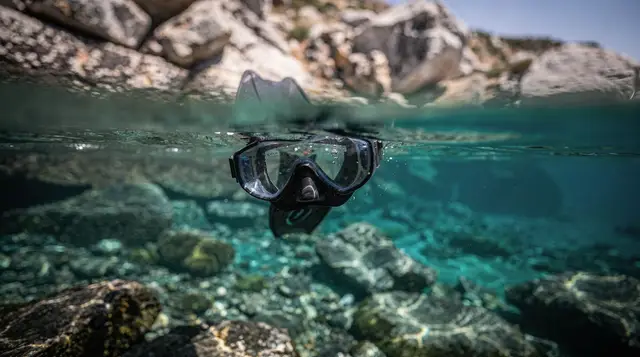
The water immediately around Isola Bella, particularly on the side facing away from the main beach crowd, has enough visibility for casual snorkelling with your own mask, and the rocky shoreline around the reserve gives more to look at than the flatter sand further along the coast at Giardini Naxos. It is not a dedicated dive destination in the way Ustica or the waters around the Egadi Islands are, but it rewards a short swim beyond the main lido area for anyone who has brought their own gear. See Snorkelling and diving in Sicily for how this stretch of coast compares with the island’s better-known underwater spots.
Family visits
Isola Bella works reasonably well for families in the cooler shoulder months, when the beach is less crowded and the crossing to the islet itself is an easy, short adventure for older children. In peak summer, the combination of a packed beach, a funivia queue, and limited shade makes it a more demanding outing with young children than a straightforward, flatter beach like Giardini Naxos or Mondello.
Families prioritising an easy day at the water are generally better served choosing Giardini Naxos as the main beach stop and treating Isola Bella as a shorter, scenic add-on rather than the centrepiece of the day. See The best family beaches in Sicily for how it compares with other family-friendly options around the island.
Combining Isola Bella with the rest of Taormina
Most visitors treat Isola Bella as an afternoon add-on to a stay built around Taormina’s old town rather than the reason for the trip itself. The town’s own ancient theatre is the headline sight, with views out over the same coastline that includes Isola Bella below, and a natural pairing for a morning in town followed by an afternoon at the beach.
Taormina has also gained a newer kind of attention in recent years as a filming location for television productions shot in and around its historic hotels and streets, and views of the coastline toward Isola Bella have featured prominently in that coverage, drawing a wave of visitors specifically hoping to recognise locations from the screen; see The White Lotus in Taormina for that angle on the town, alongside the area’s longer-standing association with Godfather film locations at nearby Savoca and Forza d’Agrò, themselves a realistic half-day trip from a Taormina base.
For a wider view of Sicily’s screen connections beyond this one town, see The Godfather tour: what is real and what is not.
For a broader base of things to do from Taormina beyond the beach, Day trips from Taormina covers the wider set of options, including Etna and the Alcantara Gorges, both realistic half-day excursions from the same base. Travellers building a longer stay around eastern Sicily should also look at Eastern Sicily in 5 days and Catania and Etna in 3 days, both of which fold a Taormina and Isola Bella stop into a wider route covering the volcano and Catania.
How Taormina compares to Cefalù as a beach-and-town base
Taormina and Cefalù are Sicily’s two best-known examples of a historic town paired directly with a beach, and travellers often weigh one against the other when planning a coastal base. Taormina’s advantage is drama — the clifftop setting, the ancient theatre, the funivia descent — but its beach is genuinely smaller and more crowded relative to demand than Cefalù’s.
Cefalù’s beach sits at sea level directly below its own old town, offering easier, flatter access without a cable car, at the cost of a less dramatic backdrop than Taormina’s cliffs and islet. Taormina or Cefalù covers this comparison in full if you are deciding between the two as a base for several days rather than visiting both as shorter stops.
When to go
Isola Bella’s swimming season runs roughly from late spring through early autumn, in line with the rest of Sicily’s east coast — see Sea temperature in Sicily, month by month for the water conditions across the calendar. Given how narrow and popular this particular bay is, timing matters more here than at almost any other beach in this guide: arriving with the first funivia of the day gives a real chance at both lido and free-sand space, while a midday arrival in July or August often means queuing for the cable car itself before even reaching the beach.
Shoulder season — late spring or the weeks after the main summer rush in September — gives a noticeably calmer version of the same bay, worth prioritising if your travel dates have any flexibility and Isola Bella specifically is a priority for your trip. August in particular compounds Taormina’s ordinary summer crowds with the island-wide Ferragosto travel spike; see Sicily in August for why that fortnight is worth avoiding here more than almost anywhere else covered in this guide, given how small and fixed this beach’s capacity actually is.
What to bring
A few practical additions make a real difference at this particular beach: water shoes for the mixed pebble-and-sand shoreline, a printed or saved note of the funivia’s current operating hours so a late return trip does not become a surprise, cash or a card for the cable car fare and any lido rental, and sun protection for the exposed crossing to the islet, where there is little shade once you are away from the tree cover on the mainland side of the beach.
The honest bottom line
Isola Bella earns its reputation as one of Sicily’s most photographed coastal scenes, and the combination of clifftop town, cable car descent, tombolo and nature reserve islet is genuinely unlike anywhere else on the island. The honest catch is capacity: this is a narrow bay serving one of Sicily’s most visited towns, and it shows in exactly the way you would expect — crowded lidi, a competitive free beach, and a funivia queue that can eat into your morning before you have even reached the sand.
Arriving early, treating Giardini Naxos as the practical fallback for an actual beach day, and building in enough time for both the town above and the reserve below are the honest ways to get the most out of a stop that rewards planning far more than its postcard image lets on.
None of that takes away from what makes the place worth seeing in the first place: few beaches anywhere in Sicily offer quite this combination of a clifftop historic town, a short cable-car descent, a genuine offshore islet you can walk to on foot, and a coastline that has drawn painters, writers and now television productions for longer than mass tourism has existed here. Go for the view and the novelty of the tombolo crossing, treat the swim itself as a bonus rather than the main event if the bay is packed, and you will leave with a fair sense of why this small stretch of coast has such an outsized reputation relative to its actual size.
Beach and coastal trips on GetYourGuide
Verified deep-linked GetYourGuide tours. Book through these links and we earn a small commission at no cost to you.
Photo: our own image of the location, not the operator’s product photo.