A working port town, not a resort
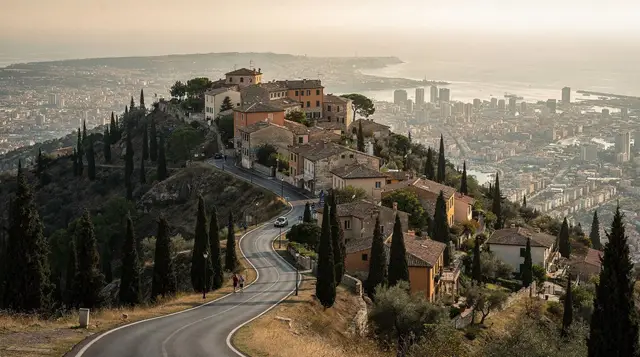
Sciacca sits on Sicily’s southwestern coast, roughly midway between Agrigento and the Egadi-facing far west of the island, built on a series of terraces rising from an active fishing harbor, and it reads immediately as a working town rather than a curated tourist stop — one of the largest fishing fleets on this coast still operates out of the port, and the smell of the catch and the noise of boats being unloaded are part of the daily rhythm rather than an occasional spectacle staged for visitors. This is worth setting expectations around: Sciacca does not offer the polished old-town experience of Noto or Ortigia, and its appeal lies more in genuine local life, thermal water and craft traditions than in Baroque grandeur.
The town’s name and its hot springs both trace back to antiquity — “Sciacca” likely derives from an Arabic word related to the thermal waters, and the springs themselves were known and used by Greek and Roman settlers before the Arab period that gave the town much of its name and layout. That continuity across more than two thousand years of recorded use is one of the more genuinely old things about Sciacca, even though comparatively little medieval or ancient fabric remains visible above ground compared to Sicily’s more famous archaeological sites.
The port and its fish
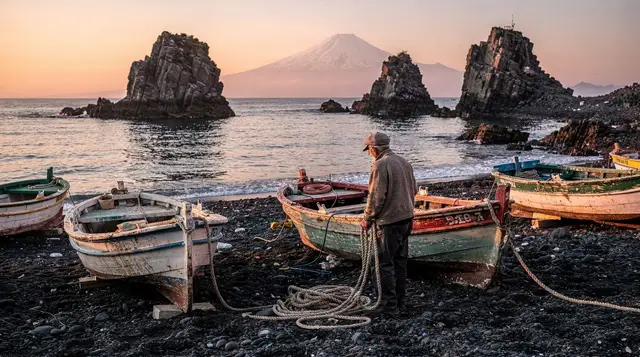
Sciacca’s fishing fleet is one of the largest still operating in Sicily, and the harbor is genuinely active rather than a picturesque backdrop — boats come and go through the working day, nets are mended on the quayside, and the catch is sold both to local restaurants and at a modest daily fish market near the port that runs at a fraction of the scale, and the tourist polish, of Catania’s Pescheria or Ortigia’s market.
This is a reasonable stop for anyone interested in seeing Sicilian fishing as a living industry rather than a heritage display, and several restaurants along the harbor front serve whatever came in that morning, generally at prices noticeably lower than equivalent seafood in more visited towns further along the coast. For the wider regional food context, see the Sicilian seafood guide.
The thermal baths and Monte Kronio
Sciacca’s sulphurous thermal springs, still active today, feed a modern spa and treatment complex, the Nuove Terme Sciacca, offering pools, mud treatments and respiratory therapies built around the mineral-rich water — a legitimate wellness destination in its own right rather than a purely historical curiosity, and one of relatively few such facilities on this side of the island.
Above the town, on the slopes of Monte Kronio, the Stufe di San Calogero are a set of natural steam caves, warmed by underground volcanic activity, that have been used since antiquity for something close to a natural sauna — Greek and Roman writers reference the caves, and continuous use through the following centuries makes this one of the oldest continuously used spa sites anywhere in the Mediterranean. Visiting the caves requires appropriate footwear and tolerance for genuinely hot, humid conditions; this is not a polished modern spa experience but a natural geological feature adapted for bathing, and worth knowing that distinction before arriving with resort-spa expectations.
Coral, ceramics, and a craft tradition worth seeking out
Sciacca has a long tradition of coral carving, historically tied to Mediterranean coral fishing that has since become far more restricted for conservation reasons, and the town’s coral museum documents this history alongside displays of historic worked pieces — jewelry, religious objects, and decorative carvings that were once a significant local export.
A guided tour of the coral museum covers this history in more depth than a casual walk-through would, and for visitors wanting a hands-on version, a coral workshop combined with the museum visit adds a practical craft element to the historical overview.
Separately, Sciacca also has its own distinct ceramics tradition, generally less internationally known than Caltagirone’s but genuine in its own right, characterized by a particular blue-and-white glaze style associated with the town. Several small workshops in the older quarters continue producing in this style, worth seeking out for anyone interested in Sicilian craft traditions more broadly — see the craft workshops guide and the separate Caltagirone destination page for the comparison with the island’s larger and more famous ceramics center.
Carnevale di Sciacca
Sciacca’s Carnival celebration is among the oldest and most elaborate in Sicily, with a history said to stretch back centuries, built around large papier-mâché floats depicting satirical and grotesque figures, paraded through the streets over several days in the run-up to Lent each year. It draws visitors well beyond the town’s normal numbers and reshapes the town’s usual quiet character entirely for its duration — worth checking whether travel dates overlap with the event, since it changes both the atmosphere and the accommodation availability substantially, in either direction depending on whether experiencing the carnival is the goal.
A history of shifting rulers, visible in the layout
Sciacca’s layout and surviving fortifications reflect a long sequence of rulers rather than a single dominant architectural period. Greek and Roman settlers first exploited the thermal springs; Arab rule from the 9th century onward gave the town much of its name and its terraced urban structure, built into the hillside rather than laid out on a grid; the Norman conquest that followed across the wider island brought new fortifications, later expanded under Aragonese and Spanish rule as the town’s strategic coastal position made it a repeated target and prize during centuries of Mediterranean conflict.
A notable and violent feud between two rival noble families, the Luna and the Perollo, dominated the town’s late medieval history and is still referenced locally as the “Caso di Sciacca” — a story of factional violence more associated with this specific town’s history than with Sicily’s broader political narrative, worth asking a local guide about for anyone curious about the human history behind the walls rather than just their construction dates.
The old town and the walls
Sciacca’s historic center retains sections of its medieval walls and several defensive gates, along with the ruined Castello dei Conti Luna, a fortress reflecting the town’s changing rulers across the Norman, Aragonese and Spanish periods of Sicilian history. The layout, built across a series of terraces overlooking the port, means walking the old town involves genuine elevation change, and the views back over the harbor from the upper terraces are a reasonable reward for the climb. Piazza Scandaliato, a terraced square overlooking the port, is the town’s main gathering point and a good spot for an evening drink with a view over the fishing boats below.
Beaches and horseback riding near Sciacca
The coast around Sciacca is less developed for beach tourism than the more famous stretches near San Vito Lo Capo or Cefalù, but it offers straightforward, quieter sand and rock coastline for anyone based in the town rather than specifically chasing a beach-resort experience. A horseback riding excursion along Sciacca’s beaches is a distinctive way to see this stretch of coast, and a genuinely different activity from the walking and boat-based options that dominate most of Sicily’s coastal destinations.
Caltabellotta and the surrounding countryside
Caltabellotta, a dramatic hilltop town roughly 30 minutes inland from Sciacca, is worth the detour for its setting alone — perched on a rocky outcrop with sweeping views over the surrounding countryside, and historically significant as the site of the 1302 Peace of Caltabellotta that ended the War of the Sicilian Vespers. A private tour to Caltabellotta with food tasting combines the hilltop views with a taste of the surrounding countryside’s produce, and is a reasonable half-day addition for anyone with a car and a free afternoon.
Further inland, the Sambuca di Sicilia area and Lake Arancio produce wine from the DOC zones of this part of the southwest, less internationally known than Etna or Marsala but a genuine local specialty worth a stop for wine-focused travelers — see the Sicilian wine explained guide for the wider context.
Eraclea Minoa, a short drive along the coast
A short drive east of Sciacca, toward Agrigento, the ancient Greek site of Eraclea Minoa sits on a low headland above a long, largely undeveloped beach — a smaller and far less visited site than the Valley of the Temples, but genuinely worthwhile for its well-preserved theatre, cut into the local sandstone and unusual for retaining most of its seating rows.
The setting, with the theatre facing out over the sea rather than inland, is arguably more atmospheric than more famous, better-attended Greek sites elsewhere on the island precisely because so few other visitors are there to share it. Combining Eraclea Minoa with a Sciacca visit makes for a full and varied day covering ancient Greek history, medieval fortification and a still-working modern fishing town within a fairly short driving loop.
Visiting with children
Sciacca’s terraced streets involve real elevation change, similar to several other hill towns in this region, making a stroller more of a hindrance than a help across much of the old town, though the harbor-front areas and Piazza Scandaliato are flatter and easier going. The thermal baths and steam caves are generally not suitable for young children given the heat and mineral concentration involved; the horseback riding option along the beach and a stop at Eraclea Minoa’s more open, sandy coastline tend to work better for a family day than the spa facilities. See the wider Sicily with kids guide for how a Sciacca stop fits into a broader family itinerary through the south coast.
Getting there and getting around
Sciacca has a train station with limited service on a line connecting toward Agrigento, though as with much of Sicily’s south and west coast, service is sparse and a car is the more practical option for most visitors. Sciacca sits roughly 40 minutes west of Agrigento by car via the SS115, making it a natural extension of a Valley of the Temples day or a stop on a longer loop along the south coast that also takes in Scala dei Turchi — see the separate Scala dei Turchi destination page and Agrigento destination page.
The day trips from Agrigento guide covers how Sciacca fits into a wider south-coast plan, and the driving in Sicily guide covers the practicalities of this stretch of coastal road.
An honest note on what Sciacca is not
Some travel content oversells Sciacca as a hidden-gem Baroque equivalent to Noto or Modica; it is not, and arriving with that expectation sets up a disappointing comparison. Sciacca’s fortifications and civic buildings are more modest and more worn than the showpiece Baroque towns of the Val di Noto, and its appeal is genuinely different in character: a working economy, a thermal and craft tradition, and a slower, less curated version of Sicilian coastal life.
Visitors specifically chasing photogenic Baroque architecture are better served spending the extra time in Noto or Modica instead; visitors interested in a real, functioning fishing town with genuine history underneath the surface will likely find Sciacca more rewarding than its relatively modest tourism profile suggests.
When to come
April through June and September through October give the most comfortable conditions for walking the old town’s terraced streets and any inland detour to Caltabellotta. Midsummer brings the warmest sea temperatures for the beaches nearby, though Sciacca’s interior hinterland, like much of Sicily’s south, runs hot and dry in July and August; the thermal baths and steam caves are, somewhat counterintuitively, a year-round draw regardless of season, since their appeal is not weather-dependent in the way beach or hiking activities are.
See the best time to visit Sicily guide for the wider seasonal picture, and plan specifically around Carnival season if that is a priority, since dates shift each year with the Christian liturgical calendar.
Frequently asked questions about visiting Sciacca
Is Sciacca worth visiting if you are not interested in the thermal baths?
Yes — the working fishing port, the coral and ceramics craft tradition, and the old town’s terraced streets and views over the harbor are all worth seeing independently of the spa facilities, and Carnival season adds a further distinct reason to visit if the timing aligns.
What are the Stufe di San Calogero?
Natural steam caves on Monte Kronio above the town, heated by underground volcanic activity and used since antiquity as a kind of natural sauna. They require appropriate footwear and tolerance for hot, humid conditions rather than offering a polished modern spa experience.
How does Sciacca’s ceramics tradition compare to Caltagirone’s?
Sciacca’s tradition is smaller and less internationally known, centered on a distinctive blue-and-white glaze style rather than Caltagirone’s broader, more varied majolica tradition. Both are genuine local crafts, worth comparing for anyone specifically interested in Sicilian ceramics.
Do you need a car to visit Sciacca?
Effectively yes for a comfortable visit, particularly if combining it with Caltabellotta, the Valley of the Temples or Scala dei Turchi. Train service exists but is limited, and public transport into the surrounding countryside is minimal.
When is Carnevale di Sciacca held?
It runs in the days leading up to Lent each year, following the Christian liturgical calendar, and dates shift annually. It is one of Sicily’s oldest and most elaborate carnival celebrations, built around large satirical papier-mâché floats.
Is Sciacca a good base for exploring the southwest coast?
It works reasonably well for a night or two, particularly for visitors wanting a genuine working town rather than a purely tourist-oriented base, and its position between Agrigento and the Egadi-facing western coast makes it a workable midpoint for a longer south-coast loop.
Is there a beach in Sciacca itself?
Yes, along the coast near the town, though it is less developed than Sicily’s more famous beach destinations. Quieter stretches and a horseback-riding option along the coast are available for visitors prioritizing a lower-key beach experience over resort infrastructure.
What is Eraclea Minoa, and is it worth the detour from Sciacca?
An ancient Greek site a short drive toward Agrigento, notable for a well-preserved theatre carved into sandstone above a long, undeveloped beach. It receives far fewer visitors than the Valley of the Temples and is a worthwhile add-on for anyone interested in ancient sites without the crowds of the more famous locations.
Is Sciacca dangerous or run-down?
No — it is a genuine working town with normal Sicilian urban character, not a manicured tourist center, but this does not translate to any particular safety concern. Ordinary city awareness around the port and busier streets applies, as in any Sicilian town of comparable size.
How does Sciacca compare to Agrigento as a base for the southwest coast?
Agrigento is the better base for the Valley of the Temples itself, but Sciacca offers a more genuine working-town atmosphere, cheaper dining around the port, and easier access to Caltabellotta and Eraclea Minoa. Many visitors treat Sciacca as a worthwhile stop rather than a primary base, combining it with an Agrigento-centered stay.