Solo travel in Sicily
Is Sicily good for solo travel?
Yes. Cities are walkable, English is manageable in tourist areas, and both car rental and public transport work well for solo itineraries. The realistic concerns — pickpocketing, car break-ins — are the same ones every traveller should watch for, not solo-specific risks.
A destination that works well alone, without extra effort
Sicily doesn’t require any special adaptation for solo travel the way some destinations do — cities are walkable, English is manageable in the main tourist circuits, and both self-driving and public transport work fine as a solo itinerary. What follows is the practical detail: safety specifics, where to base yourself, eating alone, getting around without a group, and how to add social contact to the trip if you want it without needing to organise a group tour from home.
Safety, for a solo traveller specifically
The realistic safety concerns in Sicily — pickpocketing in crowded markets and stations, theft from visibly loaded rental cars — apply to every traveller, not specifically to those travelling alone. There’s no meaningful solo-specific risk beyond the ordinary awareness any traveller should bring to an unfamiliar city: keeping a bag closed and worn across the body in a crowd, using normal judgement about which streets to walk down after dark, and not leaving valuables visible in a parked car. Is Sicily safe: an honest answer covers this in full, including the mafia question that comes up in almost every Sicily safety discussion and deserves a direct rather than evasive answer.
Choosing a base with some built-in activity
For solo travellers who want a sense of life around them in the evenings without needing to organise anything, Ortigia — the old-town island core of Syracuse — and Palermo’s historic centre both offer walkable evening life: restaurants, bars, a passeggiata culture of people out and about, all within comfortable walking distance of typical accommodation. Smaller hill towns like Modica or Scicli are quieter and better suited to a solo traveller specifically seeking solitude and a slower pace rather than ambient company. Ortigia, Palermo and where to stay in Sicily cover the fuller set of base options and trade-offs.
Eating alone: much less of an issue than anticipated
Solo dining anxiety is one of the more common worries first-time solo travellers bring to Sicily, and it’s largely unfounded in practice. Counter-style eating — an arancino or panelle stand, a granita and brioche at the bar, standing for an espresso — is entirely normal solo, everywhere, without a second thought.
Sit-down trattoria dining alone is completely unremarkable in cities and larger towns like Palermo, Catania, Taormina and Syracuse; it’s only in very small, quiet villages that solo dining might draw the occasional curious glance, and even there it’s rarely uncomfortable. Palermo street food: what to eat and where and granita and brioche: the Sicilian breakfast both cover genuinely solo-friendly ways to eat well.
Getting around solo: car versus public transport
A rental car gives a solo traveller real independence — no need to coordinate with anyone else’s preferences or pace — but it also adds the specific stresses of ZTL zones and city parking that fall entirely on one person to manage rather than being split across a group. Renting a car in Sicily and Sicily by car or by public transport cover this trade-off directly.
For solo travellers who’d rather not drive, a combination of regional trains, buses and organised day tours is a workable strategy that removes the parking and ZTL stress entirely, though it does narrow the realistic range of towns and sites reachable compared with a self-driven itinerary. Sicily without a car in 7 days shows what that looks like as a full itinerary.
Adding social contact, on your own terms
For solo travellers who enjoy independence most of the time but want occasional company, small-group day tours, food tours and cooking classes are a natural, low-pressure way to add social contact without changing the overall shape of a solo trip. These formats put a handful of travellers together for a few hours around a shared activity — cooking, tasting, a guided walk — which tends to produce easier conversation than a purely social setting. Staying in guesthouses or smaller B&Bs rather than larger anonymous hotels also tends to create more natural, low-key interaction with hosts and other guests than a big hotel does.
Evenings alone: what actually works
Evening hours are usually the part of solo travel that takes the most adjusting to. In Sicily, Palermo and Catania both have a genuine after-dark scene worth exploring on foot in central, well-lit areas, and smaller towns tend to wind down earlier, which suits a solo traveller happy with an early dinner and a quiet evening reading or walking rather than seeking out nightlife. Palermo after dark and Catania nightlife: from the Pescheria to the Riviera cover what each city’s evening scene is actually like.
Solo female travellers specifically
Solo female travellers generally report Sicily as a comfortable destination, broadly in line with the rest of southern Italy, with the caveat that unsolicited conversation or attention — a comment, an invitation for a coffee — comes up somewhat more often than in northern Europe. This is worth being prepared for without treating it as alarming; it rarely escalates beyond conversation, and a polite, direct decline is generally respected. Ordinary precautions around late-night solo walking in unfamiliar, poorly lit areas apply as they would anywhere.
What surprises solo travellers about Sicily specifically
A few things come up repeatedly from people who’ve done a solo Sicily trip. First, how much easier solo dining is than anticipated, given how central counter-style and casual eating is to Sicilian food culture generally. Second, how much a rental car changes the calculus of a solo trip — it opens up far more of the island but adds a genuine mental load around parking and ZTL zones that a group can share but a solo traveller carries alone. Third, how naturally conversations start in small, shared-activity settings like a cooking class or a boat trip, compared with how little unprompted socialising happens simply walking around a city.
Budgeting for a solo trip
Solo travel changes the cost calculus mainly through accommodation, since a double room rarely costs half of what two travellers would pay together, meaning a solo traveller’s per-night accommodation cost is proportionally higher than for a couple or group covering the same standard of room. Food, transport, site entries and most activities scale per-person regardless of group size, so those categories don’t carry the same solo penalty. Choosing a guesthouse or B&B over a larger hotel can help offset the accommodation gap, since these formats are often priced more moderately at a comparable standard. What a week in Sicily actually costs covers the fuller cost picture that applies regardless of travel style.
A sample solo-friendly route
For a first solo trip, a reasonable shape is: base in Ortigia (Syracuse) for 3-4 nights, using it as a walkable hub for the town itself plus day trips to Noto, Modica and the Vendicari nature reserve, all reachable without excessive driving; then move to Catania for 2-3 nights to cover Mount Etna and, optionally, Taormina as a day trip. This keeps driving manageable for someone managing logistics alone, keeps accommodation changes to a minimum, and combines a quieter historic base with a livelier one. Syracuse and the Val di Noto in 4 days and Catania and Etna in 3 days both map out fuller versions of each half.
Staying connected and building in downtime
A local SIM or an international data plan makes solo travel considerably smoother in practice — offline maps, translation apps and the ability to book a table or a taxi on the fly all lean on having reliable data. It’s equally worth building deliberate downtime into a solo itinerary — an afternoon with no fixed plan, a slow coffee with a book — since solo travel without any built-in rest can tip into a tiring, constantly-on-the-move experience faster than group travel does, simply because there’s no one else’s pace to naturally slow things down.
Solo travel and driving specifically
Renting a car solo means the full mental load of navigation, ZTL awareness and parking falls on one person rather than being shared, which is worth factoring into how much driving you plan into a single day. A solo driver benefits more than most from building slack into the schedule and from choosing an automatic transmission if manual driving isn’t second nature, since there’s no co-pilot to help navigate a stressful junction or an unfamiliar roundabout. Driving in Sicily: what nobody warns you about is worth reading in full before a solo self-drive trip specifically, given how much of the stress in Sicilian driving comes from unfamiliarity with ZTL zones and local driving norms rather than the driving itself.
Solo travel through the seasons
Shoulder season (April-June, September-October) tends to suit solo travellers particularly well: accommodation is easier to book at short notice, sites are less crowded, making it easier to strike up conversation with fellow visitors or staff, and the more relaxed pace matches well with the flexibility that solo travel affords. Peak summer solo travel is entirely workable too, but come prepared for busier sites and a harder time securing last-minute accommodation in the most popular towns, particularly around Ferragosto in mid-August.
What solo travellers say surprises them most
Beyond the specific practicalities above, returning solo travellers most often mention two things: how quickly a solo trip can start to feel comfortable rather than isolating, once the first day or two of adjustment passes, and how often small, unplanned interactions — a conversation with a shopkeeper, a shared table at a busy trattoria, a chat while waiting for a ferry — end up being some of the most memorable parts of the whole trip, in a way that’s harder to replicate when travelling as part of a group already absorbed in each other’s company.
Solo travel and accommodation choice
Choosing accommodation with some communal element — a shared breakfast room, a host who’s genuinely present and chatty, a small guesthouse over an anonymous large hotel — tends to make a real difference to how connected a solo trip feels day to day, independent of any deliberate effort to socialise. Agriturismo stays in particular, where a shared dinner table with other guests is often part of the experience, can be a surprisingly effective way for a solo traveller to have built-in company on specific evenings without needing to seek it out actively. Where to stay in Sicily covers the fuller range of accommodation styles this guide only touches on from the solo-travel angle.
Solo travel safety apps and check-ins
Beyond the general safety precautions covered elsewhere, some solo travellers find value in sharing a daily rough itinerary or check-in with someone at home, simply as a low-effort safety habit rather than a sign that Sicily itself demands special caution. Offline map apps with a “share my location” feature, or a simple daily text to a friend or family member, cost nothing and provide peace of mind without meaningfully changing how the trip actually feels day to day.
Solo travel and language
Travelling solo means there’s no travel companion to lean on for translation or navigation in a moment of confusion, which makes the practical Italian phrases covered in Italian and Sicilian: the words that help somewhat more valuable for a solo traveller than for someone travelling with others who might share the language load. A translation app, downloaded and tested before departure rather than relied on for the first time mid-trip, is worth the small amount of prep time for exactly this reason.
Solo travel and the islands
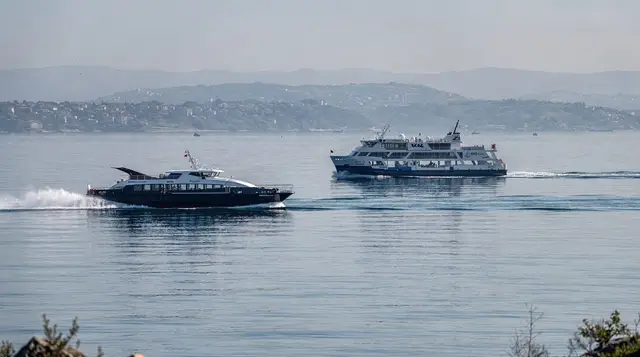
A solo trip to one of Sicily’s outlying islands — the Aeolians or Egadi in particular — is entirely workable and, for many solo travellers, a genuine highlight, given how naturally conversation starts on a smaller island where the same handful of restaurants, boats and beaches see repeat visitors over a few days. The main practical solo consideration is the same one covered for the mainland: build in a buffer around ferry schedules, since a solo traveller managing a missed connection alone carries a slightly higher logistical load than a group splitting the problem-solving. Island hopping around Sicily covers the ferry logistics in more depth.
Solo travel and packing
A solo traveller carries and manages their own luggage entirely independently, which is a small but real reason to pack lighter than you might for a group trip where bags can be shared or left with a companion while sightseeing. What to pack for Sicily covers the general packing picture; for solo travel specifically, prioritising a single manageable bag over multiple pieces of luggage makes navigating stations, ferries and uneven historic-centre streets considerably less stressful.
A realistic first solo day
To make this less abstract: a first solo day based in Ortigia might run as an unhurried morning coffee and pastry at a bar, a slow walk through the old town’s narrow streets and along the seafront promenade, lunch alone at a trattoria without any awkwardness, an afternoon at the Neapolis archaeological park across the bridge in mainland Syracuse, and an evening passeggiata before dinner — a full, satisfying day built entirely around your own pace, with no need to negotiate timing or interests with anyone else. This is the version of solo travel that tends to convert sceptics: not a lonelier version of a group trip, but a genuinely different, often more attentive way of experiencing a place.
Frequently asked questions about solo travel in Sicily
Is Sicily a good first solo trip destination?
It works well for travellers with at least some independent travel experience, given how car- dependent much of the island is; it’s a slightly more demanding solo destination than, say, a single well-connected European city, but well within reach for anyone comfortable navigating trains, buses or a rental car on their own.
Should I join a group tour instead of travelling fully independently?
That depends on preference rather than necessity — Sicily doesn’t require a group tour for safety or logistics reasons. A hybrid approach, independent for most of the trip with the occasional small-group day tour, is a common and effective middle ground.
Is it more expensive to travel solo in Sicily?
Accommodation is the main area where solo travel costs more per person, since a double room rarely costs half of what two people would pay together. Food, transport and site entries scale roughly per-person regardless of group size. What a week in Sicily actually costs covers the fuller cost picture.
Are hostels common in Sicily?
Hostels and budget guesthouses exist in the main cities — Palermo, Catania, Syracuse — more than in smaller towns, and are a reasonable way for solo travellers on a budget to both save money and meet other travellers.
Is renting a car alone in Sicily intimidating?
It has a learning curve — assertive local driving norms, ZTL zones, mountain roads — but nothing uniquely difficult for a solo driver versus a group. Driving in Sicily: what nobody warns you about covers what to actually expect.
What’s the best way to structure a first solo Sicily itinerary?
Start with one region rather than the whole island, base in a walkable town like Ortigia or central Palermo, and build in a couple of small-group day tours if you want social contact without restructuring the whole trip around it. Sicily for the first time covers the broader planning picture.
Trip-planning essentials on GetYourGuide
Verified deep-linked GetYourGuide tours. Book through these links and we earn a small commission at no cost to you.
Photo: our own image of the location, not the operator’s product photo.