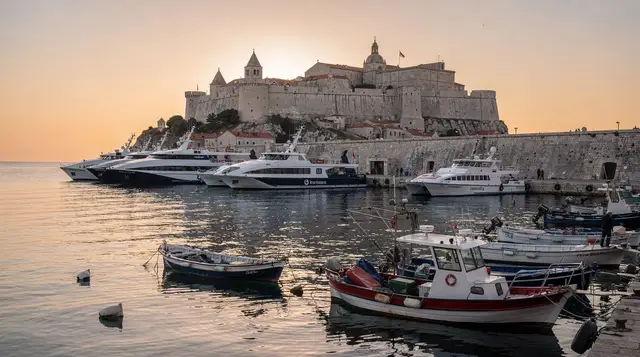
What to pack for Sicily
What should I pack for Sicily?
Comfortable closed shoes with grip for cobblestones, a lightweight layer that covers shoulders and knees for churches, strong sun protection, and a warmer layer for Etna or winter evenings. Formal wear is rarely needed outside a handful of upscale restaurants.
What Sicily’s terrain and climate actually demand
A good Sicily packing list isn’t about volume — it’s about matching a handful of specific, real conditions the island throws at visitors regardless of itinerary: worn stone underfoot in nearly every historic centre, strong sun for most of the year, church dress codes that catch first-time visitors off guard, and a temperature range on Etna that has nothing to do with the coastal forecast. This list works through each of those, plus what genuinely changes by season.
Footwear: the single most important decision
The uneven, often centuries-old paving in Sicily’s historic centres is the one packing detail that affects every single day of a trip, regardless of what else is planned. Ragusa Ibla’s staircases, Erice’s cobbled lanes within the walled hill town, and Ortigia’s worn stone streets are all more demanding on footwear than they look in photographs. Bring comfortable, closed, sturdy shoes with real grip — trainers or walking shoes rather than sandals or thin-soled fashion shoes, which struggle on smooth, worn stone and offer little support on stairs. Ragusa Ibla: the staircase town and Erice both give a sense of exactly what kind of walking to expect in each.
Church-appropriate clothing
Shoulders and knees covered is the standard, actively enforced expectation at Sicily’s major cathedrals and churches, including Monreale’s cathedral, Palermo Cathedral and Cefalù Cathedral, and it applies to both men and women. The easiest fix is a lightweight scarf, shawl or light long-sleeve layer that can go over a sleeveless top or shorts on the spot, rather than needing a fully separate outfit or having to skip a site because of what you’re wearing that day. Monreale cathedral and its cloister and the Cappella Palatina and the Norman Palace are both places where this comes up directly.
Sun protection
The sun in Sicily is stronger for longer stretches of the year than visitors from northern Europe or much of North America tend to expect, including in shoulder season. A proper hat, sunglasses and a high-SPF sunscreen belong in every version of this list, alongside a habit of reapplying rather than assuming morning sunscreen covers a full day outdoors — particularly relevant at exposed, largely unshaded archaeological sites like the Valley of the Temples and Selinunte.
A reusable water bottle and staying ahead of dehydration
Hydration matters more in Sicily’s summer heat than casual planning tends to account for, especially on days combining walking, sun exposure and driving. A reusable water bottle, refilled at cafés, fountains or accommodation rather than bought fresh every time, is both a practical and low-waste habit worth building into the trip from day one.
Layering for Etna and the mountains
Mount Etna’s upper slopes run considerably colder and windier than the coast, even at the height of summer — a proper windbreaker or light shell jacket is worth packing specifically for an Etna day, regardless of what the Catania or Taormina forecast says. This applies even to visitors travelling in July or August who otherwise pack nothing warmer than a T-shirt for the whole trip. Mount Etna: the complete visitor guide covers exactly what to expect and wear on the mountain in more detail than is useful to repeat here.
Adapter and electronics
Italy uses type C and F sockets at 230V, the standard continental European two-round-pin plug design. Visitors travelling from the UK, Ireland, the US, Canada or Australia will need a plug adapter, and anyone bringing electronics not rated for 230V will additionally need a voltage converter — check device ratings before assuming a simple adapter is sufficient.
Swimwear and beach basics
Sicily’s coastline and islands are a major part of most trips, and swimwear, a light beach towel (or a rented lounger, common at many lidi) and reef-safe sun protection are worth packing regardless of season, since even shoulder-season trips often include at least a partial beach day. The best beaches in Sicily, region by region and lidi or free beach: how Sicilian beaches work cover what to expect from beach infrastructure around the island.
What NOT to overpack
Sicily is a broadly casual destination. Formal wear is rarely needed outside a small number of upscale restaurants or evening events, where smart-casual — a collared shirt, a nice dress, closed shoes instead of sandals — is generally sufficient. Overpacking formal clothing that never leaves the suitcase is a common and avoidable mistake, and it takes up space better used for the layers that actually see use across a varied itinerary.
Summer-specific additions
For visits in July and August, prioritise heat management above almost everything else: light, breathable fabrics, a wide-brimmed hat, and a plan for the hottest hours of the day (roughly midday to mid-afternoon), when many locals themselves slow down or retreat indoors. Note that 15 August, Ferragosto, is when Sicilians head to the coast en masse, adding crowding to the heat — Sicily in August and Ferragosto covers what that specifically means for a summer trip.
Shoulder-season additions
April-June and September-October, the most comfortable months for walking around sites and towns, still benefit from a light rain layer and a jumper or light jacket for cooler evenings, particularly inland or at higher elevation. Sicily in spring and Sicily in autumn cover the specific weather patterns of each.
Winter additions
Sicily’s coastal winter is mild rather than warm — genuine rain is common, and evenings can be cool enough to want a proper jacket rather than a light layer. Inland and upland areas, including Etna and the Madonie mountains, see meaningfully colder temperatures and occasional snow, which changes the packing calculus considerably if a winter itinerary includes either. Sicily in winter covers this in more depth, and Sicily weather month by month gives the fuller seasonal picture across the whole year.
A short, practical checklist
Pulling the above together into a working list: closed, grippy walking shoes; a lightweight shoulder-and-knee cover for churches; hat, sunglasses and high-SPF sunscreen; a reusable water bottle; a windbreaker or light shell for Etna regardless of season; a European plug adapter (and voltage converter if needed); swimwear and light beach kit; a rain layer and a warmer layer for shoulder season or winter; and, deliberately, less formal clothing than instinct suggests.
Luggage size, for a car-based trip
Many Sicily itineraries involve a rental car, and rental cars in Sicily, as across much of Europe, skew smaller than what North American travellers may be used to — a full-size SUV is the exception rather than the norm, and boot space in a compact or mid-size car is genuinely limited. Packing in soft-sided duffels or smaller suitcases rather than large hard-shell cases makes fitting luggage for two or more people into a typical rental boot considerably easier, particularly if the trip also involves picking up wine, ceramics or other bulky souvenirs along the way.
Documents and paperwork worth having on hand
Alongside the obvious passport and any visa or ETIAS documentation relevant to your nationality, it’s worth carrying a printed or offline-saved copy of your accommodation bookings, rental car reservation and travel insurance details, since mobile signal isn’t universally reliable in more rural or mountainous parts of the island. An international driving permit is worth checking for relevance depending on your home country’s licence and Italy’s current requirements — confirm this directly with your rental company or your home country’s motoring authority before travel, since requirements vary by nationality and can change. Renting a car in Sicily covers what else to check in the rental agreement itself.
Tech essentials
A European plug adapter (covered above) is the main tech-specific item, alongside a portable battery pack for longer sightseeing days away from charging points, particularly useful on hiking days on Etna or in the Alcantara Gorges where a phone doubles as camera, map and emergency contact. Offline maps, downloaded in advance for the specific regions you’re visiting, are a sensible backup given patchy signal in some rural and mountain areas.
Medications and personal care
Bring any regular prescription medication in sufficient supply for the full trip plus a reasonable buffer, kept in original packaging, alongside a basic personal first-aid kit — plasters, pain relief, motion sickness tablets if driving mountain roads is a concern, and any allergy medication relevant to you. Health, pharmacies and insurance in Sicily covers what’s available locally if something runs short or gets forgotten, including how the farmacia di turno duty-pharmacy system works outside normal hours.
Packing for specific activities
Beyond the general list above, a few specific activities call for their own additions. A day on Mount Etna calls for closed, sturdy shoes with grip beyond what’s needed elsewhere on the island, since volcanic gravel and ash are loose and abrasive, plus the windbreaker already mentioned for the mountain’s persistent wind and cold. A boat trip to the islands or along the coast calls for a change of dry clothes packed separately, since sea spray and the occasional unexpected swim stop mean arriving back on land damp is common.
A cooking class or food tour calls for nothing special beyond an appetite and, occasionally, a note of any dietary restrictions communicated in advance — cooking classes in Sicily: what you actually learn covers what a typical session actually involves. Hiking routes beyond a casual walk, such as the Zingaro reserve or Cava Grande del Cassibile, call for proper hiking shoes rather than the general walking shoes suggested elsewhere in this guide.
Packing for a trip with children
Families travelling with children should add a few specifics beyond the general list: sun protection suitable for younger skin, snacks for longer drives given how spread out some sites and towns are, a basic child-specific first-aid kit, and entertainment for transit time, since drives between regions can run well over an hour. Sicily with kids and Sicily with toddlers both cover family-specific planning considerations in more depth than a packing list alone can capture.
What locals actually wear, for reference
Sicilians themselves dress in a way that balances the practical demands of heat and stone streets with a genuine sense of style — smart-casual is closer to the local norm than either overly formal or overly casual beachwear-style clothing worn away from the beach itself. Following this general sensibility, rather than dressing purely for comfort in gym wear or beach clothes once away from the coast, tends to help visitors blend in a little more and feel more comfortable in restaurants and towns generally.
Packing light versus packing thoroughly
There’s a genuine tension in Sicily packing advice between travelling light, which suits a multi-base road trip with frequent repacking, and packing thoroughly enough to cover the island’s range of conditions — hot coastal days, a cold windy Etna morning, a formal-ish church visit, a beach afternoon — all potentially within the same week. The practical resolution is to prioritise a small number of genuinely versatile items (a scarf that works for both sun and church cover-ups, shoes comfortable enough for both city walking and light hiking) over packing a separate outfit or item for every single scenario, which keeps luggage manageable without leaving real gaps in coverage.
A note on laundry
For trips of a week or longer, it’s worth checking whether accommodation offers laundry service or a washing machine, particularly for agriturismo stays or self-catering apartments, since this can meaningfully reduce how much needs to be packed in the first place. Many guesthouses and hotels can arrange laundry for a fee even without an in-room machine, worth asking about directly rather than overpacking to avoid the question.
Packing for a beach-and-island leg specifically
For itineraries including the Aeolian, Egadi or other islands, a slightly different packing emphasis applies: quick-dry clothing given the boat-and-beach-heavy days, a dry bag or waterproof pouch for phones and documents on any boat excursion, and closed water shoes for some rockier coves and volcanic beaches, particularly on Vulcano and Stromboli where black volcanic sand and rock can be sharp and hot underfoot. The Aeolian Islands: choosing between seven and Vulcano: the crater, the mud and the black beaches both give a sense of what a typical island day actually involves underfoot.
A last practical note on packing philosophy
The single most useful mindset for packing for Sicily is thinking in terms of conditions rather than days: pack for heat and sun (nearly every day), for church visits (likely at least once), for uneven stone streets (every day), and for one cold, windy exception if Etna is on the itinerary — rather than trying to plan a specific outfit for each individual day of the trip. This conditions-based approach both packs lighter and covers the island’s genuinely variable demands more reliably than a rigid, day-by-day packing plan.
A quick reference for last-minute packers
For anyone packing the night before with limited time to read the full guide above, the shortest possible version is: grippy closed shoes, a shoulder-and-knee cover-up, sunscreen and a hat, a windbreaker if Etna is on the itinerary, a European plug adapter, and less formal clothing than instinct suggests. Everything else in this guide expands on why each of those specific items matters enough to prioritise over a longer, more generic packing list.
Frequently asked questions about packing for Sicily
Do I need hiking boots for Sicily?
Not for most itineraries — comfortable walking shoes with grip cover the vast majority of towns and sites. Genuine hiking boots become worth packing specifically for activities like hiking in Sicily or a demanding trail such as the Alcantara Gorges or the Zingaro reserve.
What should I wear to visit the Valley of the Temples in summer?
Light, breathable clothing, a hat, sunscreen and closed shoes rather than sandals — the site is large, mostly unshaded, and involves genuine walking distance between temples on uneven ground.
Is a rain jacket necessary in summer?
Not usually — summer rainfall is infrequent across most of the island. A light rain layer becomes more useful in spring, autumn and winter.
Should I bring a scarf even if I’m not planning to visit many churches?
It’s a small, light item worth including regardless, since church visits often come up unplanned — passing a cathedral in a town you’re exploring on foot — and having a cover-up on hand avoids having to skip an interior on the spot.
Do I need special gear for the Aeolian or Egadi Islands?
Standard beach and walking kit covers most visits; travellers planning to hike Stromboli’s volcano or snorkel extensively should check the specific gear notes in Stromboli: climbing and watching the eruptions or snorkelling and diving in Sicily.
What’s genuinely optional versus essential on this list?
Footwear, sun protection and a plug adapter are essential regardless of trip style. Everything else — formal wear, specific hiking gear, cold-weather layers — depends on season and the specific activities planned, and is worth trimming rather than packed “just in case.”
Trip-planning essentials on GetYourGuide
Verified deep-linked GetYourGuide tours. Book through these links and we earn a small commission at no cost to you.
Photo: our own image of the location, not the operator’s product photo.