One name, two towns, and a staircase between them
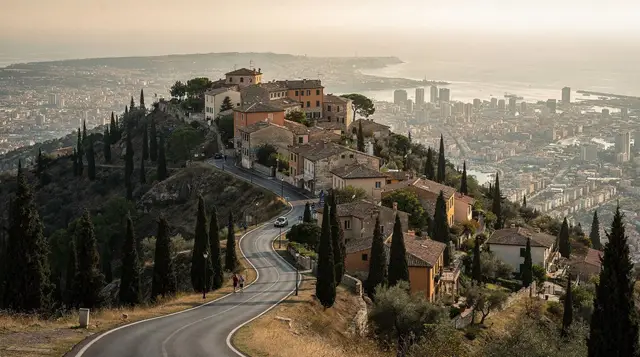
Ragusa is unusual among the Val di Noto’s Baroque towns because the 1693 earthquake did not simply flatten it and let it be rebuilt in place — it split the town in two. Survivors rebuilding the upper part of Ragusa, on the flatter ridge above the original site, laid out a new, more regular grid that became Ragusa Superiore, the modern administrative center. Others chose to rebuild on the original hill in the valley below, following the old medieval street pattern rather than starting fresh, and that became Ragusa Ibla — the older, denser, and by most measures more architecturally interesting half of the town.
The two are connected by several routes, the most memorable being the Salita Commendatore stairway past the church of Santa Maria delle Scale, a climb of a little over 300 steps that also functions as a viewpoint partway up, looking back down over Ibla’s rooftops and domes. Most visitors focus their time on Ibla, and this page does the same, though Superiore is worth a brief mention for anyone staying overnight or arriving by train, since the station and much of the everyday commercial city sit up there rather than down in the postcard version of town.
This split identity trips up first-time visitors more than any other town in the Val di Noto: a hotel address listed simply as “Ragusa” could mean a five-minute walk from the Duomo or a twenty-minute uphill climb from it, and it is worth confirming which half of town an accommodation booking actually sits in before arriving.
Ragusa Ibla: baroque built into a valley floor
Ibla’s layout follows the contours of the hill it sits on rather than a planned grid, which gives it a more organic, occasionally disorienting street pattern compared to Noto’s single deliberate Corso — alleys curve, dead-end, and open unexpectedly onto small squares, and getting at least briefly lost is close to a rite of passage here.
The town’s centerpiece is the Duomo di San Giorgio, designed by Rosario Gagliardi, the same architect behind several of Noto’s and Modica’s finest Baroque churches, and widely considered one of the masterpieces of Sicilian Baroque. Its position, raised above the surrounding square and approached by a broad staircase, and its distinctive convex facade with a neoclassical dome added later, make it visible from multiple points around the valley — a useful landmark for orientation when the surrounding streets become confusing.
A guided walk through Ibla is genuinely worthwhile here, more so than in some other Baroque towns, precisely because the street layout resists casual navigation and a good guide can connect the dots between the Duomo, the Giardino Ibleo gardens at the town’s eastern tip, and the various palazzi along the way whose facades otherwise blur together without context.
A Baroque walking tour of Ragusa Ibla with a guide typically covers this ground in a couple of hours, and a private tour of Ibla is the option for those wanting a more flexible pace or a family-sized group rather than joining a scheduled departure.
The Giardino Ibleo, a public garden at Ibla’s far end, is a quieter stop than the Duomo square, with several smaller churches on its grounds and views out over the valley beyond the town — a reasonable place to end a walking loop before heading back toward the center for a meal.
The staircase, and why Superiore still matters
The climb up to Ragusa Superiore via Santa Maria delle Scale is steep — 300-plus uneven stone steps, unshaded for stretches — and not something to attempt in the midday summer heat without water and a realistic sense of the effort involved. It is, however, worth doing at least once for the view back over Ibla’s domes and rooftops from partway up, best in the late afternoon light.
Superiore itself, laid out on its more regular post-earthquake grid, holds the town’s main train station, most everyday shops and services, and the Cattedrale di San Giovanni Battista — a competent but less celebrated Baroque church than Ibla’s San Giorgio. Visitors staying in Superiore for practical reasons (proximity to the station, generally cheaper accommodation) should budget the walk, a short taxi ride, or a local bus connection down into Ibla each day, since walking distances between the two are longer than the map suggests once the elevation change is factored in.
Smaller sights worth the detour
Beyond the Duomo and the Giardino Ibleo, Ibla holds a handful of quieter stops that reward a slower walk. The Circolo di Conversazione, a 19th-century private gentlemen’s club on the main corso, retains its original neoclassical interior and is occasionally open for short visits — a glimpse of the town’s post-Baroque social history rather than another church facade.
The ruins of the Chiesa di San Giorgio Vecchio, the original Gothic-Catalan church destroyed in 1693 and left as a partial ruin rather than fully rebuilt, sit a short walk from the current Duomo and are easy to miss without knowing to look for them, tucked into a residential block. For visitors with an interest in the mechanics of the earthquake rebuilding itself, this contrast — a preserved ruin standing meters from its Baroque replacement — is one of the more direct illustrations anywhere in the Val di Noto of what 1693 actually did to the built landscape.
Ibla’s Teatro Donnafugata and a scattering of small private palazzi occasionally open their courtyards for exhibitions or events; checking noticeboards near the Duomo square for anything running during a visit is worth the minute it takes, since these openings are irregular and not reliably listed online in advance.
Pottery, ceramics, and craft workshops
Ragusa has its own, smaller ceramics tradition distinct from Caltagirone’s larger, more famous one — several small workshops around Ibla produce hand-thrown and hand-painted pieces, and a number offer short hands-on sessions for visitors. A two-hour pottery-making workshop is a reasonable rainy-afternoon or midday-heat alternative to more walking, and gives a genuine sense of the craft rather than a purely observational visit.
For visitors specifically prioritizing ceramics, though, Caltagirone, a little over an hour northwest, remains the larger and more historically documented center — see the dedicated Caltagirone ceramics guide for the fuller picture.
Food: Ragusano cheese, cooking classes, and the local table
Ragusa’s countryside is cattle country by Sicilian standards, and Ragusano DOP, a semi-hard cow’s milk cheese with protected designation status, is the local specialty most worth seeking out — look for it on menus around Ibla rather than assuming it will simply appear on a standard cheese plate, since quality varies and the better producers supply specific restaurants rather than every kitchen in town.
A traditional Sicilian cooking class, often run at a farmhouse just outside town, is a good way to get a hands-on introduction to the region’s cuisine beyond the Baroque sightseeing, and typically covers a full meal built around local ingredients rather than a single dish.
For the broader food landscape across the Val di Noto, including Modica’s chocolate tradition a short drive away, see the where to eat in Sicily, city by city guide and Modica chocolate guide.
Ibla after dark
Once day-trip groups clear out in the late afternoon, Ibla’s atmosphere shifts noticeably — the Duomo square in particular is worth returning to after dinner, when the San Giorgio facade is lit and the crowds and coach parking that dominate the daytime version of the square have mostly gone.
Evening passeggiata culture is genuinely alive here, with locals and visitors mixing along the corso and around the Duomo steps rather than the town emptying out once shops close, which is not true of every Baroque town on this coast. Restaurants directly facing the Duomo charge accordingly for the view; as with Noto and Syracuse, walking a street or two back finds comparable food for less, without losing much of the atmosphere that makes an Ibla evening worth the trip in the first place.
Visiting with children
Ibla’s central streets are manageable with a stroller on the flatter stretches near the Duomo and the corso, though many of the smaller side alleys involve steps and uneven paving that make a stroller more hindrance than help. The climb to Santa Maria delle Scale is not realistic with young children in a stroller and should be treated as an adults-and-older-children activity, with a taxi or bus as the practical alternative for a family group. The Giardino Ibleo gardens, with more open space and less traffic, are a reasonable spot for children to run off energy between sightseeing stops.
Combining Ragusa with Modica and Scicli
Ragusa, Modica and Scicli sit close enough together — each roughly 15-25 minutes apart by car — that most visitors treat them as a single connected day, sometimes extending to Noto as well. The three towns share the 1693 earthquake rebuilding and the broad Val di Noto Baroque style, but differ noticeably in character: Ragusa’s split hill-and-valley layout, Modica’s steep, layered streets built almost vertically up a gorge, and Scicli’s flatter, quieter center.
The Modica and Scicli Baroque guide and the wider Val di Noto Baroque guide lay out how the three relate. Both Modica and Scicli have their own dedicated pages on this site.
Getting there and getting around
Ragusa has a train station, in Superiore, with connections to Syracuse and, less directly, Catania, though service on this line is limited and slower than the main Palermo-Catania corridor — see the Sicilian trains guide for realistic timings. Most visitors arrive by car, typically as part of a wider loop through the southeast; Comiso airport, a small regional airport roughly 25 minutes from Ragusa, occasionally has useful low-cost connections and is worth checking against Catania Fontanarossa’s fuller schedule.
Ibla’s historic core is largely pedestrianized and subject to ZTL restrictions on the streets that do allow vehicle access — park in one of the lots near the Giardino Ibleo or at the edge of the old town and walk in; see the ZTL and parking guide for the wider pattern across Sicilian towns.
When to come
April through June and September through October offer the most comfortable walking conditions, particularly relevant here given the climb between Ibla and Superiore. Midsummer regularly exceeds 35°C, and the stone staircase and Ibla’s shadeless squares hold heat aggressively into the evening — climbing to Santa Maria delle Scale is best attempted early morning or within an hour or two of sunset in July and August rather than at midday. See the best time to visit Sicily guide for the wider seasonal picture, and Sicily in August for what stays open around Ferragosto.
Day trips from Ragusa
Ragusa’s location makes it a workable base for exploring the wider southeast beyond Modica and Scicli. Marina di Ragusa, the town’s own seaside satellite roughly 25 minutes south by car, offers a straightforward sandy beach and a modern seafront promenade — a useful contrast to Ibla’s stone and history for anyone traveling with children who need a swimming break between sightseeing days.
Further afield, Piazza Armerina and the Villa Romana del Casale mosaics are reachable in about an hour and a half, and several tour operators run the two as a combined day from Ragusa; see the Piazza Armerina destination page for the fuller picture of what that detour involves. Comiso, with its own small but distinct Baroque center and airport, sits roughly 20 minutes away and makes an easy half-day add-on for anyone with a rental car and an afternoon to spare.
An honest note on the walk between the two towns
Travel content sometimes undersells how physically demanding the Ibla-Superiore connection is, presenting the staircase as a quaint photo opportunity rather than the genuine climb it is. Anyone with mobility concerns, traveling with young children who tire quickly, or simply visiting in high summer heat should treat the stairs as an optional add-on rather than an assumed part of the day — a taxi or local bus covers the same route in a few minutes for those who would rather save the energy for walking Ibla’s own streets, which is where nearly all of the sightseeing value actually sits.
Frequently asked questions about visiting Ragusa
Should you visit Ragusa Ibla or Ragusa Superiore?
Ibla, for nearly all visitors — it holds the Duomo di San Giorgio, the Giardino Ibleo and the great majority of what makes Ragusa worth visiting. Superiore is the practical, administrative half of town, useful mainly for its train station and everyday services rather than sightseeing.
How many steps are there between Ibla and Superiore?
A little over 300, via the Santa Maria delle Scale stairway, with a meaningful elevation change and minimal shade for much of the climb. Budget 15-20 minutes at an unhurried pace, more in hot weather.
Is Ragusa a day trip or worth an overnight stay?
A day trip covers Ibla’s main sights, but an overnight allows a slower evening in Ibla once day-trip groups have left, and makes the Ibla-Superiore climb more comfortable to schedule around the cooler parts of the day.
How does Ragusa compare to Modica and Noto?
All three share the same 1693 earthquake rebuilding and Baroque style, but Ragusa’s split hill-and-valley layout is more physically dramatic, Modica’s streets climb almost vertically up a gorge, and Noto’s single planned Corso is the most architecturally unified of the three. Seeing more than one clarifies the differences.
Do you need a car to visit Ragusa?
Not for Ibla itself, which is walkable and largely pedestrianized, but a car is far more practical for combining Ragusa with Modica, Scicli and the surrounding countryside in a single day, since bus connections between the towns are limited.
Is Ragusa connected to the Montalbano television series?
Loosely — some exterior scenes and establishing shots from the Inspector Montalbano series were filmed around the Ragusa area, though the main filming locations associated with the show are concentrated in nearby Scicli (the police station) and Punta Secca. See the Montalbano filming locations guide for the specifics.
What is Ragusano cheese, and where should you try it?
A semi-hard, protected-designation cow’s milk cheese made in the Ragusa area, distinct from more widely exported Sicilian cheeses. It is worth seeking out specifically on menus in Ibla rather than assuming any restaurant serves the genuine product — a knowledgeable server or a dedicated cooking class is a more reliable route to the real thing than a random cheese plate.
Is there a beach near Ragusa?
Yes — Marina di Ragusa, about 25 minutes south by car, has a straightforward sandy beach with the usual lidi (paid beach clubs) alongside free stretches of sand, and a modern seafront promenade with restaurants. It is a reasonable half-day addition for anyone wanting to combine Ibla’s Baroque streets with time in the water.