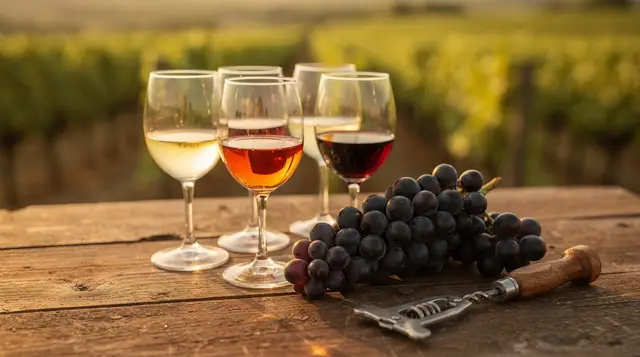
Marsala wine — the cantine and the tastings
What actually is Marsala wine?
Marsala is a fortified wine made only around the city of Marsala in western Sicily, classified by color (oro, ambra or rubino), sweetness (secco, semisecco or dolce) and ageing category (fine, superiore, superiore riserva, vergine and others). It ranges from a dry aperitif style to a rich dessert wine, and is a far more serious category than the cheap cooking-wine reputation it carries in some export markets.
A wine that survives mostly on its reputation for cooking
Ask most travelers outside Italy what Marsala wine is for, and the answer is usually “cooking chicken marsala” — a fair reflection of what cheap, export-grade Marsala became over the 20th century, but a genuinely misleading one when it comes to what is actually produced in and around the city itself. Marsala is a fortified wine, meaning grape spirit is added during or after fermentation to raise the alcohol level and stabilize it, in the same broad family as port, sherry and Madeira.
The better bottlings from the historic cantine in Marsala are made to be drunk, not simmered into a sauce, and understanding the classification system is the fastest way to tell the two apart before buying anything. For the town itself, distinct from its wine, see the Marsala destination page.
Colour: oro, ambra, rubino
Marsala is classified first by color. Oro (gold) and ambra (amber) are both made from white grapes — grillo, catarratto, damaschino and ansonica are the permitted varieties — with the difference coming largely from whether cooked or concentrated grape must was used in the amber style to deepen the color and add caramelized notes. Rubino (ruby) is made from red grapes, mainly nero d’avola and perricone, and is considerably less common than the white-grape styles; a tasting flight built purely around rubino examples is unusual outside the more specialist cantine. None of the three colors indicates sweetness on its own — that is a separate axis of the classification, and one that trips up more visitors than the color question does.
Sweetness: secco, semisecco, dolce
The second axis is sweetness. Secco (dry) Marsala is closer in role to a dry sherry — served chilled as an aperitif, not as a dessert pairing — and is arguably the style least familiar to visitors who only know the name from a kitchen bottle. Semisecco sits in the middle. Dolce (sweet) is the rich, often dark, dessert-style Marsala that built the export reputation, served with cheese, nuts or on its own after a meal. A serious tasting at any of the historic cantine will usually walk through more than one sweetness level specifically to make this distinction clear, since it is the single most useful thing for a visitor to leave understanding.
Ageing categories: fine, superiore, vergine
The third axis, and the one that actually separates a serious Marsala from a cheap one, is the ageing category. Fine is aged at least a year and represents the entry level of the DOC. Superiore requires at least two years, and superiore riserva at least four.
Vergine (sometimes labelled vergine riserva) sits apart from the others: it is made without any addition of cooked or concentrated must, aged a minimum of five years (ten for riserva) in wood, and is widely considered the most serious and age-worthy expression of the category — closer in seriousness to a fine oloroso sherry than to anything resembling a supermarket cooking wine. A producer pouring a vergine alongside an entry-level fine in the same tasting makes the gap in ambition immediately obvious, and it is worth asking specifically for that comparison if a cantina offers a flight rather than a single pour.
The historic cantine: Florio, Pellegrino, Donnafugata, De Bartoli
Florio is the name most associated with Marsala internationally, founded in the 19th century and still operating from its historic baglio (a fortified estate building typical of the area) right on the Marsala waterfront, with tours that take in the ageing cellars and a structured tasting at the end. Pellegrino, another long-established house based in the city, runs a similar format and is often mentioned alongside Florio as the two most visitor-ready historic producers.
Both can be visited through a winery visit with wine tasting or a broader historic winery tour that covers the cellar architecture as well as the wine itself.
Donnafugata, based a short distance outside the city, is a larger and more internationally distributed producer working across a wider range of Sicilian wine styles, of which Marsala is one part rather than the entire identity. De Bartoli, smaller and more specialist, is particularly respected among wine professionals for its vergine-style Marsala and is often the name cited when someone wants to make the case that Marsala deserves to be taken seriously as a category, not dismissed as a cooking ingredient.
What a tasting actually covers
A typical cellar visit in Marsala walks through the baglio architecture — thick stone walls and a shaded courtyard designed for the coastal heat — before descending into barrel-aged cellars where the wine sits for years in large wooden casks, often chestnut or oak. The tasting itself usually presents three to four styles across the color, sweetness and ageing axes described above, sometimes finishing with a genuinely aged vergine or riserva as the high point.
A tasting built around four native white wines is a useful format for visitors who want the breadth of styles in a single sitting, while a night tour of a historical wine cellar paired with Sicilian food works well for anyone treating the visit as an evening out rather than a daytime detour. None of these promise a specific vergine bottling from a specific vintage — that level of detail generally requires contacting a producer directly — but they reliably deliver a genuine cellar tour rather than a tasting room detached from the ageing process.
The Marsala DOC zone and what grows there
The Marsala DOC production zone covers the area immediately around the city and extends into the surrounding countryside toward Trapani, a flat, hot, coastal landscape quite different from Etna’s volcanic slopes or the hillier interior. The permitted white grapes — grillo, catarratto, damaschino and ansonica — are all suited to this warm, dry, wind-exposed terrain, much of it close enough to the coast that the salt air and constant breeze off the Stagnone lagoon are often cited by producers as part of what shapes the base wine’s character before fortification and ageing even begin.
Unlike Etna, where altitude and contrada-level variation are the central story, Marsala’s terroir story is more about this consistent, sun-drenched coastal plain producing a reliable base wine that fortification and extended barrel ageing then transform into something considerably more complex than the raw grape would suggest on its own.
Marsala all’uovo and other culinary uses worth knowing
Beyond the wine sold to drink, a related product called marsala all’uovo — Marsala blended with egg yolk and sugar into a custard-like drink similar to eggnog or a liquid zabaglione — is a specifically Sicilian tradition worth knowing about separately from the wine itself, sometimes served as a restorative drink or a simple dessert course. This is distinct from the cooking-wine Marsala that gave the category its poor export reputation, and distinct again from the drinking-quality Marsala covered throughout this guide — it is its own small culinary category built specifically around the wine’s ability to pair with egg and sugar.
Chicken or veal marsala, the dish most associated with the name internationally, uses Marsala as a sauce base reduced with stock and butter, and a version made with a genuinely good drinking-quality Marsala rather than a bottom-shelf cooking wine is a noticeably different, better dish — a detail worth knowing for anyone ordering it at a restaurant in Marsala itself rather than assuming the export version is representative.
How an English merchant made Marsala famous abroad
Marsala’s international fame owes a great deal to a specific historical accident: in the late 18th century, an English trader named John Woodhouse, sheltering in Marsala’s port, encountered the local fortified wine and recognized its resemblance to port and sherry, both already commercially successful in Britain. He began exporting it in bulk, fortifying it further to survive the sea voyage, and Marsala quickly became fashionable in England, reportedly including among the Royal Navy.
This is why Marsala, alone among Sicilian wines, built an early international reputation and export infrastructure that Etna and the island’s other regions did not develop until much later — and it is also part of why the export-driven, mass-produced version of Marsala that eventually damaged the category’s reputation took hold as early as it did, well before the more recent quality-focused revival led by producers like De Bartoli.
Marsala as a food pairing, not just an aperitif or dessert wine
Beyond drinking it on its own, Marsala has a real culinary role that goes past the well-known chicken marsala association. Secco styles pair reasonably with aged cheeses and cured meats as an aperitif alternative to the more commonly offered prosecco or a simple white wine, while dolce styles pair with the same rich desserts — cassata, cannoli, almond-based sweets — that define the rest of Sicilian pastry, covered in the cannoli and Sicilian pastry guide.
Some of the historic cantine build this pairing directly into their tasting format, serving a specific local sweet alongside the dolce pour specifically to demonstrate the combination rather than leaving guests to work it out from a printed tasting note.
Combining Marsala with Trapani and Erice
Marsala sits close enough to Trapani and the hilltop town of Erice that a wine-focused day in the city can extend naturally into a broader west-coast loop without excessive driving. Trapani’s own historic centre and its salt-pan landscape, covered on the Trapani destination page, share much of the same salt-and-wine identity as Marsala itself, and Erice, reached by cable car or a winding mountain road above Trapani and covered on the Erice destination page, offers a completely different, cooler hilltop perspective on the same coastline within a short drive.
Segesta’s ancient temple, a short distance further, is another common addition for visitors treating this corner of the island as a single, varied day rather than a single-purpose wine stop.
Marsala, the salt pans, and the rest of a west-coast day
Marsala the town sits at the edge of the Stagnone lagoon, whose pink-tinged salt pans and windmills are one of western Sicily’s most photographed landscapes, and pairing a winery visit with a walk through the salt flats is a natural combination for a single day based here — full detail on that side of the visit is outside the scope of this wine guide but covered on the Marsala destination page.
Trapani and Erice, both a short drive north, round out a longer west-coast itinerary; see the Trapani destination page and Erice destination page for those. Anyone weighing Marsala’s wine scene against the Etna DOC region on the opposite side of the island should read the Etna DOC wine guide, and a wider comparison of guided formats for both regions is in Sicilian wine tours compared.
How Marsala fits into Sicilian wine as a whole
Marsala is unusual within Sicilian wine specifically because it is fortified — nearly everything else made on the island, including the Etna reds and whites and the Nero d’Avola and Grillo produced across the west and southeast, is a standard table wine with no added spirit. That makes Marsala a poor stand-in for “Sicilian wine” in general despite being the name most familiar to visitors before they arrive.
For the fuller map of grapes and regions, including where Marsala sits relative to Nero d’Avola, Grillo, Cerasuolo di Vittoria and the island’s Moscato and Malvasia dessert wines, see Sicilian wine explained by grape and region. Travelers building a dedicated wine trip rather than a single cellar stop should look at the Sicilian food and wine week itinerary, which sequences Marsala alongside Etna and the island’s other wine regions in a single route.
Marsala versus the rest of Italy’s fortified wine tradition
Marsala is sometimes described loosely as “Sicily’s sherry,” and while the comparison is reasonable as a shorthand for unfamiliar visitors, it is worth understanding where the styles actually diverge. Sherry, made in southern Spain, uses a solera ageing system that blends multiple vintages together continuously over years, while traditional Marsala production, particularly at the vergine level, is closer to a single-vintage or limited-blend approach aged in static barrels rather than a continuously refreshed solera stack.
Port, the other frequent comparison, is fortified earlier in fermentation to retain more residual sugar, producing a generally sweeter result than dry Marsala styles even before the secco-to-dolce classification is considered. None of these comparisons is wrong exactly, but treating Marsala as simply “Italian sherry” undersells a production method with its own distinct history and technical character, most clearly expressed in the vergine category discussed above.
Buying a bottle to take home
Both Florio and Pellegrino sell directly from their cellar shops, and a vergine or superiore riserva bottling is a meaningfully better souvenir than the sweet dolce style most visitors default to, if the goal is bringing home something that reflects what the region can actually do. Bottles are heavy and fragile for check-in luggage; wrapping in clothing inside a hard-sided bag or shipping through a producer’s own logistics, where offered, avoids the common mistake of arriving home with broken glass in a suitcase.
A quick guide to ordering Marsala confidently
For a visitor who wants a simple rule of thumb rather than memorizing the full classification system before a trip, this shorter version covers the essentials: ask for secco if the goal is a dry aperitif before a meal, ask for dolce if the goal is a dessert pairing, and ask specifically for vergine or superiore riserva if the goal is the most serious, age-worthy expression of the category regardless of sweetness.
Color (oro, ambra, rubino) matters more to appearance and grape origin than to how the wine should be used at the table, so it is a reasonable detail to ask about out of curiosity rather than a decision-driving factor the way sweetness and ageing category are. A server or cantina host presented with these three simple questions — dry or sweet, and how seriously aged — can usually guide a visitor to an appropriate bottle even without further explanation of the full system covered above.
Frequently asked questions about Marsala wine
Is Marsala only used for cooking?
Outside Sicily, that is often the only context it appears in, and cheap export-grade Marsala earned the category its poor reputation abroad. The better producers in Marsala itself make wine intended purely for drinking, in both dry aperitif and sweet dessert styles.
What do oro, ambra and rubino mean?
They describe the wine’s color and grape base. Oro and ambra come from white grapes, with ambra typically deepened using cooked must; rubino comes from red grapes and is considerably less common.
What is the difference between secco, semisecco and dolce?
These describe sweetness, from dry (secco), through medium (semisecco), to sweet (dolce). Secco works as a dry aperitif; dolce is the rich, dessert-style wine most associated with the name.
What does vergine mean on a Marsala label?
Vergine is the most respected ageing category, made without cooked or concentrated must, aged a minimum of five years in wood, and considered the most serious expression of Marsala.
Which historic cantine can visitors tour in Marsala?
Florio and Pellegrino both run visitor-facing cellars in the city with tours and tastings. Donnafugata and De Bartoli are also major names in the wider zone, with De Bartoli particularly respected for vergine-style Marsala.
Can Marsala tastings be combined with the salt pans?
Yes. The Stagnone lagoon and its salt pans sit just outside the city, and several tours combine a winery visit with a walk through the salt flats, sometimes ending at sunset.
Food and wine tours on GetYourGuide
Verified deep-linked GetYourGuide tours. Book through these links and we earn a small commission at no cost to you.
Photo: our own image of the location, not the operator’s product photo.