Why Trapani is more than a ferry terminal
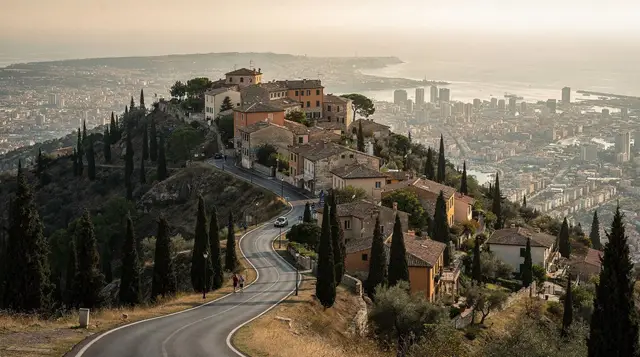
Most visitors meet Trapani for ten minutes: drop the rental car, buy a hydrofoil ticket, and forget the town exists until the return trip. That is a mistake. The old city sits on a narrow spit of land between two seas, with a street plan tight enough to walk end to end in twenty minutes, and it happens to be positioned under the best vantage point in western Sicily — Erice, 750 metres straight up, reachable by cable car in under ten minutes. Add the salt pans immediately south of town, the port for the Egadi Islands, and a cannolo tradition that locals will argue is better than Palermo’s, and Trapani earns a night rather than a layover.
The historic centre runs along Via Giudecca, Via Garibaldi and the seafront Via Torrearsa, with the Torre di Ligny — a 17th-century watchtower — marking the tip of the peninsula where the two coastlines meet. It is flat, walkable, and small enough that a first pass takes an afternoon. The point of staying longer is what surrounds it: the salt pans to the south, the ferries out to sea, and the funivia up to Erice, none of which fit into a rushed itinerary.
Getting to Trapani and getting around
Trapani has its own airport, Vincenzo Florio Airport at Birgi, about 15 km south of the city — closer than Palermo’s Punta Raisi, which is roughly 100 km away and the airport most visitors actually fly into for a Sicily trip. If Trapani-Birgi has a route from your origin, it saves a long drive; if not, budget an hour and a half from Palermo airport on the A29 motorway.
Inside the old town, drive nowhere. Streets are narrow, one-way, and several fall inside a ZTL (zona a traffico limitato) monitored by camera — an unannounced turn into the wrong street produces a fine by post, months later, with no warning issued on the spot. Park at the edge of the old centre (there are paid lots near the port and along Via Ammiraglio Staiti) and walk in. For the wider guide to Sicily’s traffic-limited zones, see ZTL zones and parking in Sicilian cities; for the broader logistics of a west-Sicily trip, renting a car in Sicily and driving in Sicily cover what a first-time renter actually needs to know.
The funivia (cable car) to Erice runs from Via Capua, a short walk or bus ride from the old town, and is the single best-value experience in the area: a few minutes to climb 750 metres, arriving in a medieval village that can otherwise only be reached by a switchback road. It closes in high wind, which happens more often than operators like to admit, so build in a backup half-day if Erice is the priority.
The salt pans: Trapani’s defining landscape
South of the city, the coast road toward Marsala runs through the Saline di Trapani e Paceco, a stretch of shallow salt pans that has produced sea salt since Phoenician times using the same basic method: seawater channelled into successive pools, evaporated by sun and wind, raked by hand, and stacked under terracotta tiles to dry through the winter. The windmills that once pumped water between pools are mostly retired now, kept as landmarks rather than working machinery, but a handful still turn.
The pans are a nature reserve as much as an industrial site, and birdwatchers come for flamingos, herons and avocets, especially in spring and autumn migration windows — sightings are not guaranteed and depend on water levels and the season, so treat “flamingos” as a possibility, not a promise. Walking the paths at golden hour, when the shallow water turns pink and orange and the light flattens the pools into mirrors, is the single most photographed experience in western Sicily, and it costs nothing beyond the drive or a short taxi from town.
A guided walk through the working salt pans with a birdwatching stop gets you a local explanation of how the harvest actually works, which is easy to miss walking the paths alone — a guide points out which pools are actively being worked and why the windmills stopped being economical.
Trapani’s old town on foot
The historic centre rewards slow walking more than a checklist of sights. Via Giudecca preserves the old Jewish quarter’s tight, arched streets, largely untouched since a 15th-century expulsion left the buildings occupied but the layout frozen. The Cathedral of San Lorenzo and the Purgatory Church — home to the twenty life-size wooden groups carried through the streets during the Good Friday I Misteri procession, one of Sicily’s oldest continuous religious traditions — sit within a few minutes of each other.
The Torre di Ligny at the western tip now houses a small prehistory museum, but its real value is the view: open sea on one side, the salt pans and the profile of Erice on the other. In the other direction, Via Torrearsa and the fish market area are where the city still functions as a working port rather than a backdrop, with boats unloading and stalls selling the tuna and swordfish that define west-Sicilian cooking. For the recipes and where those ingredients end up, Sicilian seafood: tuna, swordfish and sea urchin is the fuller reference.
A guided walking tour of Trapani’s historic centre with a cannolo stop is a reasonable way to cover the old town’s layout in two hours with someone who can point out which buildings are worth a second look, rather than working it out from a map on a hot afternoon.
What Trapani does for food
Trapani’s kitchen sits at the crossroads of Sicilian and North African cooking more literally than anywhere else on the island: cous cous alla trapanese, a fish-based couscous, is the town’s signature dish and the direct ancestor of the version served further south in Mazara del Vallo and at the September couscous festival in San Vito Lo Capo. Busiate — a hand-rolled corkscrew pasta — served with pesto trapanese (almonds, tomato, garlic, basil) is the other dish worth seeking out specifically, distinct from the Genoese pesto most visitors know.
Wine and olive oil from the countryside around Trapani and Marsala are worth tasting on their own terms, not only as an accompaniment to a winery tour further along the coast. A wine and tuna-products tasting pairs the two local staples in one sitting, which is a fair shortcut if time is tight. For the wider picture of what to drink across the region, Marsala wine: the cantine and the tastings and Sicilian wine explained by grape and region go into more depth than a single tasting can.
Trapani as a base for the rest of west Sicily
Trapani’s real value for most itineraries is logistical: it sits within 30–45 minutes of Erice, Segesta and Marsala, and it is the main departure port for the Egadi Islands, reachable by hydrofoil in as little as 20 minutes to Favignana. Basing here for two or three nights and doing day trips from a fixed hotel is often more efficient than moving every night, especially with a rental car and the ZTL headaches that come with driving into different old towns daily.
For day-trip planning specifically, Day trips from Trapani lays out realistic pairings by driving time. If the islands are the priority, The Egadi Islands: Favignana, Levanzo, Marettimo and Island hopping around Sicily cover ferry frequency and how to structure more than a single-day visit — and remember that hydrofoils to the islands are cancellable by sea conditions, a real risk in shoulder season, not a formality.
The I Misteri procession and Trapani’s religious calendar
Trapani’s most significant annual event is I Misteri, a Good Friday procession that has run in some form for centuries and is considered one of the longest continuously observed religious processions anywhere in Italy. Twenty separate wooden and canvas sculptural groups, each depicting a scene from the Passion and each maintained and carried by a specific trade guild or confraternity, move through the old town over roughly 24 hours, accompanied by mournful brass-band marches written specifically for the occasion.
The pace is deliberately slow and swaying, a walking rhythm (“annacata”) passed down within each carrying group rather than written down formally, and it gives the whole event a hypnotic, endurance-test quality quite unlike a typical festival procession.
Visiting during Easter week changes Trapani considerably — hotels fill up well in advance, the old town’s narrow streets become genuinely crowded along the procession route, and normal restaurant and shop hours can shift. It is worth deliberately planning around if the timing lines up with a trip, and worth avoiding if you simply want the quieter version of the town described elsewhere on this page. The statues themselves are kept in the Purgatory Church outside of Easter week, and can be viewed there, without the crowds, at other times of year.
Where to stay: Trapani, Erice or Marsala as a base
West Sicily’s compact geography means the choice of base matters less for reachability than for character, and each of the three main towns offers a genuinely different few days. Staying in Trapani keeps you closest to the Egadi ferry terminal and the widest choice of restaurants and everyday services, at the cost of the coolest evenings and hilltop views belonging to Erice rather than the coast.
Basing in Erice instead trades that convenience for the cable-car commute down to sea level every time a ferry, a beach, or a wider selection of dining is wanted — workable for a night, harder to sustain for several. Marsala, further south, puts wineries and the Stagnone lagoon on the doorstep but adds thirty to forty minutes to reach the Egadi ferries or Erice’s funivia station.
For most itineraries built around west Sicily as a whole, Trapani’s central position and transport links make it the more practical single base, with Erice and Marsala treated as day trips rather than overnight stops — though a one-night stay in Erice specifically, to see the hilltop village emptied of day-trippers after the last funivia car goes down, is one of the more memorable variations on the standard pattern.
The Egadi Islands ferry: a practical primer
Trapani’s hydrofoil terminal, a short walk from the old town, runs frequent services to Favignana, Levanzo and Marettimo — the three main Egadi Islands — with Favignana typically the shortest and most frequent crossing and Marettimo the longest, since it sits furthest from the mainland. Multiple operators run overlapping schedules in high season, which in practice means more flexibility than a single timetable would suggest, but it also means checking which company’s ticket you are holding matters if a sailing is delayed or cancelled, since tickets are not always interchangeable between operators.
As with every sea crossing on this coast, sailings are subject to cancellation in poor weather, and the Egadi crossing’s relatively short distance does not make it immune — a strong maestrale wind from the northwest can suspend services for a day or more in shoulder season. Visitors on a tight schedule who have booked accommodation on one of the islands should build in at least half a day of slack before a return flight, rather than scheduling the last possible crossing. For the fuller island-by-island breakdown, The Egadi Islands: Favignana, Levanzo, Marettimo and Ferries and hydrofoils around Sicily cover frequency, luggage rules and how the different operators compare.
Where the tourist traps are
The port area immediately around the hydrofoil terminal has the highest concentration of overpriced, low-quality restaurants aimed at people with twenty minutes before a ferry — menus with photos, multiple languages, and a “tourist menu” at a fixed price are the signal to keep walking. The genuinely good food in Trapani is a few streets back, on and around Via Giudecca and Via Garibaldi, where the clientele is more local.
The salt-pan windmills are sometimes presented in marketing photos as fully operational, picturesque relics; in practice most have stopped working and are maintained as landmarks. That does not make the reserve less worth visiting, but do not go expecting an active industrial site at every pool — much of what you will see is the drying and stacking process, not the pumping.
A third pattern worth naming: operators selling “skip-the-line” or bundled tickets for the Egadi ferries at a markup over the terminal counter price, aimed at visitors who assume booking ahead through a third party is the only way to guarantee a seat. In shoulder season this is rarely necessary; in peak August it can be worth it purely for the time saved standing in a queue, but it is a convenience fee, not a discount, and should be understood as such before paying it.
How much time to give Trapani
A single night lets you walk the old town at golden hour, eat one proper meal, and either catch the funivia to Erice the next morning or head straight for a ferry. Two nights make more sense if Segesta, Marsala’s wineries, and a half-day in the salt pans are all on the list, since none of them are quick stops once you factor in the ZTL-conscious driving between towns. For a full route through the region, Western Sicily in 5 days uses Trapani as its hub, and the wider Sicily road-trip loop treats it as the western anchor of a full-island circuit.
If arriving without a car, Ferries and hydrofoils around Sicily and Sicilian trains: what works and what does not explain how far public transport actually gets you here — the honest answer is that a car materially changes what is reachable in a day, but Trapani’s old town itself needs no vehicle at all.
Frequently asked questions about Trapani
Do I need a car to enjoy Trapani itself?
No. The old town is compact and flat, and everything described above — the cathedral, the Torre di Ligny, the fish market, Via Giudecca — is walkable from any central hotel. A car becomes useful the moment Erice, Segesta or Marsala’s countryside enter the plan.
How reliable is the funivia to Erice?
It runs year-round in normal conditions but closes in high wind, which is not rare on an exposed hilltop route. If Erice is a firm priority and time is short, check conditions the morning of your visit and have a backup half-day ready rather than assuming the cable car will run.
Is Trapani-Birgi airport a realistic alternative to Palermo?
Yes, if your route serves it — it sits about 15 km from the city, far closer than Palermo’s Punta Raisi at roughly 100 km. Check available routes for your dates before assuming Palermo is the only option for west Sicily.
Can I see the salt pans without a car?
Partially. Some tours and taxis run the short distance from town, and a few operators run guided walks that include transport, such as the salt-works and birdwatching walk mentioned above. Without a booked tour or taxi, reaching the pans independently by public transport is inconvenient.
Is Trapani a good base for the Egadi Islands, or should I stay on Favignana instead?
Both work. Basing in Trapani and day-tripping to the islands keeps a wider choice of dinner options and avoids island accommodation, which can be limited and expensive in August; staying a night or two on Favignana itself gives quieter evenings once the day-trip crowds leave on the last hydrofoil. Many visitors do a mix of both across a longer trip.
How busy does Trapani get during I Misteri at Easter?
Very busy by the town’s normal standards — accommodation should be booked well in advance, and the procession route through the old town is genuinely crowded for the full 24-hour event. Outside Easter week, the statues can still be seen at rest in the Purgatory Church without any of the crowding.
Does the funivia or the Egadi ferry run in winter?
Both operate year-round, but with reduced frequency compared with summer, and both remain subject to weather cancellation regardless of season. Winter visitors should check current timetables rather than assuming a peak-season schedule.