Palermo or Catania
Should I base my Sicily trip in Palermo or Catania?
Palermo suits first-time visitors who want the Arab-Norman UNESCO sites, the historic markets and a genuine capital-city feel. Catania suits travellers prioritising Mount Etna, direct flights, and easy onward trips to Taormina or Syracuse. If you only have time for one and no other factor pulls you, Palermo is the default for its heritage density; Catania is the default if Etna is a fixed point on your itinerary.
Two capitals of two different Sicilies
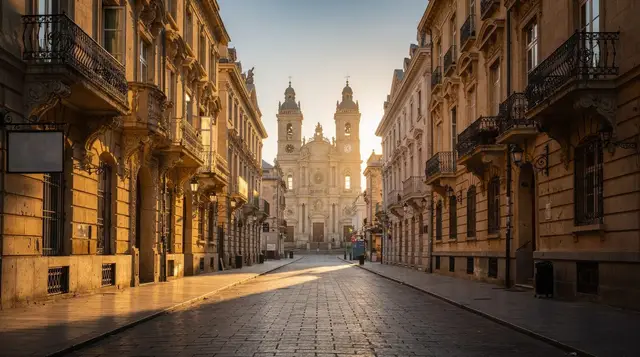
Palermo and Catania are Sicily’s two largest cities, roughly 200 km apart on opposite coasts, and they are genuinely different places rather than interchangeable “big city” options. Palermo is the island’s historic capital, built up over Phoenician, Arab, Norman and Spanish layers you can still see in the same building. Catania is younger in its current form — largely rebuilt in black lava stone and white limestone after the 1693 earthquake — and it functions today as Sicily’s busiest transport hub and the practical gateway to Mount Etna. Neither city is a scaled-down version of the other, and picking between them changes the shape of an entire trip, not just where you sleep for a few nights.
This guide compares them on the things that actually affect a visit: what there is to see, how easy each is to reach, how they sit relative to the rest of the island, and which kind of traveller each one suits. Neither city needs the other to justify a visit — both work as a standalone base for a short trip, and both also work as the first or last stop of a longer, island-wide itinerary. For the full itinerary question rather than the city-pair question, see How many days do you need in Sicily and East or west Sicily.
Palermo: Arab-Norman heritage and the market city
Palermo’s headline attraction is its Arab-Norman heritage, a UNESCO-listed collection of buildings that mix Byzantine mosaics, Arab geometric decoration and Norman architecture in ways found nowhere else in Europe. The Cappella Palatina, inside the Royal Palace, is the single most-cited example — gold mosaic ceilings and a wooden muqarnas roof in the same room.
See The Cappella Palatina and the Norman Palace for what a visit actually involves. A short bus or taxi ride out of the centre, Monreale Cathedral extends the same tradition with a cloister and mosaic cycle that some visitors rate above the Cappella Palatina itself; the full route linking these sites is covered in Arab-Norman Palermo: the UNESCO route.
Beyond the monuments, Palermo runs on its markets. Ballarò, Capo and Vucciria are working markets (Vucciria now leans more toward evening eating and drinking than daytime produce), and they are also where most of the city’s celebrated street food is sold — pane con la milza, panelle, sfincione and arancine among it. The Palermo markets guide and Palermo street food guide cover both in detail. A Best of Palermo Private Walking Tour with a Local is a reasonable way to link the monuments and the markets into a single half-day if you are short on time.
Palermo also has a darker, genuinely worthwhile stop in the Capuchin Catacombs, where several thousand mummified and skeletal remains, some dressed in period clothing, line corridors beneath a former monastery — unsettling for some visitors, historically significant for anyone interested in Sicilian burial customs through the 19th century. The Capuchin Catacombs guide sets expectations properly before you go, and a Beyond the Veil Catacombs and Cemeteries of Palermo tour adds context a self-guided visit will not.
Catania: black-and-white baroque and the volcano at its back
Catania looks different from almost every other Sicilian city because of what it is built from. After the 1693 earthquake flattened the region, the city was reconstructed largely in dark volcanic stone, with white limestone detailing on facades and staircases — a deliberate baroque style associated with the architect Giovanni Battista Vaccarini. The result is a compact, walkable historic centre that reads as a single coherent architectural statement rather than a patchwork of eras. See Catania in black and white: Vaccarini’s Baroque for the specific buildings worth seeking out, and a Catania: Historic Center Walking Tour if you would rather have a guide explain the stonework than read plaques.
Catania’s other defining feature is La Pescheria, its fish market, held every morning a short walk from the cathedral — loud, physical, and one of the more reliable “real city” experiences left in Sicilian tourism, covered fully in La Pescheria: Catania’s fish market. A Catania: Fish Market Tour with Lunch at Mariella's Home pairs a market visit with a home-cooked lunch, useful if you want the market experience without navigating the produce and the dialect yourself.
What sets Catania apart practically is what sits behind it: Mount Etna. The south-side base at Rifugio Sapienza is roughly 45 to 60 minutes from the city by car, making Catania the only Sicilian base from which the volcano is a genuinely easy half-day or full-day trip rather than an expedition. See Mount Etna: the complete visitor guide for what a visit involves, and Day trips from Catania for how Etna fits alongside other options from the same base.
Getting there: the airports make the first decision for you
For many visitors, the choice between Palermo and Catania is effectively made by flight schedules before any preference about markets or baroque architecture comes into play. Catania Fontanarossa airport is Sicily’s busiest, with more direct routes and generally more frequency from European cities, particularly in the summer season. Palermo Punta Raisi airport, around 35 km from the historic centre, is well connected but tends to have fewer direct options than Catania on a comparable date.
Neither airport is a compromise — both put you within a reasonable drive of their respective city centre — but if your flight search turns up a materially cheaper or more convenient route into one over the other, that is a legitimate reason to build the trip around that city rather than fighting the schedule. Many multi-week itineraries fly into one and out of the other specifically to avoid backtracking; check with your airline whether an open-jaw booking costs more before assuming parity. See Getting around Sicily for how the rest of the island connects to each airport.
Distance and day trips between them
Palermo and Catania sit roughly 200 km apart, connected by the A19 motorway. Driving time runs around 2 hours 15 minutes to 3 hours depending on traffic, tolls and whether you stop along the way — a genuinely long day-trip distance, not a quick hop. Rail service exists but is slower than the road link and less frequent than visitors from other parts of Europe might expect from a route between two provincial capitals; most travellers moving between the two drive, take a coach, or fly.
This distance matters for planning: Palermo and Catania are not a comfortable two-base loop unless you are willing to give up at least half a travel day to the transfer, and most itineraries treat them as two separate legs of a trip — often with the west coast, Agrigento, or the interior filling the middle — rather than a direct hop. East or west Sicily goes into this regional split in more depth.
Getting around once you are there
Both historic centres are best covered on foot, and both come with the same warning that applies across Sicily: a rental car is a liability inside the old town, not an asset. Palermo’s ZTL (traffic-limited zone) covers a large stretch of the historic centre and is enforced by camera, with fines issued automatically and by post, often weeks after the trip is over. Catania’s ZTL is smaller but works the same way. If you are renting a car for the wider island, plan to leave it at a hotel car park or a paid periphery lot for the days you are based in either city, rather than trying to drive into the centre.
Within each city, walking covers nearly everything a typical visit needs — Palermo’s historic centre and its three markets sit within roughly a 20-minute walk of each other, and Catania’s centre is even more compact, with the cathedral, La Pescheria and the main shopping streets all a short walk apart.
Evenings and nightlife
Palermo and Catania both have active evening scenes, but they look different. Palermo’s nightlife clusters around the Vucciria market after dark, alongside the Kalsa and Ballarò districts, with a mix of bars, informal street drinking and late food. Catania’s centre, particularly around the university area and the Pescheria after the fish market closes for the day, has a livelier, more concentrated bar scene that many visitors find easier to navigate than Palermo’s more spread-out options.
Food: two cuisines, not one better version
Both cities have genuinely distinct food identities rather than one simply outclassing the other. Palermo’s street food leans toward fried and braised dishes tied to the city’s working-class history — pane con la milza, panelle, sfincione, stigghiola. Catania’s street food culture centres more on arancini (here, the conical version, a genuine regional dispute with Palermo’s rounder arancine) and on the Pescheria’s seafood, alongside pasta alla Norma, the tomato-and-aubergine dish that originated in the city. Neither tradition is a downgrade of the other, and food alone is a weak reason to pick one city over the other unless you have a specific dish in mind.
Side-by-side
Heritage: Palermo has the denser concentration of UNESCO Arab-Norman sites; Catania has the more architecturally unified baroque centre.
Markets: Palermo has three historic markets across the city; Catania has one, La Pescheria, but it runs daily and close to the centre.
Airport and flights: Catania generally has more direct routes and higher frequency; Palermo is well served but comparatively lighter.
Distance to Mount Etna: Catania roughly 45-60 minutes; Palermo effectively out of range for a casual day trip.
Distance to Taormina and Syracuse: Catania is close to both; Palermo is a long way from either.
Distance to the west coast and Agrigento: Palermo is the natural base; Catania is a longer drive.
Underground and dark history: Palermo’s Capuchin Catacombs are a distinctive, unsettling stop with no real Catania equivalent.
Coast and swimming: Palermo has Mondello, a genuine city beach a short bus ride from the centre; Catania’s own coastline is rockier, with better beach options further along the Ionian coast toward Taormina than in the city itself.
Climate: both sit on the coast and share Sicily’s broad seasonal pattern — hot, dry summers with regular days above 35°C inland, and mild, wetter winters — but Catania’s position under Etna means occasional ash disruption to flights is a Catania-specific consideration that Palermo simply does not have.
Who should choose Palermo
Choose Palermo if the Arab-Norman UNESCO sites are a priority, if you want the market and street food culture as a central part of the trip rather than a side note, or if your onward plans lean toward the west coast (Trapani, Erice, Marsala) or the interior. It is also the sensible choice if your flight search simply turns up a better route into Punta Raisi. Palermo also rewards travellers who like a city with visible rough edges — peeling facades next to restored palazzi, market noise spilling into residential streets — over a more polished historic centre, and it suits anyone whose trip is built around slow, repeated visits to the same few blocks rather than a checklist of sights.
Who should choose Catania
Choose Catania if Mount Etna is a fixed point on your itinerary rather than an optional extra, if you want easy onward access to Taormina or Syracuse, or if your flight options into Fontanarossa are clearly better. It also suits travellers who prefer a more compact, walkable historic centre over a larger, more sprawling one, and anyone who would rather spend an extra day at altitude on a volcano than an extra day in museums. Solo travellers and short-stay visitors in particular often find Catania’s tighter centre easier to get oriented in within a single afternoon than Palermo’s larger, more sprawling old town.
Can you realistically do both?
Yes, but not as a quick side trip from one to the other — treat them as two separate legs of a longer itinerary rather than a single base with a day trip between them. A week built around one city with the other added as a two-to-three-day extension at the start or end of the trip works better than trying to shuttle back and forth, and it avoids burning the better part of a day on the A19 more than once. See Sicily in two weeks for an itinerary that gives both cities proper time without forcing a rushed transfer in the middle.
Frequently asked questions about choosing between Palermo and Catania
Which airport has more direct flights, Palermo or Catania?
Catania’s Fontanarossa airport is Sicily’s busiest and generally has more direct routes from European cities. Palermo’s Punta Raisi airport is well served too, but Catania tends to offer more frequency and more direct options in high season.
How far is it from Palermo to Catania?
Around 200 km by the A19 motorway, roughly 2 hours 15 minutes to 3 hours by car depending on traffic and stops. The train exists but is slower and less frequent than the road link, so most visitors drive or take a coach.
Which city is better for a first trip to Sicily?
Palermo, generally, because it concentrates the island’s Arab-Norman UNESCO heritage, its most famous markets, and a genuine big-city historic core in one place. Catania is an equally valid first stop if Etna and the east coast are your priority from day one.
Is Palermo or Catania closer to Mount Etna?
Catania, by a wide margin. The Rifugio Sapienza south-side base is roughly 45 to 60 minutes from Catania, while a Palermo-based visitor would need most of a day just to reach and return from the volcano.
Which city has better food, Palermo or Catania?
Both have strong, distinct street food traditions rather than one being objectively better. Palermo is known for pane con la milza, panelle and sfincione; Catania for arancini, pasta alla Norma and the Pescheria fish market. Neither is a downgrade from the other.
Can I fly into one city and out of the other?
Yes, and many itineraries do exactly this — flying into Palermo and out of Catania, or the reverse, to avoid backtracking across the island. Check whether your airline charges more for an open-jaw booking before assuming it costs the same as a round trip.
How many days do Palermo and Catania each need?
Two to three days covers the essentials of either city on its own. Add a day for Monreale from Palermo, or a day for Etna from Catania, and you are looking at three to four days per base if you want to do the surrounding area justice too.
The bottom line
If nothing else about your trip pulls you one way, choose Palermo — it has the denser concentration of unique heritage sites and the strongest market culture, and it works as a natural gateway to the west coast if you are continuing your trip in that direction. Choose Catania instead the moment Mount Etna, Taormina or Syracuse are fixed points on your itinerary, or if your flights clearly favor Fontanarossa over Punta Raisi — the volcano access alone is enough to override the general recommendation for anyone who wants Etna as more than a passing photo stop.
Popular Sicily experiences on GetYourGuide
Verified deep-linked GetYourGuide tours. Book through these links and we earn a small commission at no cost to you.
Photo: our own image of the location, not the operator’s product photo.