La Pescheria, Catania's fish market
When is the best time to visit La Pescheria?
Before 10am, Monday through Saturday. The market starts near dawn and much of it packs up by early afternoon, so a mid-morning visit sees the trade at its most active without the earliest, coldest hour. It is closed on Sundays.
The market that starts before the city wakes
La Pescheria sits directly behind Piazza Duomo, close enough that the cathedral bells are audible over the shouting, and it is the single most concentrated dose of unstaged Catanese life available to a visitor. It is loud, wet underfoot, and entirely unbothered by tourism — this is where the city’s restaurants and households actually buy fish, not a recreation staged for cameras, and it looks and sounds exactly as it would have looked decades ago, minus the mobile phones. For the wider destination context, see the Catania destination page.
What is actually sold, and how it is laid out
Swordfish, tuna, sea urchins, whatever came in on that morning’s boats, alongside squid, prawns, mussels and smaller local fish that rarely make it to menus outside Sicily, are laid out on ice across stone counters and shouted about by vendors in a Catanese dialect thick enough that Italian speakers from Milan or Rome often cannot follow it. Beyond the fish stalls proper, the market’s edges fold into produce, cheese and household goods, following the same general pattern as Palermo’s markets covered in the Palermo markets guide, though La Pescheria is smaller, more specialized, and centered squarely on fish rather than a full mixed-goods trade.
Hours: earlier and shorter than visitors expect
La Pescheria runs roughly from dawn until early afternoon, Monday through Saturday, and it is genuinely finished by early afternoon most days — arriving at 2pm expecting an active market is a common and avoidable mistake. Sunday is a closed day for the market entirely. The single best window for a visitor is before 10am: early enough to see the trade at its most active, late enough to avoid the very earliest, coldest hour when only the professional buyers are around. A fish market tour that ends with lunch at a local home is built around exactly this window, removing the guesswork of which stalls and which trattorie are worth trusting.
Eating what was bought that morning
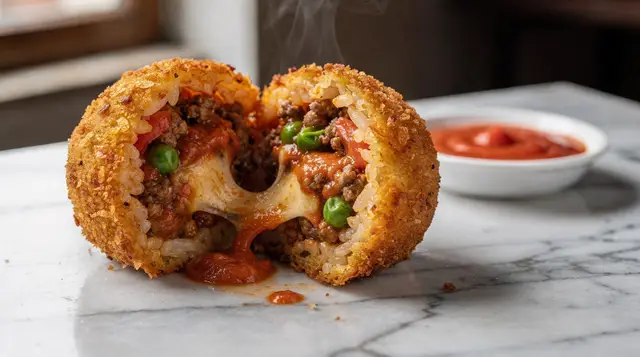
A cluster of small trattorie sit right at the market’s edge and cook what their owners bought hours earlier — this is one of the few places in Sicily where “catch of the day” is a literal, checkable claim rather than a menu phrase. A street food tour combining the fish market with the city center pairs the market with Catania’s wider street food scene — arancini, the local conical version of the rice ball snack argued over across Sicily and covered in the arancini explained guide — for visitors who want both in one outing.
A more structured market tour paired with a cooking class in the historic center goes a step further, turning the shopping trip into a hands-on lesson. For visitors who want a specific local guide’s perspective, a market tour and cooking class led by a Catanese chef is a more personal, small-group version of the same idea.
A working space, not a tourist attraction dressed up
It is worth being direct about what La Pescheria is not: it is not a photogenic, sanitized food-hall experience. The ground is wet, the aisles are narrow, and the pace of vendors moving fish and ice around is fast enough that idling in the middle of a lane draws visible impatience. Bringing a stroller is impractical, and normal awareness around bags and phones in the denser sections is sensible, exactly as it would be in any working market anywhere, rather than a specific Catania warning.
What genuinely makes it worth an early alarm
It is fair to ask why a fish market deserves setting an early alarm on a Sicilian holiday, and the honest answer is that few other sights in Catania offer this level of unfiltered, working city life within a five-minute walk of the main cathedral square. Piazza Duomo itself, however handsome, is a fixed, static thing to look at; La Pescheria is alive, changing minute to minute as crates are unloaded, prices are shouted, and the morning’s catch is sorted and sold.
For visitors who have already seen a few Baroque squares and church interiors elsewhere on the island, the market offers a genuinely different register of experience — commerce and daily life rather than architecture and history — and this contrast is part of why so many visitors, somewhat to their own surprise, name the Pescheria rather than the cathedral as the most memorable part of a Catania morning.
A market with a long memory
La Pescheria’s roots go back centuries, tied to Catania’s role as a Mediterranean port city long before the 1693 earthquake reshaped the center in Baroque stone. The market survived that disaster largely because it never depended on grand architecture — it is a working space defined by its function rather than its buildings, which is part of why it feels so unselfconscious today.
Older Catanesi describe a Pescheria that has changed remarkably little in living memory: the same families running the same stalls across generations, the same auction-style shouting of prices, the same early hours dictated by when the fishing boats actually come in rather than by any tourism calendar. That continuity is precisely what makes it worth seeing over almost anything else in the city center, including sights with more obvious visual grandeur.
The market’s position, tucked into a lower square just below Piazza Duomo, is itself a small piece of local geography worth knowing: the drop in elevation and the proximity to the old port area meant this was always the natural landing point for the day’s catch, long before refrigerated trucks made location less critical. Standing at the top of the steps looking down into the market, with the cathedral visible behind, is one of the more striking ordinary views in the city center, free and unticketed.
The dialect, the theatre, and how buying actually works
Watching a transaction happen at La Pescheria is worth doing even without buying anything. Vendors shout prices and describe the catch in a rapid Catanese dialect that even Italian speakers from elsewhere in the country often cannot follow word for word, and there is a performative quality to it — part genuine haggling, part show for whoever happens to be standing nearby.
This is not aimed at tourists specifically; it is simply how the market has always worked, and it continues exactly the same way whether or not anyone is watching. A curious visitor who lingers respectfully at the edge of a stall, rather than blocking the narrow lane, is generally tolerated and sometimes even engaged with directly by a vendor keen to explain what is on offer.
For anyone planning to actually buy and cook, a few practical notes help: prices are rarely marked, quantities are usually agreed by eye rather than precise weighing for small purchases, and a little rudimentary Italian (numbers, “quanto costa,” basic fish names) goes further than English. Vendors are used to hesitant buyers and are, on the whole, more patient with an obvious visitor trying earnestly than the loud transactional style might suggest from a distance.
Nearby: what to see before or after the market
Piazza Duomo itself, immediately above the market, is worth folding into the same outing — the Fontana dell’Elefante, known locally as “u Liotru,” and the Cattedrale di Sant’Agata sit a two-minute walk from the market’s edge, covered in more depth in the Catania Baroque guide. Via Etnea, Catania’s main shopping street, begins nearby and runs north toward the volcano, giving a framed view of Etna on clear mornings from its northern stretch. Visitors with a full morning free can reasonably combine a Pescheria visit before 10am with a walk through Piazza Duomo and partway up via Etnea, before the heat of the day sets in and the market itself has largely wound down.
What a first-time visitor tends to get wrong
The most common mistake is timing: visitors who plan their Catania morning around a leisurely 9am hotel breakfast and arrive at La Pescheria closer to 11am still catch some activity, but miss the market at its liveliest, and by early afternoon much of it has genuinely packed up rather than merely slowed down. The second common mistake is treating it purely as a photo stop rather than budgeting time to actually sit down at one of the market-edge trattorie afterward — the market and the meal that follows are really one experience, and rushing off to the next sight without eating nearby undersells the whole point of coming this early.
The third is assuming the market is a single covered hall; in reality it spreads across a network of small streets and a lower square, and a short exploratory loop rather than a single fixed path is the better way to see the different sections, from the fish stalls proper to the produce and cheese stands at the edges.
Visitors traveling with young children should note the practical constraints rather than avoid the market outright: narrow lanes, wet stone, and a fast-moving crowd of vendors carrying crates of ice make it a look-but-don’t-linger stop with a stroller, though an older child capable of walking and holding a hand generally does fine, and many local families do bring children through on their own weekly shopping trips.
Combining the market with the rest of Catania
The market sits a short walk from the main sights covered in the Catania in black and white Baroque guide, and from via Etnea, the main shopping street that frames Mount Etna at its far end on a clear day. Visitors basing themselves in the city for an Etna trip should see the dedicated Mount Etna guide and Etna tours compared, and those planning day trips beyond the city itself should see day trips from Catania, which covers Aci Trezza, Taormina and Syracuse as realistic single-day options from a Pescheria-based morning.
For dessert and pastry after a savory market visit, see the cannoli and Sicilian pastry guide and the granita and brioche guide, both strongly associated with the eastern coast around Catania, Acireale and Messina.
Travelers weighing up a Catania-based trip against a Palermo-based one should see Palermo or Catania, and those interested in the wider comparison of guided food experiences across the island should see Sicilian food tours compared. The practical rhythm of Sicilian mealtimes — including why so much of the market and its neighboring kitchens shut mid-afternoon — is covered in the food etiquette guide.
Visitors flying into Catania Fontanarossa and heading straight into the city center can realistically fit a Pescheria morning into a first day before continuing on to Etna or the coast, and those building a longer trip around the region often anchor it with the Catania and Etna in 3 days itinerary.
Frequently asked questions about La Pescheria
Is La Pescheria closed on Sundays?
Yes, along with much of Catania’s produce trade. Sunday is the wrong day to plan a visit specifically for the market; the surrounding Piazza Duomo and cathedral remain open regardless.
Can you actually buy fish to cook yourself, or is it only for restaurants?
Both. Restaurants and trattorie buy in bulk early, but individual households shop here too, and stalls sell in whatever quantity a customer wants, from a single fillet up.
Is La Pescheria worth visiting if I’m not going to eat there?
Yes, as a piece of spectacle and Catanese life on its own terms — the shouting, the layout of ice and fish, the narrow lanes — but going hungry and picking a market-edge trattoria for lunch is the more complete version of the visit.
Is the market safe, and is it stroller-friendly?
It is safe with ordinary market awareness around bags in the busiest aisles, but it is not stroller-friendly — narrow lanes, wet stone underfoot, and a fast-moving crowd of vendors and buyers.
What is the difference between La Pescheria and Palermo’s markets?
La Pescheria is a fish market first, with produce and other goods around its edges, and it runs on a tighter, earlier schedule than Palermo’s mixed food-and-goods markets like Ballarò. It is smaller and more specialized, but arguably louder and more theatrical for its size.
Do I need Italian to shop or eat there?
No, though the dialect shouted between vendors is genuinely hard even for standard Italian speakers to follow. Pointing and simple numbers are enough for a purchase.
Street food and market tours on GetYourGuide
Verified deep-linked GetYourGuide tours. Book through these links and we earn a small commission at no cost to you.
Photo: our own image of the location, not the operator’s product photo.