The Aeolian Islands, choosing between seven
Which Aeolian island should a first-time visitor pick?
Lipari for the easiest logistics and best hotel choice, Vulcano for a single day trip with mud baths and black sand, Salina for quiet and good food, Stromboli or Panarea only if you specifically want the volcano-by-night or the nightlife. Most itineraries base on Lipari and day-trip to the rest.
Seven islands, and no single one that suits every traveller
The Aeolian Islands (Isole Eolie) are a volcanic archipelago off Sicily’s north coast, made up of seven inhabited islands: Lipari, Vulcano, Salina, Stromboli, Panarea, Filicudi and Alicudi. They were named a UNESCO World Heritage Site for their ongoing volcanic activity and geology, and in practice that means two of the seven — Vulcano and Stromboli — are still active volcanoes you can visit, while the other five range from small resort towns to near-empty outposts with a few dozen year-round residents.
The mistake most first-time visitors make is trying to see all seven on a short trip. Ferry timetables between the smaller islands are thin, weather cancels sailings without warning, and a itinerary built around five inter-island transfers in four days usually collapses into a lot of waiting at ports rather than time on any island. This guide is about choosing which two or three actually fit the time available, not about squeezing in all seven.
Distances are short on a map and deceptive in practice. Lipari to Vulcano is a twenty-minute hydrofoil hop; Lipari to Alicudi, the furthest inhabited island, can take close to two hours even on a fast hydrofoil, longer on the slower traghetto (car ferry). A trip that looks like “a quick loop” on a map can mean four separate boat bookings, four separate weather risks, and four separate luggage transfers between quaysides that don’t always have obvious signage. Comparing this trip to hopping around a different archipelago is covered in Aeolian or Egadi islands, and the wider logistics of ferries generally are in Ferries and hydrofoils around Sicily.
Getting there: Milazzo is the port that matters
Four mainland Sicilian ports run scheduled services to the Aeolian Islands, but they are not remotely equal in frequency. Milazzo, on Sicily’s north coast about 40 minutes’ drive from Messina and just over an hour from Catania, is the primary gateway: both major hydrofoil operators and the car ferry company run multiple daily departures from here, with the crossing to Lipari or Vulcano taking roughly 45–90 minutes depending on the vessel and how many islands it calls at en route.
Messina itself runs a smaller number of direct sailings, useful for anyone arriving by train from mainland Italy without wanting to backtrack to Milazzo. Palermo has a handful of weekly or summer-only services, considerably longer at several hours. Naples runs an overnight ferry in summer that is popular with Italians doing a longer island-hopping trip but is not a practical option for a short Sicily-based visit.
Booking the crossing itself, without inventing a schedule, is best done through the ferry operators’ own booking pages or a Milazzo–Lipari ferry ticket rather than turning up at the port and hoping for space, especially in July and August when sailings do sell out. Car parking at Milazzo port is paid and fills early in peak season; travellers arriving without a car on public transport or a private transfer avoid that problem entirely, and Milazzo’s train station connects reasonably well to Messina and Catania.
Traghetto or aliscafo: the choice that actually matters
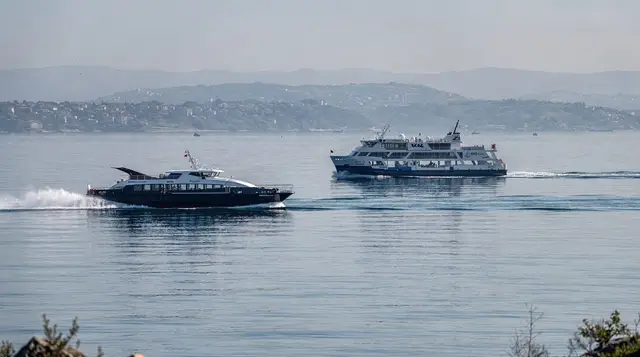
Every route between the mainland and the islands, and between the islands themselves, is served by two different vessel types, and the difference is worth understanding before booking. The aliscafo (hydrofoil) is faster — often half the crossing time of the traghetto — and more expensive, typically by a third to a half. It also rides higher above the waterline, which makes it noticeably less comfortable, and sometimes cancelled outright, in choppy seas, since these smaller, lighter vessels are more sensitive to swell.
The traghetto (car ferry) is slower, cheaper, carries vehicles, and rides lower and more steadily in rough water, so it keeps running in conditions that ground the hydrofoils. Anyone prone to seasickness, or travelling with small children, generally does better on the traghetto even though the crossing takes longer. The full comparison of vessel types, operators and how to actually buy tickets is in Ferries and hydrofoils around Sicily.
This is also the single most important honest caveat for the whole archipelago: ferries and hydrofoils here are cancellable by the sea, and cancellations are frequently announced the same morning, not days in advance. A day of strong wind from the north or northwest can suspend hydrofoil services archipelago-wide while the slower ferries keep running, or in genuinely bad weather, stop everything.
This is not a rare edge case in autumn and winter, and it happens occasionally even in summer. The practical rule that follows is simple and worth repeating: never book a flight home for the same day you plan to leave an island. Build in a buffer night on the mainland, or accept the small risk of an extra unplanned night on the island if the sea decides otherwise.
Lipari: the practical base
Lipari is the largest and most populated of the seven islands, and for most visitors it is also the right base. It has the widest choice of hotels and rental apartments, the most restaurants, a walkable historic centre and castle overlooking the port, and the best-connected ferry schedule of any island in the archipelago — meaning day trips to Vulcano, Salina, Panarea and even Stromboli are all realistically bookable from here without an overnight stay elsewhere.
Lipari’s own beaches are modest: small pebble coves rather than long stretches of sand, and the well-known white cliffs and beach near the old pumice quarries at Canneto, worth a visit for the unusual white-and-turquoise scenery even though swimming there means walking over pumice gravel rather than soft sand.
A day based in Lipari commonly includes a boat tour taking in Vulcano and one or two of the smaller islands in a single outing — a combined Lipari, Vulcano, Panarea and Stromboli boat tour covers most of what a time-limited visitor wants to see without arranging separate ferry legs. For a shorter, cheaper hop, the Vulcano ferry alone takes about twenty minutes.
Vulcano: mud, sulphur and a genuinely active crater
Vulcano is the island closest to Lipari, and the only Aeolian island where the volcano itself is the main attraction rather than a backdrop. It gave its name to volcanoes generally, and its Gran Cratere still steams visibly from fumaroles near the summit; the crater rim hike is a roughly two-hour round trip on loose volcanic ground, rewarded with views across the whole archipelago on a clear day.
At the base, the mud baths (fanghi) — naturally warm, sulphurous mud pools — are a genuine tourist attraction and also genuinely smell strongly of sulphur, which surprises visitors who didn’t read ahead; expect the smell to follow you for the rest of the day regardless of how thoroughly you shower afterward. Vulcano’s beaches have black volcanic sand, distinctly different from anywhere else covered in the best beaches in Sicily.
Vulcano works well as a half-day or full-day trip from Lipari and does not usually require an overnight stay, though a handful of hotels exist for anyone who wants to watch the crater at sunset without a ferry deadline.
Salina: quiet, green, and where the food is better
Salina is the second-largest island and the greenest, its extinct twin volcanic peaks covered in vineyards producing Malvasia delle Lipari, a sweet dessert wine that is one of the archipelago’s genuine culinary exports. Salina has a reputation, largely deserved, for having Sicily’s best small-island restaurant scene relative to its size, built around capers (a major local crop), the sweet wine, and simple seafood.
It suits travellers who want a slower few days rather than a checklist of sights, and it was the filming location for the 1994 film Il Postino, which still draws a modest amount of literary tourism to the fishing village of Pollara. Salina is reachable by hydrofoil from Lipari in roughly 30–40 minutes and from Milazzo directly on some summer schedules.
Stromboli: the volcano that never really stops
Stromboli is the most famous of the seven for one reason: its crater has been in a state of near-continuous mild eruption for centuries, visible after dark as small explosions of glowing rock, most dramatically along the Sciara del Fuoco, a bare scar of loose volcanic debris running down the northwest flank into the sea. Watching this at night from a boat, without setting foot on the crater rim, is the single most popular way to experience Stromboli and does not depend on trekking permits or volcanic activity levels the way the summit hike does. Full detail on that experience, timing and what a night boat trip actually involves is in the dedicated Stromboli by night guide.
The guided crater hike itself is a serious undertaking — several hours of steep ascent, mandatory with a certified guide, and its upper limit is set day to day according to current volcanic activity, sometimes stopping well below the true summit and sometimes closed altogether. Nobody can promise in advance exactly how high a given hike will go. Stromboli has the archipelago’s least developed infrastructure relative to its fame; it has no real road network, a small resident population, and accommodation books out early in summer given how much demand the volcano generates.
Panarea: small, glamorous, and the priciest of the seven
Panarea is the smallest inhabited island and, since the 1970s, the one with the strongest reputation for summer nightlife and a wealthier visiting crowd, driven partly by its proximity to Stromboli (visible across the water) and partly by a long-standing pattern of Italian and international celebrity visits in July and August. It is correspondingly the most expensive island to eat, sleep or drink on, and the most crowded relative to its size at the height of summer, while being genuinely quiet and pleasant in June or September. Most vehicles are banned on Panarea’s narrow lanes, and the island is best explored on foot or by small electric cart.
Filicudi and Alicudi: for travellers who actually want isolation
The two westernmost islands are a different proposition entirely. Filicudi has a few hundred residents, one real village, dramatic sea caves (notably the Grotta del Bue Marino) best seen by small boat, and almost no nightlife. Alicudi goes further still: no paved roads, transport by mule or on foot along stone paths, a population that dwindles to well under 100 in winter, and ferry connections thin enough that a visit needs to be planned around the timetable rather than the other way round.
Neither island suits a short trip or a traveller who wants restaurant choice and reliable wifi; both suit someone who has already done Lipari or Salina once and wants the version of the Aeolians with almost nobody else in it. A joint multi-island boat tour occasionally includes a Filicudi stop, but a dedicated visit generally means booking a specific Filicudi or Alicudi ferry leg rather than a day-tour add-on.
Building an itinerary that survives a bad-weather day
The single practical piece of advice that applies across every version of this trip: build one buffer day into any Aeolian itinerary, ideally at the end, before a flight or an onward booking. If a hydrofoil is cancelled on your intended departure day, that buffer absorbs it without turning into a missed flight from Catania or Palermo.
A workable structure for a first visit is three nights on Lipari, with day trips to Vulcano on one day and a combined Panarea–Stromboli boat excursion — ideally timed to end with the Stromboli night-viewing — on another, leaving one day unscheduled. Longer visits of five to seven nights can add a night on Salina and, for anyone genuinely keen on isolation, a Filicudi day trip. The ten-day Sicily and the Aeolian Islands itinerary works through one version of this in full, combining a mainland Sicily loop with an island stay.
For visitors basing on the mainland rather than sleeping on an island at all, a single long day from Milazzo or Taormina covering Lipari and Vulcano is workable and widely sold; see boat tours in Sicily compared for how these day-tour formats stack up against sleeping on an island for a night or two. Anyone weighing island time against the Egadi Islands off the west coast, a very different and much calmer archipelago, should read Aeolian or Egadi islands before committing.
What actually costs money here
A return hydrofoil ticket from Milazzo to Lipari runs a modest sum in the tens of euros per person; the traghetto is cheaper again but slower. Inter-island hops (Lipari–Vulcano, Lipari–Salina) cost less still individually but add up quickly across a multi-island itinerary, and buying a multi-leg pass or planning routes in advance avoids paying for redundant crossings.
Boat tours combining several islands in a day, like the Milazzo yacht day tour, bundle transport with the sightseeing and can work out more efficient than booking each ferry leg separately for a one-day visit. A realistic overall budget for a multi-day Aeolian stay, food and lodging included, is covered from a Sicily-wide angle in what a Sicilian boat tour actually costs and what a week in Sicily actually costs.
Frequently asked questions about the Aeolian Islands
How many days do you need for the Aeolian Islands?
Three nights is a workable minimum for one base island plus two day trips. A week lets you sleep on two islands and see most of the archipelago without feeling rushed on every transfer.
Which port do most ferries leave from?
Milazzo, on Sicily’s north coast, is the main departure point, with the shortest crossings and the most daily sailings. Messina, Palermo and Naples also run less frequent services, mostly concentrated in summer.
Can ferries to the Aeolian Islands be cancelled?
Yes. Rough seas, especially with wind from the north or northwest, can suspend hydrofoil and occasionally ferry services with only a few hours’ notice, most often announced early on the morning of the sailing.
Is Stromboli worth visiting if you can’t do the summit hike?
Yes. The Sciara del Fuoco can be watched safely from a boat after dark even without joining the guided crater trek, which is itself limited in altitude or closed entirely depending on current volcanic activity.
Do you need a car on the Aeolian Islands?
No, and on several islands you cannot rent one at all. Lipari and Vulcano have local buses and rentable scooters; Panarea restricts most vehicle traffic; Alicudi has essentially no roads.
Which island has the best beaches?
None of the seven has long sandy beaches in the northern-European sense. Vulcano has dark volcanic sand, Lipari has small pebble coves and the white former pumice quarry at Canneto, and swimming from a boat off the rocks is the norm across the archipelago.
Can you visit all seven islands on one trip?
It is possible but rarely advisable on a trip shorter than ten days, since inter-island ferry schedules are thin, especially to Filicudi and Alicudi, and a packed itinerary leaves no slack for a weather cancellation.
Is it better to base on Lipari or move between several islands?
Basing on Lipari and day-tripping suits most first-time visitors, since it avoids repeatedly packing and unpacking and keeps a single reliable ferry schedule. Moving between two or three islands over a longer stay suits travellers who specifically want to sleep somewhere quieter than Lipari for a night or two, such as Salina or Panarea.
Boat trips and island tours on GetYourGuide
Verified deep-linked GetYourGuide tours. Book through these links and we earn a small commission at no cost to you.
Photo: our own image of the location, not the operator’s product photo.