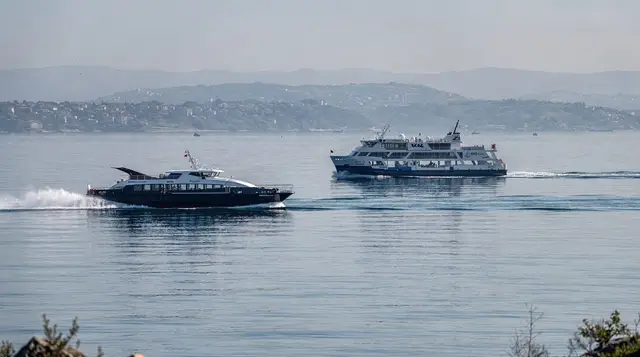
Ferries and hydrofoils around Sicily
What is the difference between a traghetto and an aliscafo in Sicily?
The traghetto is a slower, cheaper car ferry that carries vehicles and rides steadily even in rough seas. The aliscafo is a faster, pricier passenger-only hydrofoil that rides higher above the water and is more likely to be cancelled or delayed in choppy conditions.
The single fact that governs every island trip in Sicily
Anyone planning a visit to any of Sicily’s islands needs to internalise one fact before booking anything else: ferries and hydrofoils here are cancellable by the sea, and cancellations are frequently decided and announced on the morning of the sailing itself, not days in advance. This is not scaremongering — it is simply how the Mediterranean works around small, exposed islands, and it is the reason experienced visitors build slack into island itineraries rather than scheduling a flight home for the same day they plan to leave an island. Everything else in this guide is mechanics: which port, which company, which type of vessel. This one rule is the thing actually worth remembering.
Aliscafo or traghetto: two very different boats
Every scheduled route to a Sicilian island is served by one or both of two vessel types, and the choice between them matters more than most visitors expect.
The aliscafo (hydrofoil) is the fast option — often covering a route in half the time of the alternative — riding partly above the water on foils once at speed. It is passenger-only, carries no vehicles, costs more (typically a third to a half more than the equivalent ferry fare), and is noticeably more sensitive to rough water: hydrofoil services are the first to be suspended when wind picks up, since the smaller, lighter hull rides less steadily in swell. It also tends to have limited luggage space and a lower total passenger capacity than a ferry.
The traghetto (car ferry) is slower, cheaper, and carries vehicles as well as passengers. It rides lower and heavier in the water, which means it keeps running in sea conditions that ground the hydrofoils, and it has considerably more space for luggage and for anyone prone to seasickness who wants to be able to move around rather than sit in an aircraft-style hydrofoil cabin for the whole crossing. The trade-off is time: a traghetto crossing can take twice as long, sometimes more, as the same route on an aliscafo.
The practical rule: choose the aliscafo when time matters more than comfort or budget and the forecast looks settled; choose the traghetto when travelling with a car, prone to seasickness, travelling with small children, or when the forecast is uncertain and reliability matters more than speed.
The ports, one by one
Milazzo, on Sicily’s north coast between Messina and Palermo, is the main gateway to the Aeolian Islands. It runs the highest frequency of daily sailings to Lipari and Vulcano of any Sicilian port serving any archipelago, with crossings of roughly 45–90 minutes depending on vessel and route. Messina, Palermo and Naples also run Aeolian services but far less frequently.
Trapani and, to a lesser extent, Marsala serve the Egadi Islands (Favignana, Levanzo, Marettimo), with the shortest crossings of any archipelago covered on this site — as little as 20 minutes to Favignana on the fastest hydrofoil. Trapani also runs the ferry and occasional flight connections to Pantelleria.
Palermo is the sole mainland port for Ustica, with a small number of daily hydrofoil departures and a considerably longer traghetto option.
Porto Empedocle, near Agrigento, is the departure point for Lampedusa and the Pelagie Islands, a considerably longer crossing (several hours by ferry) than any other route in this guide, which is why most visitors fly instead.
Booking: when to plan ahead and when not to bother
In July and August, popular routes — Milazzo to Lipari, Trapani to Favignana — do sell out, particularly on weekend departures and around the Ferragosto holiday in mid-August; see Sicily in August for how that specific week disrupts schedules and crowding beyond the ferries themselves.
Booking a Milazzo–Lipari ferry ticket or a Trapani–Favignana ferry ticket in advance during these weeks removes that risk entirely. Outside peak season, from October through May, walking up to the ticket office on the day of travel is usually fine on all but the smallest, least frequent routes, such as Marettimo or the more remote Aeolian islands of Filicudi and Alicudi.
Tickets can generally be bought directly from the ferry operators’ own websites or booking counters at the port; for travellers who prefer not to compare multiple operator sites in a language they don’t read fluently, a single consolidated booking, such as the Palermo–Ustica ferry ticket or the Lampedusa–Linosa boat ticket, handles the same route without that friction.
What actually happens when a sailing is cancelled
Operators typically rebook affected passengers onto the next available sailing at no additional cost, but “the next available sailing” can be hours away, or in a genuinely bad multi-day weather system, the next day entirely. There is no compensation scheme comparable to EU flight delay rules for short domestic ferry routes, and operators are not obligated to arrange alternative transport. Travellers who have built in a buffer day absorb this without consequence; travellers who booked a flight home for the same afternoon they planned to leave an island can miss it.
This single planning habit — one buffer night before any onward flight, always — is the most valuable piece of advice in this entire guide, worth repeating from every individual island page: Aeolian Islands, Egadi Islands, Ustica, Pantelleria and Lampedusa all carry the same risk.
Reading a weather forecast like a local before you book
Sea conditions, not rainfall, are the thing that actually determines whether a sailing runs, and the wind direction matters more than the wind speed number on its own. On Sicily’s north coast, wind from the north or northwest (tramontana or maestrale) is what most often disrupts Aeolian Islands crossings from Milazzo, since it blows directly into the archipelago’s exposed anchorages. On the west coast, westerly wind affects the Trapani-Egadi and Trapani-Pantelleria routes similarly.
A forecast showing moderate wind from a sheltered direction rarely causes problems; the same wind speed from an exposed direction can ground hydrofoils for the day. This isn’t something a visitor needs to become an expert in — port authorities and ferry operators make the call, and checking the operator’s own website or social media the evening before or the morning of a sailing gives the most reliable real-time picture, well before travel blogs or general weather apps catch up with a local cancellation.
Buying tickets: online, at the port, or through an agency
Every major ferry and hydrofoil operator serving Sicily’s islands runs its own booking website, and buying directly is usually the cheapest option when the site is straightforward to use. In practice, several operators run older booking interfaces not always available in English, and language or payment friction leads some visitors to book instead through a consolidated affiliate ticket, at a modest premium, purely for the convenience of a clear checkout in a familiar interface.
Buying at the port on the day of travel remains entirely possible outside peak season and on routes with several daily departures, and it’s often the simplest approach for anyone with a flexible schedule and no specific sailing time to hit. What doesn’t work well: waiting until the last minute in July or August on a popular route and expecting a same-day ticket to be available, since these sailings frequently sell out a day or more ahead during the busiest weeks.
Seasickness, comfort and who should choose which vessel
Seasickness is a real and common concern on Sicily’s ferry and hydrofoil network, particularly on the longer, more exposed crossings to the outer Aeolian Islands, Pantelleria and Lampedusa. The traghetto’s lower, steadier ride in the water makes it the more comfortable option for anyone prone to motion sickness, and being able to stand, walk around or sit outside on a car ferry’s open deck helps more than staying seated in a sealed hydrofoil cabin.
Standard over-the-counter motion sickness remedies, taken well before boarding rather than once symptoms start, work as well here as on any other sea crossing, and choosing a seat toward the centre of the vessel, where motion is least pronounced, helps on both vessel types. Families travelling with small children should default to the traghetto on any route where both options exist, for the same comfort reasons, and should build extra time into the day given the traghetto’s longer crossing duration.
Ferries and pets
Small pets are generally permitted on both hydrofoils and ferries, usually in a carrier for cats and small dogs, with somewhat more flexibility for well-behaved dogs on leads on the open decks of a traghetto than in the enclosed cabin of a hydrofoil. Rules vary by operator and it’s worth confirming directly, particularly for anyone travelling with a larger dog, since space and specific pet policies differ between companies more than between routes.
Cars, luggage and practical details
Rental cars can be taken on the traghetto to islands that have roads worth driving — Lipari and Vulcano in the Aeolians, or Favignana in the Egadi group — but space is limited and should be booked in advance for summer travel, and vehicle fares are considerably higher than foot-passenger fares.
Many visitors choose not to bring a car at all, since several islands either restrict vehicles (Panarea) or have no real road network to speak of (Alicudi, much of Marettimo); see the individual island guides for which ones actually need one. Luggage space is generally adequate on hydrofoils for a normal suitcase per passenger but gets tight in peak season, and arriving at the port with time to spare rather than right at departure avoids a scramble for overhead or hold space.
Arriving at the port and boarding
Sicilian ferry terminals range from a genuinely modern building with a proper check-in desk, as at Milazzo, to little more than a ticket kiosk and a marked queuing area at smaller ports serving less-visited routes. Arriving 30 to 45 minutes before a hydrofoil departure and closer to an hour before a car ferry, particularly with a vehicle to load, avoids the scramble that comes with cutting it close, especially in peak season when queues at the ticket counter itself can take longer than expected.
Boarding passes are usually checked against a printed or digital ticket and, on international or longer routes, a passport or ID card; domestic inter-island routes within Sicily generally require just a ticket. Luggage is typically self-carried onto hydrofoils, while car ferries allow both foot passengers and vehicles to board via separate ramps, usually with vehicles loading first.
Off-season versus peak-season realities
Outside the June-to-September window, Sicily’s ferry network changes shape noticeably: fewer daily sailings on every route, entire routes to the smallest islands sometimes reduced to two or three times a week rather than daily, and considerably lower demand meaning almost no risk of a sold-out sailing.
This makes off-season travel simpler in one respect, booking pressure, but harder in another: a cancelled sailing in November, when the next one might not run until the following day, has a much bigger knock-on effect on a tight itinerary than the same cancellation in July, when another departure often runs within hours. Anyone planning an off-season island visit should check the specific week’s timetable directly with the operator, since schedules shift year to year and a printed timetable from a previous season is not a reliable substitute.
What it costs
Fares scale with distance and vessel type rather than following a single fixed structure. A short hydrofoil hop like Trapani–Favignana costs a fraction of a longer route like Milazzo to the furthest Aeolian islands, and the traghetto is reliably cheaper than the aliscafo on the same route, often by a third or more. Return tickets are sometimes, but not always, cheaper than two singles, and it’s worth checking both when booking. A broader look at what boat excursions and ferry-based day trips cost across the whole island system is in what a Sicilian boat tour actually costs, and the wider trip budget context is in what a week in Sicily actually costs.
Ferries to Sicily itself, versus ferries to Sicily’s islands
This guide covers inter-island ferries within the Sicilian archipelago system. Ferries arriving in Sicily from the Italian mainland (Naples, Salerno, Genoa) or from other countries are a separate topic, covered in ferries to Sicily from the mainland. The two systems share the same basic cancellation risk from rough seas but operate on different routes, timetables and, in most cases, different companies entirely.
Frequently asked questions about Sicily’s ferries and hydrofoils
Can Sicilian ferries and hydrofoils be cancelled?
Yes, and this is the single most important thing to know before booking an island trip. Rough seas, most often from wind rather than rain, can suspend sailings with only a few hours’ notice, sometimes announced the same morning as the scheduled departure.
Which ports matter most for island ferries?
Milazzo for the Aeolian Islands, Trapani or Marsala for the Egadi Islands, Palermo for Ustica, Trapani for Pantelleria, and Porto Empedocle for Lampedusa. Each serves a different archipelago and they are not interchangeable.
Should you book ferry tickets in advance?
In July and August, yes, since popular routes sell out, particularly on weekends. Outside peak season, buying a same-day ticket at the port is usually workable, though booking ahead still removes the risk entirely.
Can you take a rental car on a Sicilian ferry?
Yes, on the traghetto (car ferry), though space is limited and should be booked in advance for summer travel. Hydrofoils (aliscafo) are passenger-only and do not carry vehicles.
How much luggage can you bring on a hydrofoil?
Standard hold luggage is fine, but hydrofoils have less storage space than ferries and can be crowded in peak season, so arriving early to secure space for larger bags is worth doing.
What happens if your ferry is cancelled?
Operators typically rebook passengers onto the next available sailing at no extra cost, but that sailing may be hours or a full day later. This is why a buffer day before any onward flight matters more here than almost anywhere else in Sicily.
Is the hydrofoil always faster than the ferry?
Yes, on every route where both exist, though the difference is more significant on longer routes than short ones. On a 20-minute crossing like Trapani to Favignana the time saved is modest; on a longer route to the outer Aeolian Islands, it can save well over an hour.
Can you buy a ferry ticket at the port on the day of travel?
Usually, outside July and August or on routes with several daily departures. On the busiest summer routes and the least frequent connections to remote islands, booking ahead removes the risk of arriving to a sold-out sailing.
Do all Sicilian ferry routes carry vehicles?
No. Hydrofoils are passenger-only on every route. Only the traghetto (car ferry) carries vehicles, and not every archipelago has a car-carrying option on every leg, particularly to the smallest, least developed islands.
Boat trips and island tours on GetYourGuide
Verified deep-linked GetYourGuide tours. Book through these links and we earn a small commission at no cost to you.
Photo: our own image of the location, not the operator’s product photo.