The best beaches in Sicily, region by region
Which is the best beach in Sicily?
There is no single answer, because Sicily's coast changes character every hour of driving. San Vito Lo Capo has the whitest sand and calmest water, Scala dei Turchi the most striking scenery, Vendicari the emptiest sand, and Cefalù and Mondello the easiest access without a car.
Sicily’s coast is not one thing
Sicily has around 1,600 km of coastline, and no two stretches of it look alike. The north coast below Palermo is rocky headland broken by pocket bays; the west is long white sand facing Tunisia; the south is low white cliffs and wide open beaches; the southeast is flat marshland and reserve coast with almost no development; and the east, around Taormina, is a narrow strip of pebble and rock squeezed between mountain and sea. Asking “what is the best beach in Sicily” is really asking five different questions, one for each stretch of coast, and the honest answer depends on whether you are after calm turquoise water, dramatic scenery, an easy day trip from a city, or a place with almost nobody else on it.
This guide works through the coast region by region, with the specific beaches worth the drive (or the walk) in each, and points to a full guide for the ones that deserve one. If you are trying to decide how a beach day works logistically — paid sunbeds versus free sand, what a lido actually costs — read Lidi or free beach: how Sicilian beaches work alongside this one.
Palermo and the north coast: Mondello and beyond
Mondello is Palermo’s beach, a curved bay of fine sand about 20 minutes from the city centre by car or the number 806 bus, backed by a row of Liberty-era villas and a wooden bathing pavilion that has become the postcard image of the place. The water is shallow and calm, which makes it the easiest option for anyone without a car, but it is also the most crowded beach in the Palermo area by a wide margin, especially on August weekends when Palermitani themselves head there. The full picture, including where the free stretch is and which lidi are worth the price, is in Mondello: Palermo’s beach.
Visit Mondello covers the essentials for a first visit — how to get there, what the bay looks like split between lido and free sand, and where the swimming is best.
Beyond Mondello, the coastline toward Cefalù offers quieter, smaller coves, though most require a car and some local knowledge to find. Cefalù itself has its own in-town beach directly below the medieval Rocca, different enough in character from Mondello — sandier, tighter, with the old town as a backdrop rather than a park — that it earns a separate write-up: see Cefalù beach and the Rocca.
The west: San Vito Lo Capo and the Zingaro reserve
If a single Sicilian beach shows up on every “best beaches in Italy” list, it is San Vito Lo Capo: a straight run of white sand facing the pyramid shape of Monte Monaco, with water that stays shallow and startlingly clear for a long way out. It is also the busiest beach in the west of the island in July and August, when the town’s population multiplies several times over and the Cous Cous Fest in late September adds a different kind of crowd. The full breakdown of the town, the beach and the festival is in San Vito Lo Capo: the beach and the couscous.
A round-trip bus transfer from Palermo is a straightforward way to reach the beach without driving, useful given how limited parking gets in season.
South of San Vito Lo Capo, between the town and Scopello, sits the Zingaro nature reserve: 7 km of protected coastal path with no road running through it, reachable only on foot from either the northern entrance (near San Vito Lo Capo) or the southern one (near Scopello). The coves inside are some of the clearest water on the island precisely because there is no vehicle access and no development, but reaching them costs an hour or more of walking each way, in full sun, with no water sold on the trail. It rewards planning rather than spontaneity — the full logistics are in The Zingaro nature reserve on foot.
For visitors who would rather see this stretch of coast from the water than on foot, a boat trip from San Vito Lo Capo covers the reserve’s coves with stops for snorkelling, which avoids the walk entirely at the cost of the reserve’s quieter, slower character.
The south: Scala dei Turchi and the wide beaches near Agrigento
The south coast, near Agrigento, is built around one landmark: the Scala dei Turchi, a staircase-like formation of white marl cliff that has become one of the most photographed places in Sicily. It is not, in the ordinary sense, a great beach for spending a whole day — the sand at its base is narrow and the site has been closed to direct access more than once because of erosion — but it is worth the detour for the view and a swim nearby. What you can and cannot actually do there, and how to check whether it is open before you drive out, is covered in Scala dei Turchi: what you can and cannot do.
Agrigento: Tour to the Scala dei Turchi bundles transport and a guide, useful if you would rather not navigate parking and access rules on your own on a day when conditions may have changed.
The wider south coast around Realmonte and Siculiana has long, wide sandy beaches that get a fraction of the Scala dei Turchi’s crowds, worth considering if the main site is closed or overwhelmed when you arrive.
The southeast: Vendicari and the empty coast near Noto
Between Noto and Marzamemi lies the Vendicari nature reserve, a strip of wetland, dune and empty sand protected as a bird sanctuary — flamingos pass through on migration in spring and autumn — with almost none of the development seen elsewhere on the island. Calamosche and Eloro are its two best-known beaches, both a walk from the car park rather than a drive-up, which keeps them genuinely quieter than anywhere in the west. The reserve also holds the ruins of the Bafuto tonnara, an old tuna-processing complex, for anyone curious about Sicily’s fishing history alongside the swimming. Full detail in Vendicari: flamingos, tonnara and empty sand.
Marzamemi: Private Tour to Vendicari and Capopassero combines Vendicari with the fishing village of Marzamemi and the southern tip of Sicily at Capo Passero, a sensible pairing for a single day out from Syracuse or Noto.
The east: Isola Bella and the Taormina coast
Taormina itself sits high on a cliff, but directly below is Isola Bella, a small rocky islet connected to the mainland by a narrow pebble spit that disappears at high water — a genuine nature reserve as well as a beach, reached by a cable car (funivia) down from the town or a walk. The bay splits between a paid lido section and a free public strip, and it gets extremely busy in summer given how small the actual swimming area is relative to demand. The full picture, including the funivia timetable logic and where the free access point is, is in Isola Bella and the Taormina beaches.
From Catania: Exclusive Tour of Taormina and Isola Bella with a Stop for a Swim pairs a look at Taormina’s old town with time at Isola Bella, useful for a first visit that wants both in one outing.
Giardini Naxos, just along the coast from Taormina, has longer, flatter sandy beaches with easier access and less scenery drama — a reasonable fallback for anyone who wants an actual beach day rather than a scenic swim stop.
The islands: a different kind of beach trip
Sicily’s satellite islands hold some of the clearest water anywhere in the country, but they demand a ferry or hydrofoil crossing rather than a drive, and every one of those crossings can be cancelled by rough sea with little notice. The Aeolian Islands off the north coast combine volcanic black-sand coves with the option of watching Stromboli’s eruptions from a boat after dark; see The Aeolian Islands: choosing between seven for which island suits a beach-focused visit versus a hiking one.
The Egadi Islands, off Trapani in the west, are quieter and calmer, with Favignana’s Cala Rossa regularly named among the best beaches in Italy for its turquoise, almost lagoon-like water — see The Egadi Islands: Favignana, Levanzo, Marettimo.
Further south, Lampedusa’s Rabbit Beach and Pantelleria’s black volcanic coast are both worth a dedicated trip rather than a day add-on, given how far they sit from mainland Sicily; see Pantelleria: the black island and Lampedusa: Rabbit Beach and the crossing. Whichever island you pick, read Ferries and hydrofoils around Sicily first and build a buffer day into your plans, because a cancelled sailing is a when, not an if, at some point in a Sicilian summer.
Sand, rock and everything in between
Not every Sicilian beach is sand, and knowing which type you are heading for changes what to pack. San Vito Lo Capo, Mondello, Cefalù, Vendicari’s Calamosche and the wide beaches near Realmonte are genuine sand. Scala dei Turchi is white marl rock with a narrow strip of sand at its base rather than a proper beach.
Much of the Aeolian and Egadi coast, and stretches around Taormina and Acireale, are pebble or volcanic rock, where water shoes make a real difference and a beach towel alone is not enough padding for a full afternoon. If comfort matters as much as scenery, check which category your planned stop falls into before you commit a whole day to it — a five-minute look at a map or a recent photo saves a wasted trip with young children or anyone who struggles on uneven ground.
What a beach day actually costs
Renting a sunbed and umbrella for a day at a lido varies by location and season, but as a rough order of magnitude, expect a noticeably higher price in July and August at a well-known spot like Mondello or San Vito Lo Capo than at a quieter stretch of coast, and a lower price entirely outside peak season. Many lidi also rent snorkelling gear, paddleboards or kayaks by the hour, on top of the sunbed fee.
The free public sand exists alongside almost every lido in Sicily and costs nothing, but comes without showers, sunbeds or shade, and fills up fast on the days a lido is already full. The full breakdown of how this system works, and how to tell a fair price from an inflated one, is in Lidi or free beach: how Sicilian beaches work.
Snorkelling, diving and looking beneath the surface
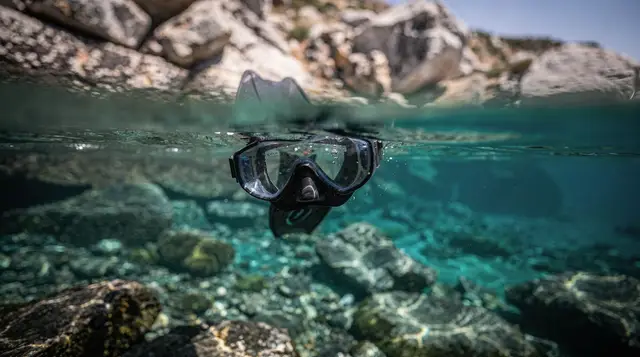
Several of the beaches above reward more than a swim. San Vito Lo Capo’s bay and the Zingaro reserve’s coves both have enough visibility for casual snorkelling with your own mask, no boat required. For more serious underwater time, Ustica, a small island north of Palermo, is one of Sicily’s oldest marine reserves and a genuine diving destination rather than a beach stop — see Ustica: Sicily’s first marine reserve. A wider comparison of where the visibility and marine life are best around the island, including operators and typical certification requirements, is in Snorkelling and diving in Sicily.
Timing a beach day around the sun
Sicilian beach light and heat both change fast through the day in summer. Arriving before 10am gets you calmer water, easier parking at the popular spots, and softer light for photos at places like Scala dei Turchi and Isola Bella, both of which turn into a crowd scene by midday in July and August.
The two or three hours either side of midday are also when the heat is hardest to manage, particularly at spots with no shade, such as Vendicari’s Calamosche or the walk into the Zingaro reserve — carrying more water than feels necessary is the standard advice from anyone who has done that walk in August sun. Late afternoon and the hour before sunset bring the light back and the crowds down again, which is why several of the boat trips referenced above are built around a sunset timing rather than a midday one.
What actually decides “the best” beach for you
Four questions do more to narrow this down than any ranked list:
- Do you have a car? Scala dei Turchi, Vendicari and the Zingaro reserve reward drivers. Mondello and Cefalù work fine without one.
- Do you want scenery or swimming? Scala dei Turchi and Isola Bella are better for the view and a quick dip; San Vito Lo Capo and Vendicari are better for spending the whole day in the water.
- How much walking will you accept? The Zingaro reserve and Vendicari’s best coves both cost you 20–40 minutes on foot each way, in full sun, for genuinely quieter sand.
- When are you going? Late June through early July and the second half of September give warm water without the Ferragosto crush. See Sea temperature in Sicily, month by month for what to expect from the water itself, and Sicily in August for why the middle of the month is worth avoiding if you have any flexibility.
Combining beaches with the rest of a trip
Few visitors build a whole itinerary around beaches alone, and Sicily rewards mixing coast with inland stops. A Sicilian beach week is built specifically around this stretch of coast; Western Sicily in 5 days and Eastern Sicily in 5 days both fold in a beach day alongside towns and ancient sites.
If you are driving yourself between these regions, note that ZTL zones and parking in Sicilian cities apply in every town you pass through, even ones that feel like beach resorts rather than historic centres, and Driving in Sicily: what nobody warns you about is worth a read before you set off on unfamiliar coastal roads.
Families should also see The best family beaches in Sicily, which narrows this same list down specifically by shallow water, shade and proximity to services rather than by scenery. Sicily with kids and Sicily with toddlers go further into logistics beyond the beach itself, from where to base yourself to what to pack for the heat.
Travellers timing a whole trip around the coast should also weigh up Taormina or Cefalù, since both are common bases that pair a beach with a historic town, and Aeolian or Egadi islands if an island detour is on the table. For a broader first-timer’s framing of how much of Sicily’s coast is realistic to see in one trip, How many days do you need in Sicily and One week or two weeks in Sicily are worth reading before you commit to a route.
The honest bottom line
If you only have time for one, the answer depends entirely on what you are optimising for. San Vito Lo Capo wins on swimming, Scala dei Turchi and Isola Bella win on photographs, Vendicari wins on solitude, and Mondello or Cefalù win on convenience if you are not driving. None of them are a secret — every one of these names appears on enough travel lists that “undiscovered” is not a realistic expectation in July or August. The honest move is to pick based on your own priorities above, check the season against Sicily weather month by month, and, for Scala dei Turchi specifically, check current access before you drive out, since the site has closed for erosion more than once in recent years.
Beach and coastal trips on GetYourGuide
Verified deep-linked GetYourGuide tours. Book through these links and we earn a small commission at no cost to you.
Photo: our own image of the location, not the operator’s product photo.