An island named after a Roman god of fire
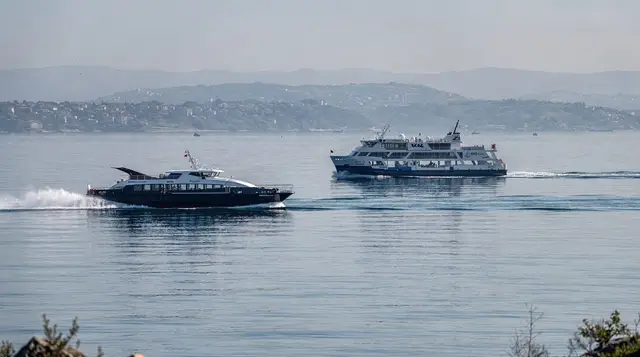
Vulcano gave its name — eventually — to every volcano on Earth. Roman mythology placed the forge of Vulcan, god of fire, beneath the island’s main crater, and the association stuck long enough to become the generic word in most European languages. Arriving by hydrofoil from Lipari, a few kilometres away, the connection is not hard to believe: the smell of sulfur reaches the boat before it has finished docking at Porto di Levante, and the crater above the port, still venting gas, is visible from almost everywhere on the island’s northern half.
Most visitors treat Vulcano as a half-day or full-day trip from Lipari rather than a place to base a whole stay, and that is a reasonable read of what the island offers — a genuinely dramatic landscape concentrated in a fairly compact area, rather than the range of beaches, restaurants and old-town wandering that would justify several nights.
The Gran Cratere and why access changes
The Gran Cratere della Fossa, the crater above the port, has an established hiking trail that on a normal day takes a couple of hours round trip and rewards the climb with views across to Lipari and, on a clear day, along the rest of the Aeolian chain. The catch, and it is a real one: access to the trail is regulated by local authorities based on current volcanic gas readings, and the path has been closed or restricted at times when emissions rose to levels considered unsafe for sustained exposure.
This is not a fixed, predictable pattern — a trail open for months can close with fairly short notice, and one that has been closed can reopen the same way. Anyone planning a Vulcano trip specifically around hiking the crater should check current access status close to the travel date rather than assuming a guidebook description from a previous season still holds. It is exactly the same caution that applies to Stromboli’s summit trail on the neighbouring island, and for the same underlying reason: these are active volcanic systems, not fixed tourist infrastructure, and the authorities close them when the geology says so.
The mud pools: lower effort, higher smell
Close to Porto di Levante, natural pools of warm sulfurous mud (fanghi) offer a lower-effort alternative to the crater hike and one that is open far more consistently. Visitors coat themselves in the grey mud, said locally to have skin benefits, and rinse off in the adjacent sea — a genuinely striking experience and also, honestly, a genuinely smelly and staining one.
Sulfur residue clings to skin, hair, swimwear and any jewellery worn into the pools for a surprisingly long time, and anyone precious about a favourite bikini or a ring should leave it at the hotel. Bring old clothes and flip-flops you don’t mind writing off, and expect the smell to follow you, faintly, for the rest of the day — see Sicily’s packing list for the wider trip checklist this fits into.
A wild snorkelling and self-guided trekking trip from Lipari pairs the crater’s lower slopes with a swim, which is a reasonable way to see more of the island than the mud pools alone without committing to the full summit hike if it happens to be restricted on the day.
Beaches and the black-sand coast
Vulcano’s beaches are volcanic black sand rather than the pale coves found elsewhere in the archipelago, and Spiaggia Sabbie Nere, near the port, is the most convenient and most visited. The water directly offshore from the mud pools carries a natural warmth and faint sulfur tang from underwater vents, which some visitors find a pleasant novelty and others find distinctly unappealing — worth knowing before committing a whole afternoon to it. Quieter coves further round the coast require more effort to reach, generally by scooter or on a boat trip, and reward it with clearer water further from the crowds around the port.
A boat excursion and snorkelling trip departing from Vulcano is a good way to see the island’s coastline, including sea stacks and grottoes not easily reached on foot, and gets you away from the crowd around the main mud pools during the busiest hours of the day.
More than one crater
The Gran Cratere is the island’s headline feature, but Vulcano is actually built from several distinct volcanic centres of different ages, stacked and overlapping across a fairly small landmass. Vulcanello, a smaller cone on the island’s northern tip, formed relatively recently in geological terms and is now joined to the main island by a low isthmus that itself was built up over time — a reminder that this whole archipelago is, geologically speaking, still being assembled.
Further south, the older and heavily eroded slopes of Monte Saraceno and the Piano area see far fewer visitors, mostly hikers who have already done the main crater and want a longer, quieter walk with sweeping views back toward Lipari and across to the Sicilian mainland on a clear day.
This layered geology is also why the island’s soil supports the vineyards that produce a small amount of Malvasia and other local wine — volcanic soil across the Aeolian Islands is unusually fertile, a small silver lining to living beside an active vent.
Vulcano compared to Stromboli
The comparison comes up constantly, since both are volcano-focused day trips reachable from Lipari, and the two experiences are genuinely different. Vulcano offers a hands-on encounter — you climb it (when the trail allows), you sit in its mud, you swim off its black-sand beach, and by the end of the day the volcano has, in a small way, gotten on you. Stromboli offers a spectacle rather than an interaction: near-continuous mild eruptions visible from a guided ascent (again, access-dependent) or, more reliably, from a boat after dark, watched rather than touched.
Neither is a substitute for the other, and travellers with the time tend to do both on the same trip — Vulcano as a day trip from Lipari, Stromboli as an evening boat excursion or a separate guided ascent on another day. Full detail on the Stromboli side of that comparison is on the Stromboli page and in the Stromboli volcano guide.
Where to eat on Vulcano
The handful of restaurants clustered around Porto di Levante lean, as everywhere in the archipelago, on the day’s fish catch, plus simple pasta dishes and the local capers that turn up across Aeolian menus. Choice is narrower than on Lipari, and quality varies more, so asking your accommodation or a local for a current recommendation is worth more here than in a bigger tourist town where reviews do more of the filtering work for you.
Expect prices in line with the rest of the archipelago — noticeably above the Sicilian mainland, a function of everything having to arrive by boat rather than a sign of being overcharged specifically on Vulcano; see eating in Sicily: hours, coperto and tipping for the broader context on what to expect at the table.
Getting to Vulcano
Hydrofoils and ferries from Milazzo, the main Aeolian gateway on Sicily’s north coast, call at Vulcano on the same routes that serve Lipari, often as the first or last stop depending on direction. The crossing from Lipari itself is short — under an hour on most hydrofoil services — which is why the two islands are so frequently paired into a single day trip.
A tour of Vulcano from Lipari is the simplest way to arrange the crossing and a look at the island’s main sights without booking separate hydrofoil legs, and a tour combining southern Lipari and Vulcano extends the day to cover more of Lipari’s own coastline as well.
For anyone approaching from further along Sicily’s north coast rather than through Milazzo directly, a mini-cruise to Lipari and Vulcano from Capo d’Orlando is a useful alternative departure point. Broader detail on ferry choices across the archipelago is in the ferries and hydrofoils guide and the Aeolian Islands guide.
Why the ferry warning applies here too
As with every other Aeolian island, sailings to and from Vulcano stop when the sea is too rough, and there is no way to override that call for a paying passenger. Because Vulcano is so commonly done as a day trip rather than an overnight stay, this mostly affects people at the return end of the day — a cancelled afternoon hydrofoil back to Lipari or Milazzo can mean an unplanned night on an island with comparatively little accommodation. Building slack into the day, and having a fallback plan for an unexpected overnight, is worth doing rather than assuming the return leg is guaranteed.
A day trip, or something longer
For most visitors a single day covers Vulcano well: the crater hike if it’s open, the mud pools, a swim, and a return hydrofoil to Lipari or onward to Milazzo. An overnight stay makes sense mainly for travellers who want to catch the crater at sunrise or sunset, or who are pairing it with an early departure the next morning toward Stromboli or Salina. Accommodation options on Vulcano are considerably fewer than on Lipari, so anyone planning to stay should book ahead rather than expecting to find a room on arrival, particularly in July and August.
For a wider view of how Vulcano fits into a multi-island itinerary, see the Aeolian Islands hub page and the Vulcano island guide; for the volcano itself in the context of Sicily’s other active peak, Etna eruptions and safety covers the same access-depends-on-activity principle from a different mountain.
What to pack, specifically
Beyond the usual sun protection — genuinely important on an island with little tree cover and reflective black volcanic rock — closed shoes with decent grip matter for the crater trail when it’s open, since the path is loose scree in places. For the mud pools, old clothes, a plastic bag for wet and stained items, and flip-flops rather than anything you’d mind ruining. A change of clothes for the return ferry is worth the extra bag space; arriving back in Lipari or Milazzo still smelling faintly of sulfur is a fairly universal Vulcano experience.
Common mistakes worth avoiding
The most frequent one is booking a whole day trip around the crater hike without a backup plan, then arriving to find the trail restricted for the day — a real possibility, not a rare edge case, given how directly access tracks current gas readings. Building the mud pools and a boat trip or swim into the plan as well means the day still works even if the summit trail is closed.
The second common mistake is underestimating the heat and lack of shade: Vulcano’s exposed black volcanic terrain gets noticeably hotter underfoot than a typical beach day would suggest, and the crater trail in particular has almost no shelter from the sun for its full length. The third is treating the mud pools casually about belongings — rings, watches and phones have all been lost or ruined by visitors who didn’t take the sulfur mud seriously enough before wading in.
Frequently asked questions about Vulcano
Is the Vulcano crater hike always open?
No. Access depends on current volcanic gas emissions and has been restricted or closed at times — check current status before planning a trip around it specifically.
How long does the crater hike take?
A round trip typically takes a couple of hours at a comfortable pace when the trail is open, longer if you linger at the rim for the views.
Are the mud pools worth it if I skip the crater hike?
Yes — they’re a lower-effort, more consistently accessible experience and arguably the island’s single most distinctive activity regardless of trail conditions.
Will the sulfur smell and mud stain my clothes?
Yes, noticeably. Wear old clothes and swimwear you don’t mind damaging, and bring a plastic bag for the return trip.
Can I visit Vulcano as a day trip from Lipari?
Yes, and most visitors do exactly that — the crossing takes under an hour on most hydrofoil services.
Is Vulcano worth an overnight stay?
Mainly for travellers who specifically want the crater or mud pools without the crowds of the middle of the day, or who are using it as a stopover en route to Stromboli or Salina.
What happens if the mud pools are closed for maintenance?
This happens occasionally for water-quality or safety reasons; the beach and boat trips around the island remain reasonable alternatives if it coincides with your visit.
Is Vulcano safe to visit given it’s an active volcano?
Yes, under the normal regulated-access system — the authorities restrict trail access rather than the whole island when conditions warrant caution, and the inhabited part of Vulcano is not considered at risk under normal conditions.
Is Vulcanello worth visiting separately from the main crater?
It’s a shorter, less strenuous walk than the Gran Cratere and a reasonable alternative or add-on if the main trail happens to be restricted, though it lacks the same sweeping views.
Do I need a guide to hike the Gran Cratere?
Not typically when the trail is open to the general public, though joining a small guided group adds context on the volcano’s history and current activity that a solo walk would miss.