Etna tours compared: which one to book
What is the best type of Etna tour to book?
For most first-time visitors, a combined cable car and 4x4 tour from the south side gives the best balance of altitude reached, time required and physical effort. Serious hikers should book a dedicated summit trek; families and wine lovers have separate formats built for them.
Too many near-identical listings
Search “Etna tour” on any booking platform and you will get dozens of results that look almost interchangeable: cable car, jeep, sunset, wine, trekking, quad, in every combination. Most of them are drawing from the same pool of guide cooperatives and the same two access points, repackaged under different operator names. This guide sorts the real formats from the branding, so you can pick based on what you actually want out of the day rather than which listing has the best photo. For background on the mountain itself and its access rules, see Mount Etna: the complete visitor guide.
Format 1: cable car and jeep (the standard)
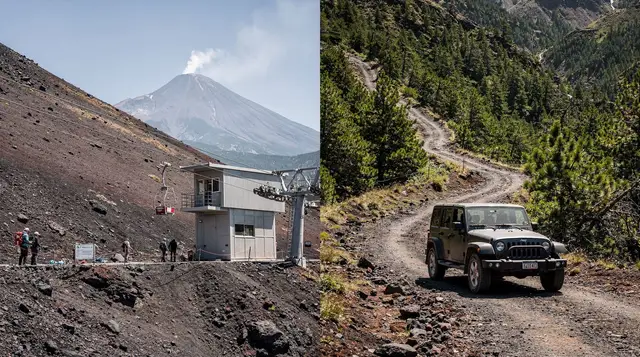
This is the default Etna tour, and for good reason. The Funivia dell’Etna cable car lifts you from Rifugio Sapienza (about 1,900 m) to roughly 2,500 m in around 15 minutes, then a 4x4 vehicle continues toward 2,900-3,000 m before a short guided walk to a viewpoint near the current craters.
Mount Etna: Return Funivia dell'Etna Cable Car Ticket is the base cable car ticket for travellers who want flexibility about adding the jeep segment on the spot; most operators instead sell it as one bundled ticket. It suits almost everyone: reasonable walking, no real fitness threshold, and the shortest total time commitment of the formats covered here. Full mechanics of how the two stages fit together are in The Etna cable car and 4x4 jeeps explained.
Best for: first-time visitors, limited time, mixed-fitness groups. Not for: anyone who specifically wants a demanding hike to the highest permitted altitude.
Format 2: guided summit crater trek
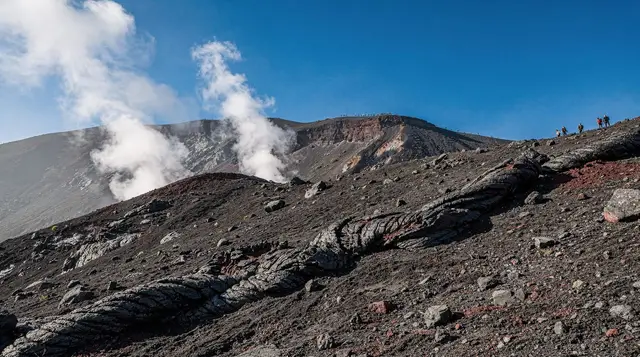
A longer, harder version of the above, built around walking rather than being driven. Expect two to three hours of guided walking on loose volcanic ground above 2,500 m, aiming for the upper end of what current activity allows — sometimes past 3,000 m. Etna: Summit Craters Trekking with Volcano Guide 3350mt is a representative option. The full breakdown of fitness requirements, gear and realistic altitude expectations is in Hiking to the Etna summit craters.
Best for: hikers, travellers who want the highest legally accessible point, no rush. Not for: families with young children, anyone with limited mobility, tight schedules.
Format 3: sunset and evening tours
Same core route as the standard cable car or jeep tour, timed instead for late afternoon and dusk. Catania: Mount Etna Sunset Jeep Tour follows this pattern. The appeal is twofold: cooler temperatures than a midday visit, especially valuable in July and August, and better light for photos over the Ionian coast. The trade-off is a later return to Catania or Taormina, which matters if you have an early flight or dinner plans.
Best for: summer visitors avoiding midday heat, photographers. Not for: anyone needing an early night or a very early next-day departure.
Format 4: wine and food combination tours
Etna’s lower slopes are a serious wine-growing region, and a number of tours combine a shorter mountain visit with a cellar stop and tasting. Catania: Etna Wine Tour and Culinary Experience bundles a crater-area visit with food and wine afterward. These tend to run as full-day commitments once transport, the mountain segment and a sit-down tasting are all included. For a version focused specifically on the wine side rather than the volcano, see The Etna wine road: Contrade and cantine.
Best for: travellers treating Etna as one stop in a broader food-and-wine day. Not for: anyone wanting to maximise altitude or hiking time.
Format 5: quad and buggy tours
Self-driven quads or buggies covering lower-mountain trails and lava fields, generally not reaching the altitude of a guided jeep-and-hike combination. Shorter, activity-focused quad tours of around two hours are typical, rather than a full mountain ascent. It suits visitors who want an active, hands-on experience over a passive one, though it can be more physically tiring than being driven, and typically does not include the summit-area walk. See Quad, buggy and jeep tours on Etna for more on this format specifically.
Best for: shorter time windows, travellers who want to drive themselves rather than be guided on foot. Not for: reaching the highest altitude points, non-drivers.
Format 6: family and semi-private tours
Built around a gentler pace, smaller group sizes and more flexibility to turn back early if children tire. A semi-private family format is designed specifically for this need. It generally covers similar ground to the standard cable car and jeep format but without pushing toward the highest walkable point. See Visiting Etna with children for a full breakdown of what works and what to skip with kids in tow.
Best for: families, groups with mixed ages or fitness levels. Not for: travellers specifically chasing maximum altitude or a demanding hike.
How to actually decide
Ask yourself three questions before booking. First, how much walking do you actually want — a short guided stroll from the cable car, or two to three hours on scree? Second, is timing flexible, or do you need to be back in Catania or Taormina by a set hour, which rules out sunset formats? Third, is Etna the whole day, or one stop among several — in which case a combined format that includes wine or lunch saves you arranging a separate stop.
For a head-to-head on the two starting points themselves, north versus south, see Etna north side or south side, and if you are weighing whether to book any organised tour at all versus driving up and arranging things independently, read Etna: guided tour or on your own.
Price expectations, roughly
Standalone cable car tickets sit at the lower end of the price range; combined cable car and jeep tickets cost meaningfully more once the 4x4 segment and guide are added; full-day wine or private tours cost the most once transport, a guide, food and tasting are all bundled together. Treat any listing significantly cheaper than comparable options with some scepticism — it usually means a shorter route, a lower maximum altitude, or transport not included, rather than an unusually good deal on an identical product.
Group tours versus private tours, in more detail
Almost every format above is available as either a standard group tour or a private booking, and the difference is worth understanding before you pay a premium for “private.” In most cases, a private Etna tour with the same operator follows the same route, reaches the same altitude, and uses the same cable car and jeep infrastructure as the group version — what you are actually paying for is control over departure time, the ability to set your own pace, and not sharing the vehicle or guide’s attention with strangers.
For families managing a child’s fatigue, or couples wanting a slower, quieter pace, that flexibility can be worth the extra cost. For solo travellers or anyone on a budget, a well-reviewed group tour delivers the same core experience for considerably less.
Half-day versus full-day formats
Half-day Etna tours from Catania or Taormina generally run four to six hours including transport, and cover the standard cable car and jeep route without much beyond it. Full-day formats extend this by adding a second element — a longer summit hike, a wine cellar visit, a lunch stop, or a second location such as the Alcantara Gorges. If Etna is one of several things you want to see on your trip and time is limited, a half-day format leaves you the rest of the day for something else; if you want to make the volcano the centrepiece of a full day out, a bundled full-day tour often works out more efficient than arranging two separate half-day bookings.
What separates a good operator from a mediocre one
Because so many Etna listings draw on the same underlying guide cooperatives and infrastructure, the practical difference between operators often comes down to details that do not show up in the headline price: how clearly they communicate that altitude depends on the day’s conditions rather than promising a fixed summit, how recently their reviews mention up-to-date routes rather than outdated information, whether pickup times and locations are precise rather than vague, and whether the listing is honest about how much walking is involved. A tour that undersells the physical demand of a summit trek, or oversells a guaranteed crater view, is worth treating with some caution regardless of its price point.
Seasonal differences in tour availability
Not every format runs identically year-round. Sunset and evening tours are most popular and most widely available in the longer daylight months of late spring through early autumn; in winter, some operators switch to season-specific routes that account for snow and shorter days rather than running the standard summer product unchanged. Wine and cellar-focused combination tours are least affected by season, though harvest time in September and October brings a livelier atmosphere at the wineries themselves. If you are travelling outside peak summer, check that your preferred format is actually running as advertised rather than assuming year-round consistency across every listing.
Matching a tour format to a broader itinerary
If Etna is one stop within a longer Sicily trip rather than the sole reason for your visit, the right format often depends on what else is on your schedule that day or the next. Travellers combining Etna with Taormina or the Alcantara Gorges the same day generally do better with a half-day format that leaves the afternoon free; see Etna in a day: the realistic options for how tight that combination can realistically be. Those building a dedicated multi-day stay around Catania and the volcano have more room for a full-day hike or wine-focused format; see Catania and Etna in 3 days for one way to structure that.
Reading reviews usefully
With so many near-identical listings, reviews are one of the more reliable ways to tell operators apart, but only if you read them for the right details. Star ratings alone tell you little when every operator sits between 4 and 5; look instead for repeated, specific comments about punctuality of pickup, how clearly the guide communicated altitude restrictions on the day, and whether the walking pace matched what was advertised. A cluster of reviews mentioning a rushed pace or an unclear altitude explanation is a more useful signal than an average star score, and worth weighing more heavily than photos in the listing itself, which are rarely from your specific departure date or season.
Booking lead time
Etna tours, particularly popular sunset and summit-trek departures in July and August, can sell out several days ahead during peak season. Booking a week or more in advance is sensible if you have a fixed date in mind, especially for smaller-group or private formats where capacity is inherently limited. Shoulder-season visitors generally have more flexibility to book closer to their travel date, though weather-dependent cancellations become slightly more common outside the reliable summer window, which cuts both ways when it comes to planning ahead versus staying flexible.
What none of these formats can promise
Regardless of price, group size or marketing, no Etna tour format can guarantee a specific summit altitude, a lava sighting, or perfect weather, because all three depend on the volcano’s current activity and conditions on the day, not on the operator. Treat comparisons between formats as a guide to the experience on offer under normal conditions, not a contractual promise of what you will see. See Etna eruptions, ash and safety for the fuller picture on how activity levels affect every format described above equally.
What’s typically included, and what usually is not
Across nearly all the formats above, transport from a Catania or Taormina meeting point, the guide and any mandatory permits for altitude are standard inclusions. What varies more is everything around the edges: bottled water is sometimes provided and sometimes not, warm jackets are occasionally available to rent or borrow at the upper station but should never be relied on, and lunch is included on some full-day and wine-focused formats but essentially never on half-day cable car or jeep tours.
Photography add-ons, such as drone footage of your group at altitude, appear on a handful of premium listings and are worth checking for explicitly if that matters to you, rather than assuming any operator offers it. Read the specific inclusions list on your chosen tour rather than assuming parity across similarly priced options — two tours at the same price point can differ meaningfully in what is actually provided once you arrive.
Solo travellers, couples and larger groups
Solo travellers generally do best joining a standard group tour, both for cost and because guided group hikes offer a natural way to meet other travellers during the walk itself. Couples have the widest choice of formats, since most tours are priced and structured around pairs or small groups without a meaningful cost penalty.
Larger groups and multi-generational families should look closely at group size caps before booking — a “group tour” advertised loosely can mean anywhere from eight to twenty-five people depending on the operator, which materially changes how personal the guide’s attention feels and how much flexibility there is to pause or adjust pace. If your group spans a wide range of ages or fitness levels, a private or semi-private booking removes the risk of the group being paced for the fittest member at the expense of everyone else.
Cancellation and rebooking policies
Because Etna access can change with volcanic activity or weather at short notice, check an operator’s cancellation and rebooking policy before paying, rather than after a tour is called off. Reputable operators typically offer a full refund or a free rebooking to another date if a tour cannot run safely, since this is standard practice on an active volcano rather than a rare edge case. Be more cautious of operators whose policy only covers cancellations made well in advance by the traveller, with no equivalent protection if the operator itself has to cancel for safety reasons — that asymmetry is a reasonable signal to book elsewhere, even if the headline price looks competitive.
The bottom line
Across every format above, the honest starting point is the same: there is no single “best” Etna tour, only the best format for what you actually want from the day, your fitness, your schedule and who you are travelling with. Time-pressed first-timers should default to the standard cable car and jeep combination. Fit hikers who want the full experience should book the dedicated summit trek.
Families should look at the semi-private format built for them. And if wine, not volcanic geology, is the real draw, a combined format saves arranging two separate excursions. Whichever you pick, confirm current access conditions with the operator close to your travel date — see Etna eruptions, ash and safety for why that matters more here than for almost any other Sicilian excursion.
Etna and volcano tours on GetYourGuide
Verified deep-linked GetYourGuide tours. Book through these links and we earn a small commission at no cost to you.
Photo: our own image of the location, not the operator’s product photo.