Etna in a day: the realistic options
What is the best way to do Etna as a day trip?
From Catania or Taormina, both under an hour and a quarter away, a half-day to full-day visit with the cable car and 4x4 on the south side, or a jeep and guide on the quieter north side, is realistic. From Syracuse, Palermo or Cefalù, it is possible but turns into a very long day given the extra driving on both ends.
Etna is a day trip from several bases, but not equally from all of them
Every itinerary that touches eastern Sicily seems to include “Etna” as a line item, which makes it worth being specific about what that line item actually costs in time depending on where you are staying. From Catania and Taormina, Etna is a genuine half-to-full-day trip with margin to spare. From Syracuse it is workable but long. From Palermo, Cefalù or anywhere on the north-central coast, it stretches into a day built almost entirely around driving, with only a few hours actually spent on the mountain.
This guide compares those options directly, plus the choice between self-driving and booking a guided tour, so you can decide what an Etna day trip should look like from wherever you are based. For the full rules on altitude access, safety and what the cable car and 4x4s actually cover, see Mount Etna: the complete visitor guide.
Costs scale roughly with distance and format rather than with the base you start from. A self-drive visit with just the cable car ticket is the cheapest way to see the south side; adding a 4x4 and guide toward higher altitude, or joining any north-side jeep tour, pushes the price into the mid double digits per person once transport and guiding are bundled in. Tours departing from Palermo or Cefalù cost more again, reflecting the extra hours of driving involved rather than anything about the mountain itself.
From Catania: the closest, easiest option
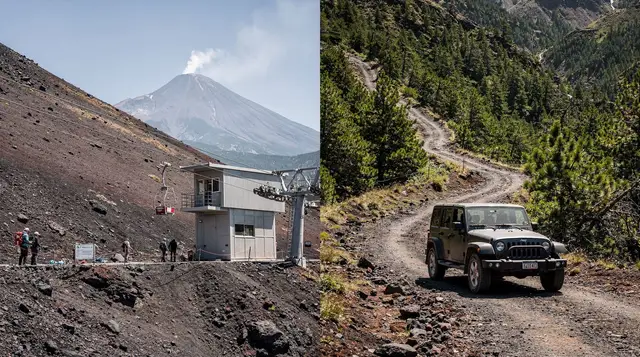
Rifugio Sapienza, the south-side base at around 1,900 m, sits roughly 45 minutes to an hour from Catania by car — the shortest drive to Etna from any Sicilian city. This makes Catania the natural choice for travellers who want to treat Etna as a single half-day or full-day excursion without losing the morning or evening to driving.
4X4 Mount Etna Excursion with Lunch at a Winery from Catania and Taormina is built around this route, combining the ascent with a winery lunch on the lower slopes afterwards — a sensible way to fill the second half of the day once the mountain portion is done. See Day trips from Catania for how Etna compares with Taormina, Syracuse and the Val di Noto as options from that base.
The short drive from Catania also means an early departure is genuinely easy to manage — leaving by 8am gets you to Rifugio Sapienza before the car park fills and before the cable car queue builds, both of which lengthen noticeably by late morning in peak season. This is the base that most rewards flexibility: if the mountain looks cloudy or windy from Catania on the morning you had planned to go, it is usually just as easy to swap that day for a different excursion and try Etna again later in your stay.
From Taormina: closer to the quieter north side
Taormina’s real advantage is Piano Provenzana, the north-side base near Linguaglossa, at roughly 45 minutes to an hour away — closer than from Catania in this specific direction, even though the south side (Rifugio Sapienza) takes slightly longer from Taormina, around an hour to an hour and 15 minutes. The north side has no cable car; access to altitude is by 4x4 and guided walk only, which tends to draw smaller groups and a quieter atmosphere than the infrastructure-heavy south side.
From Taormina: or Giardini Naxos Quad Tour Between the Alcantara Gorges and Mount Etna combines a lower-mountain quad excursion with the Alcantara Gorges, both accessible from the same general direction out of Taormina — a good option for travellers who want an active day rather than a purely guided ascent. See Etna north side or south side for the fuller comparison, and Day trips from Taormina for how this fits alongside Savoca, Catania and Syracuse as options from that base.
The lack of a cable car on the north side is worth planning around rather than treating as a drawback — every ascent here happens with a guide from the outset, which suits travellers who would rather have someone explaining the terrain and the volcano’s history throughout the visit than move independently between stations the way the south side allows. The drive up to Piano Provenzana itself, through pine forest that thins as you climb, is markedly different scenery from the more exposed lava fields on the approach to Rifugio Sapienza.
From Syracuse: workable, but a long day
Syracuse sits further from Etna than either Catania or Taormina — figure on roughly two hours each way by car to reach the south-side base, which turns an Etna visit into a genuinely long day once the cable car, jeep and guided walk are added on top of the driving. It is not an unreasonable choice if Etna is a priority and you are only in Syracuse briefly, but it deserves the honest label of a long day rather than a relaxed one. See Day trips from Syracuse for how this compares with the closer Val di Noto options from that base.
Travellers based in Syracuse specifically for Etna should weigh the alternative of relocating to Catania or Taormina for a night rather than making the round trip in a single very long day — splitting the difference this way turns two hours each way of driving into an hour or less, freeing up genuine time on the mountain rather than in the car. If your Syracuse stay is short and Etna is a firm priority, an early departure and a realistic expectation of a 12-hour day is the honest way to plan around it.
From Palermo or Cefalù: think about staying closer instead
From Palermo or Cefalù, reaching Etna means roughly three hours of driving each way — six hours on the road for what is already a half-to-full-day mountain visit once you arrive. Etna: Taormina Departure from Cefalù exists and covers exactly this route, useful evidence that the trip is possible, but it is one of the longest single-day combinations sold anywhere on the island, and the honest recommendation is to treat Etna as part of an eastern-Sicily stay — based in Catania or Taormina — rather than a day trip tacked onto a Palermo or Cefalù itinerary. See Eastern Sicily in 5 days for how to structure a trip that gives Etna its own dedicated base instead.
Self-drive or guided tour: what actually differs
Self-driving to Rifugio Sapienza or Piano Provenzana gives control over timing and generally costs less once you are only paying for the cable car or 4x4 ticket rather than a bundled tour price, but it comes with two real trade-offs: parking at Rifugio Sapienza fills up on busy weekends and in peak season, and the roads up either side of the mountain include tight switchbacks that can be unfamiliar if you are not used to mountain driving. See Driving in Sicily: what nobody warns you about before committing to a self-drive day.
A guided tour with pickup removes both concerns and adds a certified guide for the altitude sections where one is legally required regardless of how you arrive. For a full breakdown of tour formats, operators and price bands, see Etna tours compared, and for the direct comparison between doing it yourself and booking a tour, see Etna: guided tour or on your own.
Half-day versus full day
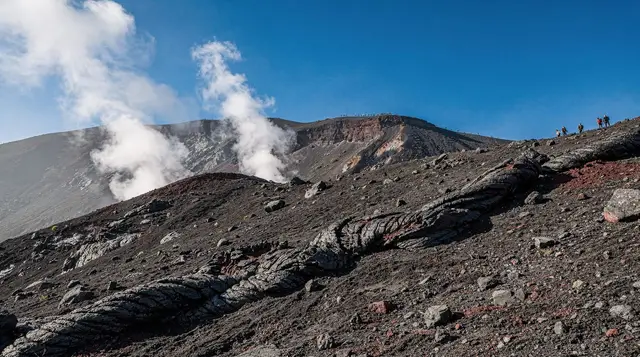
A half-day trip — the lower slopes, the Silvestri craters near Rifugio Sapienza, and a short walk without the cable car or a guided ascent — is genuinely achievable and gives a real sense of the volcano without the time commitment of the full experience. A full day, adding the cable car (south side only) or 4x4, plus the guided walk toward the highest permitted altitude, is where most of the tours and most travellers’ expectations sit.
Ascent on Mt Etna to the Summit by 4X4 represents the fuller version of this, covering the 4x4 ascent as far as conditions allow on the day — worth booking if you specifically want the highest realistic altitude rather than a shorter lower-mountain visit. Remember that no operator, whatever a listing promises, can guarantee access to the true summit craters on a fixed date — that depends entirely on volcanic activity at the time, covered in full in Etna eruptions, ash and safety.
What to skip trying to combine
Etna paired with a full day of city sightseeing in Catania, Taormina or Syracuse on the same date is not realistic — the mountain alone, once transfer time, altitude time and the guided walk are included, fills most of a day. The one genuinely compatible pairing is Etna’s north side with the nearby Alcantara Gorges, both reachable in a similar direction from Taormina with a short drive between them.
What the day actually looks like, hour by hour
From Catania, a realistic Etna day starts with an early departure — either self-driven or picked up by a tour operator — reaching Rifugio Sapienza by mid-morning. The cable car (weather and activity permitting) or a 4x4 covers the ascent toward the higher accessible altitude, generally combined with a guided walk near the Torre del Filosofo area for those on a full package. Allow roughly two to three hours for the cable car, 4x4 and guided walk together, factoring in queues at the base station in peak season.
A late lunch, either packed or at one of the mountain refuges near Rifugio Sapienza, fits naturally before the descent and drive back, with the whole round trip comfortably fitting inside a normal day’s daylight hours even with an unhurried pace. A half-day version simply drops the cable car and guided walk, keeping the Silvestri craters and lower-slope lava fields as the visit’s core.
What to wear and bring, regardless of season
Etna’s summit area sits well over a thousand metres above Catania or Taormina, and temperatures drop noticeably with altitude even during an August heatwave at sea level — a light jacket or fleece is worth carrying even on a hot summer day, since wind at altitude adds a real chill factor beyond what the temperature alone suggests. Sturdy closed shoes matter more here than on most Sicilian day trips: volcanic terrain is loose, sharp in places, and genuinely different underfoot from a paved old-town street. Sunglasses and sun protection remain relevant even at altitude, and water is worth carrying regardless of which package you book, since not every stop includes easy access to refreshments.
Fuel, food and last services before the ascent
Both Rifugio Sapienza and Piano Provenzana sit well above the last major town on their respective approach roads, so it’s worth filling up on fuel and picking up any snacks or water you want before starting the climb rather than assuming a well-stocked stop exists closer to altitude. A handful of mountain refuges near Rifugio Sapienza serve simple meals and hot drinks, useful on a cold day, but choice and opening hours thin out considerably compared with a normal Sicilian town, and outside the main season some close altogether.
Booking ahead versus turning up
Cable car tickets and guided ascents can sell out on the busiest summer days and around major holiday weekends, so booking a day or two ahead is a reasonable precaution rather than an overcautious one if your dates are fixed and Etna is a priority rather than a flexible backup plan. Self-driving visitors relying on the cable car specifically should also check current operating status before setting out, since weather, wind and volcanic activity can all suspend cable car service on short notice regardless of the ticket you’re holding.
What genuinely isn’t worth the money on an Etna day trip
Some operators sell packages promising “summit access” or similarly worded itineraries that, on closer reading, still stop at the same regulated altitude every other operator does — the marketing language oversells a fixed, regulated limit rather than delivering anything extra. Similarly, a handful of roadside stalls near Rifugio Sapienza charge inflated prices for basic snacks and souvenirs aimed squarely at coach-tour traffic; bringing your own water and snacks avoids this without any real loss. Anyone specifically chasing the true summit craters should treat that as a multi-day, guide-arranged undertaking dependent on current volcanic activity, not something any day-trip package, however expensive, can guarantee.
Children and less mobile visitors
The south side’s cable car and paved sections near Rifugio Sapienza are the more accessible option for visitors who cannot manage a long uneven walk, since much of the ascent from the cable car’s upper station onward is on a groomed path rather than loose scree, at least as far as the standard tourist stop before the guided walk toward higher altitude begins. The north side’s 4x4-and-walk format demands more physical comfort with uneven volcanic ground underfoot.
Families travelling with young children generally find the lower slopes and Silvestri craters area — reachable without the cable car at all — genuinely rewarding on their own, without needing to push for the higher, more demanding sections that add little for a child besides cold and fatigue. See Visiting Etna with children for the fuller family-specific picture.
Weather and volcanic activity: two separate things to check
It’s worth being clear that “conditions” on Etna means two distinct things visitors often conflate. Weather — wind, rain, low cloud — affects comfort and visibility and can occasionally suspend the cable car on its own, independent of anything the volcano is doing. Volcanic activity is a separate axis entirely, governing how high above Rifugio Sapienza or Piano Provenzana anyone, guided or not, is permitted to go on a given day.
A clear, calm day can still come with a lower permitted altitude if the volcano is more active than usual, and a blustery day can still allow full access if activity is quiet. Checking both before setting out, rather than assuming good weather means full access, is the honest way to set expectations for a first-time visitor.
The honest bottom line
Catania and Taormina both make Etna a straightforward day trip, with Taormina’s edge being the quieter north side and Catania’s edge being the shortest overall drive. Syracuse is workable at the cost of a longer day, and Palermo or Cefalù stretch the trip into something built mostly around driving rather than mountain time. Wherever you start from, dress for wind and cold regardless of the season at coast level, and treat any fixed promise of “the summit” as marketing rather than fact — the mountain, not the itinerary, decides how high you go on any given day.
If Etna is a genuine priority rather than a box to tick, base yourself in Catania or Taormina for at least one night specifically around it, keep a flexible attitude to which day you actually go given how much weather and activity can shift plans, and treat the volcano as the centrepiece of that day rather than one stop among several. Travellers who do this consistently come away with the better experience, regardless of which side of the mountain they choose.
Etna and volcano tours on GetYourGuide
Verified deep-linked GetYourGuide tours. Book through these links and we earn a small commission at no cost to you.
Photo: our own image of the location, not the operator’s product photo.