Etna north side or south side
Which side of Etna should I visit, north or south?
South side (Rifugio Sapienza) is faster from Catania, has the cable car, and is busier. North side (Piano Provenzana) is quieter and more scenic on the approach, but has no cable car and a longer drive from Catania.
Etna has two front doors, not one
Almost every Etna tour listing implicitly assumes one starting point, but the mountain actually has two separate, unconnected visitor bases on opposite flanks: Rifugio Sapienza to the south and Piano Provenzana to the north. They are not two viewpoints of the same experience — they involve different drives, different infrastructure, different crowds and, in the north’s case, no cable car at all. Picking the wrong one for your priorities is one of the more common Etna planning mistakes. This guide lays out the practical differences. For the mountain overview, see Mount Etna: the complete visitor guide.
Rifugio Sapienza: the south side
Sitting at around 1,900 m, Rifugio Sapienza is the busier, more developed of the two bases, and the one most tour operators and independent visitors default to. It is roughly 45 minutes to an hour by car from Catania and about an hour to an hour 15 from Taormina, making it the faster option from either base.
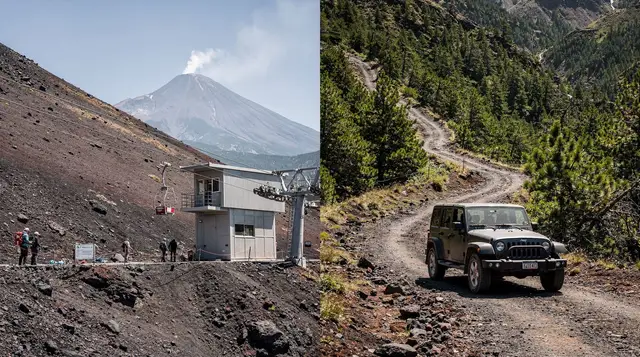
The defining feature here is the Funivia dell’Etna cable car, lifting visitors to around 2,500 m in about 15 minutes — a genuine shortcut past the lower slopes that the north side simply does not offer. From the upper station, 4x4 vehicles and guided groups continue toward 2,900-3,000 m. Mount Etna: Return Funivia dell'Etna Cable Car Ticket is the standalone ticket for this stage. Below the cable car, the short, unguided walk to the Silvestri craters — dormant 19th- century cones — is free and requires no ticket, popular with visitors short on time or budget.
The south side’s convenience comes at a cost: it is genuinely crowded, especially from mid-morning, with coach parking, a row of restaurants and souvenir stalls, and queues at the cable car in peak season. Etna: Sud Trekking to the Summit Craters follows this route for visitors who want the guided hike specifically from this side.
Piano Provenzana: the north side
Piano Provenzana, near the town of Linguaglossa, sits at a lower starting altitude and feels considerably wilder on approach — pine forest rather than car parks, and a visitor area that was substantially rebuilt after a lava flow destroyed the original tourist village in the early 2000s, which is itself part of what makes the site interesting to see.
There is no cable car here. Altitude gain toward the craters is entirely by 4x4 and guided walking, which typically means more time spent on foot from a lower starting point than the south side’s cable-car shortcut allows. North Etna Central Craters with all'Inclusive Pick Up operates from this base with pickup included, useful given the drive is longer and less signposted for independent visitors than the well-trodden south-side route. Other operators on this side run a similarly structured nature-and-lava format with pickup, also worth comparing before booking.
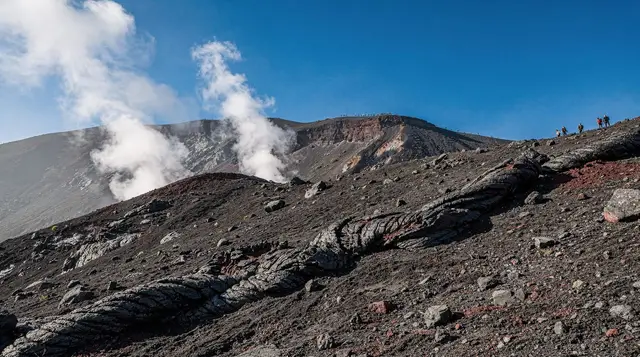
What you get in exchange for the longer drive and the absence of a cable car is space: noticeably fewer people on the trail, a genuinely different landscape on the approach, and — for travellers who have already done a standard south-side visit — a distinct enough experience to be worth a second trip up the mountain. Etna: North Etna Summit Craters Hike to 3400 Meters is a dedicated hiking option from this side aiming for a higher altitude range.
Side-by-side
Drive time from Catania: south side roughly 45-60 minutes; north side roughly 75-90 minutes.
Drive time from Taormina: north side generally shorter via Linguaglossa; south side longer.
Cable car: south side only. North side is 4x4 and guided walking from a lower base.
Crowds: south side significantly busier, especially midday in high season; north side quieter year-round.
Free, unguided walking: available on the south side (Silvestri craters); more limited on the north, where most routes involve a guide from the outset.
Infrastructure: south side has more restaurants, shops and facilities at the base; north side is more basic, though rebuilt since the early-2000s eruption.
Which side actually suits you
If your priority is efficiency — limited time, based in Catania, want to maximise altitude with minimal walking — the south side’s cable car makes it the more practical choice, and it is why most tour operators default to it. If you are based in or near Taormina, the drive-time balance tilts toward the north side instead. If you specifically want to avoid crowds, dislike the coach-tour atmosphere, or have already visited the south side on a previous trip, the north side is worth the extra driving time. Families with young children generally do better on the south side, where the cable car removes a large share of the physical effort; see Visiting Etna with children for more on that specifically.
Neither side is objectively “better” — they solve different problems. For how the cable car and jeep segments mechanically work on the south side, see The Etna cable car and 4x4 jeeps explained; for a full comparison of tour formats across both sides, see Etna tours compared.
Can you combine both in one trip?
Not in a single day alongside a full crater visit on either side. The two bases are on opposite flanks of the mountain, and the road connecting them around the base takes well over an hour, on top of whatever time you spend at altitude on either side. Visitors curious about both generally do the south side on one visit — often paired with Catania as a day trip — and save the north side, perhaps paired with Taormina, for a separate day or a return trip. See Day trips from Catania, Day trips from Taormina and Catania and Etna in 3 days for how either side slots into a broader itinerary.
Access rules apply to both sides equally
Whichever side you choose, the same regulation applies: access above roughly 2,900 m requires a licensed guide, and the park can close sections of either flank depending on current volcanic activity. Neither side is inherently “safer” in terms of eruption risk — both are managed by the same authority applying the same rules. See Etna eruptions, ash and safety for what actually changes when activity increases.
What driving each side is actually like
The two access roads have distinct characters worth knowing before you set off. The road up to Rifugio Sapienza from Catania is well signposted and heavily used, winding through vineyards and pistachio groves before opening onto the more barren volcanic landscape near the base station — easy to follow even for a first-time visitor navigating independently.
The route to Piano Provenzana from Linguaglossa is narrower in places and passes through denser pine forest, with fewer other vehicles and less obvious signage at some junctions; a GPS or offline map is worth having ready rather than relying purely on road signs. Neither road is technically difficult to drive, but the north side rewards a bit more preparation, and a rental car unfamiliar with the route should allow extra time rather than cutting it fine. For general driving guidance across the island, see Driving in Sicily: what nobody warns you about.
Weather differences between the two sides
Etna’s south side, facing the Ionian coast and Catania, tends to catch clearer weather more often, while the north side, backed by denser forest and facing a different exposure, can hold cloud and mist longer into the morning, particularly in shoulder season.
This is not an absolute rule — both sides are subject to the same broader weather systems moving across Sicily — but visitors planning a sunrise or early-morning ascent specifically for clear views often find the south side marginally more reliable for this purpose. Whichever side you choose, check a mountain-specific forecast rather than the general Catania or Taormina weather report, since conditions at 1,900-2,500 m diverge from the coast more than most visitors expect, especially outside summer.
Facilities at each base, side by side
Rifugio Sapienza has the more developed visitor infrastructure of the two: a paved car park, several restaurants and cafes, souvenir shops, and clearly marked ticket offices for the cable car. It feels closer to a ski resort base in low season than a remote mountain trailhead. Piano Provenzana is more basic, reflecting both its lower visitor volume and its history of being largely rebuilt after the early-2000s eruption that destroyed the original tourist village — expect a smaller car park, fewer dining options, and a more modest visitor centre. Neither is a problem in practice, but travellers who want a sit-down meal with a wide menu before or after their mountain visit will find the south side easier on that front.
Cost differences between the two sides
Pricing is broadly comparable once you account for what each side actually includes: the south side’s combined cable car, jeep and guide ticket reflects the cost of operating and maintaining the Funivia dell’Etna alongside the 4x4 fleet, while north-side tours, lacking the cable car, price purely around the 4x4 and guide segment from a lower starting altitude.
In practice this means south-side tickets are not necessarily cheaper just because the cable car covers part of the ascent mechanically — labour, fuel and guide costs on the north side’s longer walking-and-driving format can land at a similar overall price point. Compare specific listings rather than assuming one side is inherently the budget option; see Etna tours compared for how pricing actually breaks down across formats on both sides.
Choosing based on the rest of your Sicily trip
Where you are staying before and after your Etna visit is often the deciding factor in practice. Travellers based in Catania for several days, using it as a hub for the southeast of the island, naturally lean toward the closer south side. Travellers centred on Taormina, especially those also planning to see Messina or explore toward the Nebrodi mountains, often find the north side fits their route better and avoids backtracking. If your itinerary has you moving between both areas regardless, either side can work — in that case, base the decision on the other factors above: crowd tolerance, cable car preference, and whether you are hiking or driving up.
Combining a visit to both sides across a longer stay
Travellers spending a week or more in eastern Sicily sometimes do visit both sides of Etna, on separate days rather than the same one. A common pattern is a south-side cable car visit early in the stay, paired with Catania sightseeing, followed later in the trip by a quieter north-side hike paired with the Etna wine region around Bronte and Randazzo or a stop in Taormina. This avoids the redundancy of seeing the same route twice while genuinely making use of what each side offers. See Sicily in 7 days or Sicily in 10 days for itinerary lengths that comfortably accommodate this kind of split visit.
A common misconception worth clearing up
Some visitors assume the north side is somehow the “wilder” or more dangerous side of the volcano because it sees fewer tourists, while the south side is the “safe” tourist route. This is not accurate — both sides are managed by the same park authority and the same guide licensing system, and access restrictions above the regulated altitude apply equally regardless of which flank you climb.
The north side feels wilder because of lower visitor infrastructure and denser forest on the approach, not because it carries different safety rules. Neither side is inherently riskier than the other when visited with a licensed guide following current access conditions; see Etna eruptions, ash and safety for how those conditions are actually assessed.
Photography and views from each side
The south side offers sweeping views back down over Catania, the Ionian coast and, on a clear day, as far as the Calabrian coast across the strait — a genuinely striking outlook that many visitors rate as one of the highlights of the cable car ascent. The north side’s views trend more inward, toward the forested lower slopes and the Alcantara valley rather than a wide coastal panorama, though the approach through pine forest before the terrain opens into volcanic scree offers a different, arguably more varied visual progression than the more direct ascent from Rifugio Sapienza. Neither is objectively more photogenic; they simply frame the mountain differently.
For travellers with limited mobility
The south side is the more practical choice for visitors with limited mobility or stamina, given the cable car covers a large share of the altitude gain mechanically rather than on foot, and the base station itself has flatter, more accessible paths around the Silvestri craters. The north side, with no equivalent mechanical lift and more walking required from a lower starting point, is a harder recommendation for anyone who cannot manage sustained uneven walking. If accessibility is a primary concern for your visit, default to the south side and discuss specific needs directly with your chosen operator ahead of time.
Timing your visit to avoid the worst of the crowds
If the south side’s popularity is your main hesitation, timing can offset a good deal of it. Arriving at Rifugio Sapienza for the first cable car departure of the day, well before coach tours from Catania and Taormina arrive mid-morning, gives a noticeably quieter experience of the same route, shorter queues at the ticket office, and a cooler start before the sun is fully up over the crater area. Late afternoon and sunset departures also thin out compared with the mid-morning peak, at the cost of a later return. On the north side, crowding is rarely enough of an issue to require this kind of timing strategy, one of the trade-offs for the longer drive and more basic facilities.
The verdict for specific traveller types
First-time visitors with limited time: south side. Fit hikers seeking a quieter, more demanding route: north side. Families with young children or limited mobility: south side, for the cable car. Travellers based in or near Taormina: north side, for the shorter drive. Anyone who has already done the south side on a previous trip and wants something different: north side. Wine-focused travellers planning to combine Etna with the DOC region: north side, given its proximity to the main wine towns. There is no universal right answer, only the answer that fits your specific priorities for this particular visit.
The bottom line
Default to the south side if convenience, time and the cable car matter most to you — it is the sensible choice for the majority of first-time visitors. Choose the north side if you are coming from Taormina, want to avoid the crowds, or are visiting Etna for a second time and want a genuinely different experience of the same mountain. Either way, check current conditions with your operator before travel — access on an active volcano is never fixed months in advance.
Etna and volcano tours on GetYourGuide
Verified deep-linked GetYourGuide tours. Book through these links and we earn a small commission at no cost to you.
Photo: our own image of the location, not the operator’s product photo.