Visiting Etna with children
Is Mount Etna suitable for children?
Yes, in the right format. The south side's cable car plus the short, unguided walk to the Silvestri craters suits most children and requires no strenuous hiking. The full summit crater hike is not appropriate for young children.
The volcano can work for families, with the right expectations
Mount Etna is not automatically a difficult destination for children — the mistake most families make is booking the same demanding summit hike an experienced trekker would choose, then finding it too much for young legs, cold hands and short attention spans. Etna actually offers an easy, genuinely rewarding version for families, alongside a much harder version aimed at fit adult hikers. This guide covers which is which. For the mountain overview generally, see Mount Etna: the complete visitor guide.
The easiest win: the Silvestri craters
On Etna’s south side, a short walk from the Rifugio Sapienza car park leads to the Silvestri craters — dormant volcanic cones from 19th-century eruptions, now cool and safe to walk around. It requires no ticket, no guide and no particular fitness, and it gives children a genuine, tangible sense of “this is a volcano” without any of the altitude, cold or exposed terrain of the higher routes. For many families with younger children, this alone is a satisfying Etna visit, especially combined with lunch at one of the restaurants near the car park.
Adding the cable car
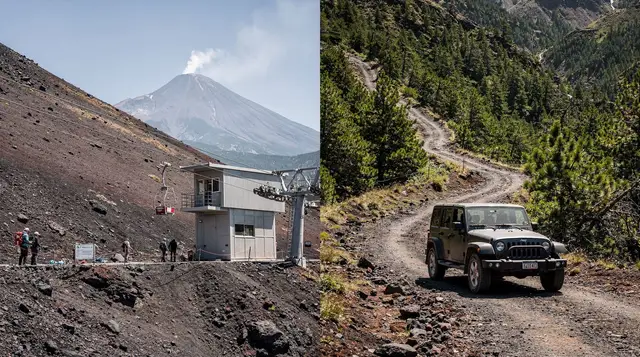
For families wanting more than the Silvestri craters without committing to the full guided ascent, the Funivia dell’Etna cable car is a comfortable, low-effort way to gain altitude and see more of the mountain.
Mount Etna: Return Funivia dell'Etna Cable Car Ticket covers this stage. The ride itself is straightforward for children, and the upper station at around 2,500 m offers striking views without requiring any strenuous walking. Whether to continue from there by 4x4 and guided walk toward the craters is a separate decision — worth thinking through based on your children’s ages and stamina, since this stage is colder, windier and involves genuine walking on loose ground. See The Etna cable car and 4x4 jeeps explained for exactly what the two stages involve.
Tours actually built for families
Rather than booking a standard adult-paced tour and hoping it works out, look for options explicitly designed around families.
Etna: Family Tour Semi Private Tour on Etna Mt for Families is built around a gentler pace and smaller group size, with more flexibility to stop, rest or turn back early if children tire — something a large standard group tour on a fixed schedule generally cannot accommodate. If wine and food matter as much to the adults as the volcano does to the kids, Taormina: Private 3 Etna Family Wineries Tour with Tastings combines an easier Etna visit with cellar stops, letting adults taste while children have a change of scenery and a proper sit-down break. On the north side, North Etna Meet Your Guide on Site and Enjoy a Gentle Trekking Experience Among the Craters is marketed specifically around a gentle trekking pace among the craters, worth considering if Piano Provenzana suits your logistics better than the south side; see Etna north side or south side for the comparison.
What to skip with young children
The full guided summit crater hike, covered in Hiking to the Etna summit craters, is not designed with children in mind. It involves two to three hours of walking on loose volcanic scree above 2,500 m, in constant wind and thin air, at a pace set for fit adults. Guides can and do turn back visitors who are struggling, and a tired, cold child on an exposed mountainside two hours from the nearest vehicle is a genuinely difficult situation to manage. If older children or teenagers are enthusiastic hikers and in good general fitness, a shorter, guide-assessed version may be appropriate — discuss it directly with the tour operator before booking rather than assuming.
Packing for kids specifically
- Warm layers, non-negotiable even in August. Temperatures at 2,000-2,500 m run well below coastal Sicily, and children get cold faster than adults standing around at altitude.
- Closed shoes, not sandals — volcanic ground is loose, sharp-edged in places, and genuinely uncomfortable in open footwear.
- Snacks and water, since there is little available once you are past the base restaurants at Rifugio Sapienza.
- Sun protection, since high-altitude sun is stronger than it looks on an otherwise cool, windy day.
Timing the day
A half day is usually the right scope for a family Etna visit: drive up, cable car, a walk around the upper station or the Silvestri craters, lunch, drive back. Trying to combine Etna with a second major stop the same day tends to produce a long, tiring day for children who have already spent the morning in cold wind at altitude. If you are building a longer trip, Sicily with kids and Family-friendly tours in Sicily cover how to pace Etna against beach time and other activities across a full itinerary, and Catania and Etna in 3 days gives one concrete structure that keeps the volcano day contained rather than open-ended.
Base choice matters
Basing yourself in Catania keeps the drive to Rifugio Sapienza short — well under an hour — which matters more with children than with adults, since a long drive on top of a demanding morning compounds tiredness. See Catania Fontanarossa airport if Etna is an early stop after arrival, and consider spacing it a day or two after landing rather than on the first day, to let children adjust.
Age-by-age guidance
Toddlers (under 4). The Silvestri craters and a short walk around the cable car’s base station are realistic; the cable car ride itself and the upper station views work fine at this age too. Skip the jeep-and-guide segment and definitely skip the summit hike — both involve more walking, cold and duration than makes sense for a toddler, and most operators will not carry very young children on those stages regardless.
Young children (roughly 5-9). The cable car plus a short guided walk at the upper station, covered in a family-specific tour format, generally works well at this age with reasonable expectations about pace and duration. Watch for tiredness and cold rather than assuming enthusiasm will carry a child through a longer day than planned.
Older children and teenagers (10+). Many are physically capable of a shortened version of the guided crater walk, and some fit, enthusiastic teenagers manage a genuine summit hike with a guide’s sign-off. Judge this by your specific child’s stamina and interest rather than age alone, and discuss it directly with the guide before committing to the longer format.
Motion sickness on the drive and the jeep segment
The winding mountain roads to Rifugio Sapienza or Piano Provenzana, and the bumpy 4x4 track above the cable car’s upper station, can trigger motion sickness in children prone to it on any winding drive. If this is a known issue for your child, consider motion sickness medication timed appropriately before setting out, keep a supply of bags or wipes to hand, and ask whether front-facing seating is available on the jeep segment specifically, since it tends to help more than a rear-facing seat.
Toilets, food and other practicalities with children
Restroom facilities exist at Rifugio Sapienza’s base station and, more basically, at Piano Provenzana, but are limited or absent once you are on the cable car or jeep segments themselves. Plan bathroom stops before ascending rather than assuming options higher up. Food-wise, both base areas have restaurants suitable for a family lunch before or after the mountain segment, though options thin out considerably compared with a coastal town, so packing snacks for younger children is sensible insurance against a longer wait than expected.
An unusual souvenir: crafting with lava stone
Away from the standard volcano-tour format, a small number of workshops on Etna’s lower slopes let visitors, including children, try their hand at shaping a small souvenir from Etna lava stone under supervision — a memorable, hands-on activity that works well as a lower-key alternative or addition to the mountain visit itself, particularly on a day when younger children have already had enough walking and cold for one outing. Ask locally or check current listings for this kind of workshop if it appeals, since availability and format vary by operator and season.
Combining Etna with a beach day for balance
Given how cold and demanding even the easy version of an Etna visit can feel to children compared with a beach afternoon, many families deliberately pair an Etna morning with a relaxed beach afternoon back on the coast, rather than filling the whole day with mountain activities. Cefalù, Mondello and the beaches around Taormina and Giardini Naxos are common choices for this kind of balance; see The best family beaches in Sicily for options that work well as a counterpoint to a morning on the volcano.
What other families say, honestly
The most common feedback from families who have done an Etna visit with children is not about the volcano itself but about temperature management — many are surprised by how cold their children got despite a warm forecast for the coast that day, and wish they had packed an extra layer. The second most common note is about timing: families who kept the visit to a genuine half day, rather than trying to combine it with a second major activity, reported a noticeably better experience than those who pushed for more in a single day. Both are easy adjustments to make in advance once you know to expect them.
Packing checklist specific to family visits
Beyond the general Etna packing advice covered in the main visitor guide, family visits benefit from a few extra items: a spare warm layer per child in case the first gets damp or dirty, snacks that travel well without refrigeration, a printed or offline map of the base area in case phone signal is patchy, and a small first-aid kit for the inevitable scraped knee on uneven volcanic ground. Bring sunscreen even though the air feels cool — high-altitude sun exposure is real regardless of wind chill, and children’s skin burns faster than adults’ at altitude.
Making the geology interesting for children
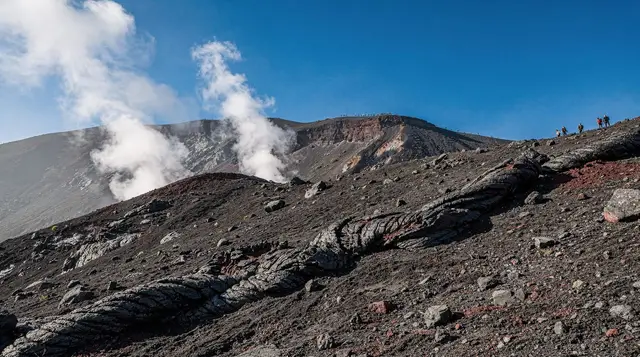
Rather than treating Etna as simply “a big cold mountain,” a bit of framing beforehand can make the visit land better with children. Explaining that the black rock underfoot is cooled lava, sometimes only a few decades old, and that the mountain is actively growing and changing shape with each eruption, tends to land well with curious children who might otherwise find a walk on grey gravel unremarkable.
Guides on the family-oriented tours are generally good at pitching this kind of explanation at a child-friendly level, pointing out specific features — a lava tube, a steam vent, a particularly recent flow — rather than delivering a generic geology lecture. Encouraging children to ask the guide questions directly, rather than relying on a parent to relay everything, often produces the most engaged reactions.
What not to worry about
Parents sometimes arrive anxious about safety given that Etna is an active volcano, and it is worth saying plainly: the standard, family-appropriate routes described in this guide are not a serious safety risk when access rules are followed and a licensed guide is present. The park authority closes sections rather than allowing groups into genuinely unsafe zones, and the routes offered to families are, by design, the least demanding and least exposed parts of the mountain. The real practical concerns for a family visit are mundane — cold, tiredness, hunger — not volcanic danger, and are all manageable with the preparation covered above.
Best time of year for a family Etna visit
Summer, particularly July and August, coincides with school holidays and is when most families travel, but it is also the busiest and, on the coast, the hottest time to visit Sicily, which makes the temperature contrast between the beach and the mountain even more pronounced. Spring and early autumn offer a gentler alternative for families with flexibility over school terms: milder coastal heat, still-reliable mountain access, and noticeably thinner crowds at Rifugio Sapienza.
If your travel dates are flexible, shoulder season is worth genuine consideration for a family Etna visit specifically, more so than for many other Sicilian activities where summer crowding matters less. See The best time to visit Sicily for how this fits the island’s broader seasonal pattern.
A sample half-day family plan
A workable structure many families use: leave your base (Catania or Taormina) by mid-morning, arriving at Rifugio Sapienza with time to walk the Silvestri craters first while everyone is fresh. Take the cable car up to the upper station for the views, without committing to the jeep-and-guide segment unless your children are older and keen to continue. Have lunch at one of the restaurants near the base station on the way back down, then head back to the coast with the afternoon still free for a swim or rest. This keeps the demanding, cold, high-altitude portion of the day to a manageable window and leaves flexibility to extend or shorten it based on how the morning is going.
When to skip Etna with very young children altogether
Not every family needs to force an Etna visit into their itinerary. With infants or very young toddlers, the combination of altitude, cold, wind and a long car journey can outweigh the benefit of a volcano visit they are unlikely to remember. It is entirely reasonable to skip Etna on a trip with very young children and substitute a gentler activity, returning to see the volcano on a future trip when children are old enough to genuinely engage with it. Nothing about Etna is so time-sensitive that it needs to be forced into a trip where it does not comfortably fit.
Talking to guides and operators before booking
Because family needs vary so much by age and temperament, it is worth a short message to the operator before booking rather than relying entirely on the listing description. Ask specifically about the youngest age the tour has taken successfully, whether the guide adjusts pace for children, what happens if a child needs to turn back partway through, and whether car seats or booster seats are available for the transfer if you are travelling without your own. Operators running genuinely family-oriented tours are generally used to these questions and will answer them directly rather than deflecting to generic marketing language, which is itself a useful signal about how the day will actually go.
The bottom line
Etna with children works well when you choose the easy version deliberately — Silvestri craters, cable car, a short walk — rather than defaulting to the same demanding summit hike an adult solo traveller might book. Pack for real mountain cold regardless of the season, keep the day to a half day, and use a tour explicitly built for families if you would rather not manage the pace yourselves.
Judge readiness by your own children’s age and temperament rather than a generic recommendation, ask operators direct questions before booking, and treat the volcano as one flexible piece of a longer Sicily trip rather than a fixed must-do that has to be forced into every itinerary regardless of how your children are coping with the rest of the holiday.
Etna and volcano tours on GetYourGuide
Verified deep-linked GetYourGuide tours. Book through these links and we earn a small commission at no cost to you.
Photo: our own image of the location, not the operator’s product photo.