Vendicari: flamingos, tonnara and empty sand
What makes Vendicari different from other Sicilian beaches?
It is a protected wetland and dune reserve rather than a developed beach: no lidi, no road running along the sand, and beaches like Calamosche reachable only by a walk from the car park. Flamingos and other migratory birds pass through the reserve's salt pans in spring and autumn.
The emptiest coast in the southeast
Vendicari nature reserve sits on the coast between Noto and Marzamemi, in the southeast corner of Sicily, and it looks almost nothing like the rest of the region’s coastline. Where the Val di Noto’s towns are dense with Baroque stone, and beaches further north come with lidi, parking directly on the sand and beachfront bars, Vendicari is wetland, dune, salt pan and open sand, protected as a nature reserve rather than developed as a resort. There is no road running along the coast inside the protected area, no beachfront development at all, and the reserve’s best-known beaches are reachable only by walking in from a car park outside the gates.
That absence of development is precisely the appeal. Vendicari holds some of the quietest, least built-up sand anywhere in southeastern Sicily, alongside genuine wildlife — flamingos and other migratory birds pass through its salt pans at points in the year — and the ruins of a historic tuna fishery that sat on this coast long before conservation became the priority.
The reserve was established as a protected area specifically to safeguard its wetlands and salt pans as a stopover for migratory birds, and its stretch of coast escaped the kind of development seen further north partly because this land was economically marginal for much of the 20th century — salt extraction and tuna fishing, rather than tourism, were the industries that shaped it. That history is still visible today: alongside the tonnara ruins, a squat medieval watchtower, built to watch for raids from the sea like so many others along Sicily’s coast, still stands near the reserve’s beaches, a practical reminder of how exposed and undefended this stretch of coastline once was.
A landscape of wetland, dune and salt pan
Vendicari’s terrain is unusual for Sicily precisely because so little of it is either cliff or hard rock. Shallow wetlands and old salt pans sit just behind the dune line in several parts of the reserve, flooding and drying with the seasons and creating exactly the kind of shallow-water habitat that attracts wading birds in such numbers. Dunes back much of the sand itself, stabilised by scrub vegetation rather than built over, and the whole area has a flatter, quieter feel than the cliff-and- cove coastline found around Scala dei Turchi or the Zingaro reserve further west — less dramatic in photographs at first glance, but arguably richer in wildlife as a direct result.
Calamosche: the beach everyone comes for
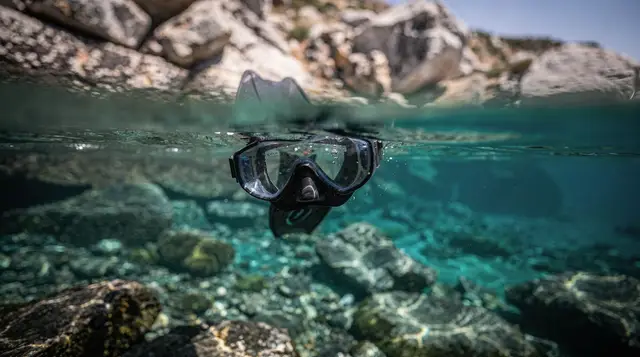
Calamosche is Vendicari’s best-known beach, a curved sandy cove backed by low dunes and scrub, reached by a walk of roughly 20 to 30 minutes each way from the nearest car park, with no vehicle access at any point. That walk is exactly what keeps it as uncrowded as it is relative to beaches with direct road access elsewhere on this coast — a filter that, like the Zingaro reserve further west, does more to control numbers than any formal capacity limit could. The water is clear and the cove sheltered enough for comfortable swimming, and it is a realistic destination for most fitness levels given the short walking distance involved, though sturdy shoes and sun protection matter given the lack of shade along the path in.
Noto: Guided Trekking and Birdwatching at Vendicari Reserve combines the walk to beaches like Calamosche with a broader look at the reserve’s wildlife, useful for visitors who want context on the birds and landscape rather than just a swim.
Eloro: beach and ancient ruins together
Toward the northern end of the reserve, near where Vendicari meets the site of ancient Eloro (Elorus), a Greek and later Roman settlement whose ruins are still visible nearby, another quieter beach gives a second walking-only option away from Calamosche’s relative popularity. Combining a swim with a look at the ruins is a reasonable way to spend a slower afternoon here, particularly for visitors who have already covered the region’s larger ancient sites and want a smaller, less-visited one alongside a beach rather than a standalone archaeological stop.
Eloro itself never reached the scale of Syracuse’s Neapolis park or the temples further south near Agrigento, and it is visited by a fraction of the numbers those larger sites draw each year, which is part of its appeal for anyone who has already spent a day walking a more crowded ancient site elsewhere in Sicily and wants a quieter, more atmospheric alternative to finish a trip through the region’s classical history.
The Bafuto tonnara
Within the reserve stand the ruins of the Bafuto tonnara, an old tuna-processing complex tied to the historic mattanza — the traditional method of harvesting bluefin tuna as it migrated along Sicily’s coast, once a major economic activity all along this stretch of the Mediterranean before industrial fishing and changing tuna populations largely ended it. What remains is a cluster of weathered stone buildings rather than a working site, standing at the edge of the reserve’s wetlands as a reminder that this coast’s economy long predates its current life as a nature reserve. It is a short, easy stop worth combining with either of the reserve’s main beaches rather than a separate destination requiring its own trip.
Flamingos, salt pans and birdwatching
Vendicari’s wetlands and old salt pans make it one of the more significant bird habitats in Sicily, and flamingos are the best-known visitors, passing through in numbers during spring and autumn migration on their way between African wintering grounds and European breeding sites further north. Exact timing varies year to year with weather and migration patterns, so no fixed calendar date guarantees a sighting, but the shoulder seasons are consistently the best window, both for flamingos specifically and for the wider range of wading birds that use the reserve’s shallow waters.
Herons, storks and various species of wader are regular visitors to the same salt pans alongside the flamingos, and the reserve’s official status as a protected wetland means its bird population is consistently better documented and more reliably present than at informal coastal wetlands elsewhere on the island.
From Siracusa: Vendicari Nature Reserve Guided Tour and Mindfulness in Vendicari Discover the Reserve Through all'Your Senses both build a visit around the reserve’s wildlife and landscape at a slower pace than a beach-only stop, useful if birdwatching or a genuinely quiet walk matters more to you than swimming.
How Vendicari compares to the Zingaro reserve
Sicily has two well-known walking-only nature reserves built around its coastline, and they suit different travellers. The Zingaro reserve, on the northwest coast near San Vito Lo Capo, is dramatic cliff-and-cove scenery with a proper multi-hour coastal hike; its appeal is the walk itself as much as the beaches at the end of it. Vendicari is flatter, shorter to walk, and built more around wetland wildlife and history than dramatic coastal scenery — a half-day outing rather than a full hiking day, and arguably more approachable for visitors who want the “no road access” experience without committing to hours of walking in full sun.
Neither reserve sells water or food inside its gates, and both reward an early start and proper footwear regardless of how short the walk to the nearest beach turns out to be. Travellers building a longer Sicily itinerary around walking-only coastal reserves could reasonably visit both in the same trip, given how different their character is despite the shared rule of no road access — Vendicari for wetland wildlife and history, the Zingaro for dramatic cliff scenery and a longer hike.
Best time of day, and photographing the reserve
Early morning is the best window at Vendicari for more than the usual reasons of heat and crowds: bird activity around the salt pans is highest in the cooler hours after sunrise, and the flat, even light across the wetlands photographs better before the haze of a hot afternoon sets in. Midday brings both the strongest sun, with essentially no shade anywhere in the reserve, and the quietest bird activity, as most species retreat to cover during the hottest hours. Late afternoon offers a second reasonable window, cooler and often with birds becoming active again as the heat eases, though the light for photography is less consistently good than at sunrise.
Family visits and accessibility
The walk to Calamosche, at 20 to 30 minutes each way over uneven, unshaded ground, is manageable for most families with older children but more of a challenge with very young children, a stroller, or anyone with mobility limitations, since there is no paved or wheelchair-accessible route to any of the reserve’s beaches. Families who want the wetland and wildlife side of Vendicari without the longer walk to the sand can often see a reasonable amount from paths closer to the entrance gates, where some of the salt pans and birdwatching points are within easier reach. See The best family beaches in Sicily for how Vendicari’s walk-in beaches compare with more accessible options elsewhere on the island.
Getting there
Vendicari sits a short drive from Noto — around 15–20 minutes — and roughly 20 minutes from Marzamemi, making both reasonable bases for a visit. Public transport to the reserve itself is limited, so most independent visitors drive, parking at one of the marked entrances outside the protected area. There is no direct road access beyond the car parks; from there, everything is on foot, in line with the reserve’s whole approach to limiting development along this stretch of coast.
Marzamemi: Private Tour to Vendicari and Capopassero is a practical option for visitors without a car, combining Vendicari with the nearby fishing village of Marzamemi and Capo Passero, the southernmost point of mainland Sicily, into a single guided day.
Combining Vendicari with Noto and the Val di Noto
Vendicari pairs naturally with a stay in Noto, the best-known of the Val di Noto’s eight Baroque towns rebuilt after the 1693 earthquake, and one of Sicily’s most photogenic historic centres. A typical day runs the town in cooler morning hours — see Noto: a walking guide to the Corso — followed by an afternoon at Vendicari once the midday heat has settled into something more bearable for walking the reserve’s paths.
The Val di Noto: eight Baroque towns, one earthquake covers the wider region if Vendicari is one stop within a longer exploration of this corner of Sicily, and Syracuse and the Val di Noto in 4 days folds a Vendicari afternoon into a broader itinerary covering Syracuse and Ortigia as well.
Marzamemi itself, a small former fishing village a short drive south, has grown into a well-known evening stop with restaurants around its old tonnara square, and works well as a base for exploring Vendicari without needing to stay in Noto or Syracuse. Like Scopello near the Zingaro reserve, Marzamemi’s own historic tonnara marks it out as a place whose economy was built on tuna fishing long before it became a tourist destination, and the two old tuna-fishery towns — Marzamemi and Scopello — make an interesting parallel for anyone visiting both of Sicily’s walking-only reserves over the course of a longer trip. The blog post A day in Marzamemi gives a first-hand sense of how that pairing plays out in practice.
Travellers based further away in Syracuse can reach Vendicari as part of a longer day out; see Day trips from Syracuse for how it fits alongside the city’s own ancient sites and Ortigia old town.
When to go
Spring and autumn are the best overall windows — comfortable walking temperatures, migration season for the birds, and a real chance of solitude at the beaches that disappears somewhat in peak summer. July and August still work for swimming, given how much cooler and quieter Vendicari stays relative to beaches with direct road access, but expect more company at Calamosche specifically during those months. See Sea temperature in Sicily, month by month for the water conditions across the calendar, and The best beaches in Sicily, region by region for how Vendicari compares with Sicily’s other well-known coastal stops.
What to bring
As with Sicily’s other undeveloped reserves, there is nothing to buy once you are past the entrance gates. Water for the walk to Calamosche or Eloro, sun protection given the almost total lack of shade, sturdy shoes for the uneven dune paths, and binoculars if birdwatching interests you at all are all worth carrying in. A car is close to essential for reaching the reserve itself, and cash is useful for anywhere you stop to eat afterwards in Marzamemi or Noto, where not every smaller restaurant accepts cards without notice.
Etiquette inside the reserve
The same basic rules that apply at any of Sicily’s protected coastal reserves apply here: stay on marked paths rather than cutting across dune vegetation or wetland edges, since both are fragile and directly tied to the bird habitat the reserve exists to protect; take all rubbish away with you, since there are no bins along the trails; and keep a respectful distance from nesting or feeding birds rather than approaching for a closer look or photograph, particularly around the salt pans during migration season when disturbance can push birds away from a stopover they rely on.
None of this asks much of a visitor, but it matters more at Vendicari than at a developed beach, given how directly the reserve’s appeal depends on the wildlife staying undisturbed.
The honest bottom line
Vendicari rewards exactly the kind of visitor who is drawn to the Zingaro reserve further west: someone willing to walk rather than drive up to the sand, in exchange for beaches and wildlife that development never reached. It is not a beach for a lido afternoon with sunbeds and a beach bar, and anyone expecting that kind of infrastructure should look elsewhere on this coast instead. What it offers instead — a tuna-fishery ruin, migratory flamingos, ancient ruins at Eloro, and sand that stays genuinely quiet even in summer — makes it one of the more distinctive stops in southeastern Sicily for travellers willing to carry their own water and walk the last stretch to the coast.
Pair it with a morning in Noto’s Baroque centre and an evening in Marzamemi, and Vendicari stops being a single-attraction detour and becomes one of the better full days available anywhere in the southeast of the island — provided you arrive early, carry enough water, and treat the walk to the sand as part of the experience rather than an inconvenience standing between you and a beach towel.
Beach and coastal trips on GetYourGuide
Verified deep-linked GetYourGuide tours. Book through these links and we earn a small commission at no cost to you.
Photo: our own image of the location, not the operator’s product photo.