Lidi or free beach: how Sicilian beaches work
What is the difference between a lido and a free beach in Sicily?
A lido is a managed section of beach where you pay a daily fee for a sunbed and umbrella, usually with showers and sometimes food service included. A free beach (spiaggia libera) costs nothing but comes without any of that infrastructure, and space is first-come, first-served.
Two systems on the same sand
Almost every well-known beach in Sicily runs on the same split: part of the sand is managed as a paid lido, where a daily fee gets you a sunbed, an umbrella and usually a shower, and part of it is free public beach, open to anyone at no cost but without any of that infrastructure. Understanding how this works, and how to pick between the two for a given day, matters more in Sicily than it does in countries where beaches are either fully public or fully commercial, because the coexistence of both systems, on the same stretch of coast, shapes almost every practical decision about a beach day here — where to set up, what to bring, and how early to arrive.
This guide explains the mechanics in general terms; for beach-specific detail on how the split actually looks at particular well-known spots, see the dedicated guides for Mondello, San Vito Lo Capo, Isola Bella and Cefalù, all of which follow this same basic pattern with their own local variations.
The word “lido” itself comes from the Lido di Venezia, the barrier island that gave its name to the whole concept of a managed bathing establishment across Italy, and the same basic model — rows of sunbeds and umbrellas, a bar, a shower block, a daily or half-day fee — has spread to essentially every stretch of developed Italian coastline since, Sicily included. What differs from one country’s beach culture to another is less the existence of paid beach clubs, which exist in many Mediterranean countries, than the fact that Italian and Sicilian law specifically protects public access to some free portion of every beach, which is why a completely privatised stretch of sand, with no free alternative at all, does not really exist in Sicily.
What a lido actually is
A lido, in the Italian and Sicilian sense, is a managed concession on a stretch of public beach, typically operated by a private business under a local licence. In exchange for a daily fee, it provides sunbeds and umbrellas set up in rows, usually with access to showers and changing facilities, and often a bar or restaurant on site. Larger, more established lidi at well-known beaches also rent snorkelling gear, paddleboards or kayaks by the hour, and some offer half-day rather than full-day rental for visitors who only want the morning or afternoon.
Visit Mondello gives a sense of how this looks in practice at one of Sicily’s best-known lido-and-free-beach combinations, useful background before a first visit to any similarly split Sicilian beach.
Beyond the basics, larger lidi at well-known beaches sometimes add extras: a children’s play area, volleyball nets, a proper sit-down restaurant rather than just a snack bar, or accessible ramps and equipment for visitors with reduced mobility, though this last point varies considerably by location and should not be assumed without checking directly with a specific lido ahead of a visit if accessibility is a genuine requirement. Some lidi also offer umbrella-only rental at a reduced price for visitors who bring their own beach chair or simply want shade without a full sunbed setup, worth asking about if the standard package includes more than you actually need for the day.
What it actually costs
Lido pricing in Sicily varies considerably by location and season, and no single number applies everywhere. As a general pattern: a well-known, easily accessible beach in July or August charges noticeably more for a sunbed and umbrella than the same beach would in June or September, and a famous, heavily photographed spot charges more than an equally nice but less well-known stretch of coast nearby.
Quieter beaches away from the main tourist circuit, or the same beach visited outside peak season, cost meaningfully less. Rather than quoting a single figure that will be wrong for half of Sicily’s coast, the practical approach is to treat lido pricing as a real but manageable cost that scales with a location’s popularity and the time of year, and to budget more generously for a well-known beach in August than for a quieter one in June.
What the free beach gives you, and what it doesn’t
The free public beach, or spiaggia libera, exists alongside almost every lido in Sicily by law — beach access itself cannot be entirely privatised, so some free stretch of sand is required at essentially every coastal location. What you get is exactly the same sand and the same water as the paid section next door, at no cost. What you do not get is a sunbed, an umbrella, a shower, or reliable shade, which matters considerably more in a Sicilian summer than it might elsewhere, given how intense midday sun becomes by June.
Free sections are typically concentrated toward the edges of a bay, away from the main promenade or the busiest access point, which is both a practical fact about how beaches are laid out and a useful piece of information when you arrive somewhere new and are trying to work out where to head. At a place like Mondello or San Vito Lo Capo, this means walking a little further from the main car park or bus stop rather than heading for the most obvious, central stretch of sand.
Choosing between them
The decision mostly comes down to what you are optimising for on a given day. A lido makes sense if you want guaranteed shade, a comfortable place to sit for several hours, easy access to a shower before heading elsewhere, or you are travelling with young children or older relatives for whom comfort outweighs cost. A free beach makes sense if you are travelling on a budget, only plan to be at the beach for an hour or two, already have your own towel, umbrella and cooler, or simply prefer to set up wherever you like rather than in a managed row of sunbeds.
Many visitors do both across a single trip — a lido for a full beach day at a well-known spot, free sand for a quick swim on a day when the beach is more of a stopover between other activities. Neither choice is objectively better; they suit different kinds of days.
From Palermo: San Vito lo Capo Beach Roundtrip Bus Transfer is a reminder that transport logistics matter as much as the lido-versus-free decision — arriving early by whatever means gives you the best choice of both lido availability and free-sand position, regardless of which you end up choosing.
How early is early enough
In peak season, particularly July, August and any well-known beach on a weekend, both systems reach capacity, and the honest advice is the same one repeated throughout this site’s individual beach guides: arrive before mid-morning if you want a real choice. Lidi at popular beaches sell out their sunbed inventory for the day by late morning in August; free sand fills in from the most convenient access points inward, leaving only awkward or distant spots for late arrivals. There is no way around this other than an early start — a beach day built around sleeping in and arriving at noon in high season is, at the busiest Sicilian beaches, a beach day built around disappointment.
Day passes, half-day rates and other pricing variations
Beyond the standard full-day sunbed-and-umbrella package, many lidi offer variations worth asking about: a half-day rate for visitors arriving in the afternoon, a reduced weekday price at spots that charge a premium on weekends, or a discounted rate for a second or third day if you plan to return to the same lido across a longer stay. None of these are universal, and asking directly at the lido’s reception rather than assuming a single fixed price applies is worth the extra minute, particularly at quieter, family-run operations away from the most famous beaches, where pricing tends to be more flexible than at large, well-known lidi with fixed posted rates.
Reservations, walk-ins and how lidi actually operate day to day
Larger, well-established lidi at landmark beaches sometimes take phone or online bookings in advance during peak season, a sensible option if you know your dates well ahead of a trip and want certainty rather than an early alarm. Many lidi, however, particularly smaller or family-run operations, work on a straightforward walk-in basis: you arrive, ask what’s available, and pay for the day (or half day) on the spot.
If a specific lido matters to your plans — perhaps one attached to accommodation you are staying at, or one recommended for a particular reason — checking whether reservations are possible ahead of a peak-season visit is worth the effort; otherwise, treating lidi as walk-in and arriving early is the more broadly reliable approach across the island.
Payment and practicalities
Card payment has become standard at larger, established lidi, but smaller operations and quieter beaches still sometimes prefer cash, or only accept it, so carrying some with you is a sensible habit regardless of which beach you are heading to. Showers at lidi are generally reliable; on free sections, facilities are hit or miss and often nonexistent, so a plan for rinsing off — whether that means driving back to accommodation with a shower or accepting a slightly salty rest of the afternoon — is worth having in mind before you commit to a free-beach day at a spot with no services nearby.
Regional patterns worth knowing
While the lido-and-free-beach split holds true almost everywhere in Sicily, its intensity varies by location. Landmark, heavily photographed spots — Mondello, San Vito Lo Capo, Isola Bella — see the fiercest competition for both lido space and free sand in peak season, given how much demand concentrates on a small number of well-known names.
Sicily’s walking-only nature reserves, covered in The Zingaro nature reserve on foot and Vendicari: flamingos, tonnara and empty sand, work entirely differently — no lidi at all, since development inside a protected reserve is exactly what these areas exist to prevent, which is also why their beaches stay far quieter than anywhere with direct road access. Scala dei Turchi: what you can and cannot do sits somewhere in between, with limited lido infrastructure directly at the formation and better-equipped beach clubs nearby for a fuller day.
Unwritten rules on the free beach
The free public sand runs on informal etiquette rather than a managed system, and a few habits are worth knowing before your first visit. Space is generally understood as claimed once a towel, umbrella or beach bag is set down, even if nobody is currently occupying that spot — arriving very early, placing a towel, and returning later in the day is a genuine, if occasionally resented, strategy some locals and visitors use at the busiest beaches.
Leaving a large gap of unclaimed sand around your own setup is considered inconsiderate once a beach fills up, and packing your things reasonably close together, as everyone else does, avoids friction on a crowded day. None of this is written down anywhere; it is simply how a first-come, first-served system settles into practice once a beach gets busy enough that space becomes genuinely scarce.
Safety flags and swimming conditions
Where lifeguard cover exists — generally concentrated around the busier lido sections rather than along the full length of a free beach — a simple coloured flag system is standard across Italy, including Sicily: green for safe swimming conditions, yellow for caution, and red for water considered unsafe to enter. Free sections of beach, especially at less developed spots, sometimes have no lifeguard cover and no flag system at all, which is worth knowing before swimming any distance out unsupervised, particularly with children or in conditions that feel rougher than a typical calm bay day.
Packing differently for a lido day versus a free-beach day
The two options call for slightly different preparation. Heading to a lido, you can travel lighter — towel, swimwear, sun protection and cash or a card are generally enough, since the sunbed, shade and shower are provided. Heading to a free beach, plan to bring your own umbrella or sunshade, a proper towel or mat, drinking water, and anything else you would want across several hours with no services nearby. What to pack for Sicily covers the wider packing list for a Sicily trip beyond just the beach day itself, worth checking if this is your first visit to the island in summer.
Budgeting for beach days across a trip
For travellers planning a longer stay, lido costs add up if you visit a paid beach club daily across a week-long trip, particularly at well-known spots in peak season. Alternating lido days with free-beach days, or reserving the paid option for beaches where the extra comfort matters most — a full family day at Mondello or San Vito Lo Capo, say, versus a quick swim elsewhere — is a reasonable way to manage the cost without giving up the comfort entirely. See What a week in Sicily actually costs for how beach spending fits into a wider trip budget.
Families in particular should weigh the lido’s shade and convenience against cost carefully; see The best family beaches in Sicily and Sicily with kids for how this trade-off plays out with young children specifically, where the practical value of guaranteed shade and a nearby shower often outweighs the extra cost more clearly than it does for adult travellers alone.
The honest bottom line
Neither a lido nor a free beach is the objectively correct choice in Sicily — they are two different products serving different needs on the same sand, and most travellers end up using both across a trip depending on the day. What actually determines whether your beach day goes well is less the lido-versus-free decision itself and more the timing: arrive early at a well-known spot in July or August, and both options are realistically available to you; arrive at noon, and you may find both are effectively full, whatever your budget. Plan around that reality rather than around a rigid preference for one system over the other, and Sicily’s beaches deliver on their reputation considerably more reliably than a late, unplanned arrival ever will.
If there is one habit worth carrying across every beach day of a Sicily trip, it is this: decide the night before whether tomorrow is a lido day or a free-beach day, set an alarm accordingly, and treat the choice between the two as a logistics question rather than a values one. Both systems exist for good reasons, both are used constantly by Sicilians themselves alongside visitors, and neither is a tourist trap or a hidden gem — they are simply the two ways this coastline has organised beach access for generations, and understanding both in advance is worth more than any single packing tip in this guide.
Beach and coastal trips on GetYourGuide
Verified deep-linked GetYourGuide tours. Book through these links and we earn a small commission at no cost to you.
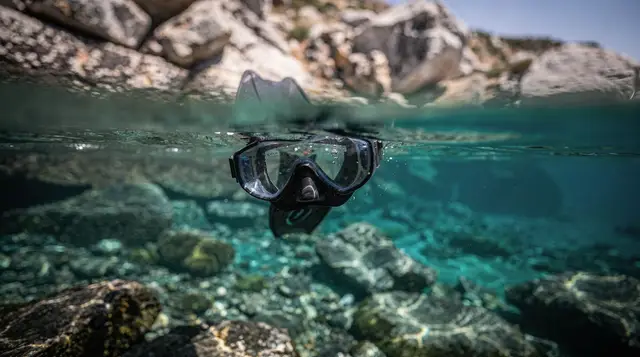
Photo: our own image of the location, not the operator’s product photo.