Sicily's parks and nature reserves
What are Sicily's best nature reserves?
The Zingaro reserve (car-free coast walking near Scopello), Vendicari (flamingos and empty beaches near Noto), Cava Grande del Cassibile (a canyon with freshwater pools near Syracuse), and the Madonie and Nebrodi parks (mountain forest inland). Each suits a different kind of day out, from an easy coastal walk to a demanding canyon descent.
More protected land than the itinerary usually admits
Between the temples, the Baroque towns and the beaches, Sicily’s standard tourist circuit leaves surprisingly little room for its nature reserves — which is a gap worth closing, because the island protects a genuinely varied set of landscapes: car-free coastline, wetland beaches with migratory flamingos, a canyon full of freshwater pools, and mountain forest old enough to carry UNESCO recognition. This guide compares the main reserves side by side so you can pick the one or two that fit your trip rather than trying to see all of them.
The Zingaro: the coast reserve with no road
The Riserva Naturale dello Zingaro, near Scopello and the Zingaro on the west coast, is Sicily’s oldest nature reserve and its most distinctive: a stretch of cliff and cove coastline with no road running through it, walkable only via a main trail between two entrance gates, plus side paths dropping to small, mostly empty beaches.
There’s an entrance fee at the official gates, and access can close on days of extreme wildfire risk in high summer. The walking itself is easy by Sicilian hiking standards — a wide, well-graded track with modest elevation change — which makes heat, rather than terrain, the main challenge on a July or August visit. For entrance details and route distances, see The Zingaro nature reserve on foot.
Castellammare del Golfo: Zingaro Reserve Boat Rental Without a License offers a different angle on the same reserve — approaching its coves by boat rather than on foot, useful if the walk itself isn’t the priority.
Vendicari: flamingos, an old tonnara, and the easiest terrain
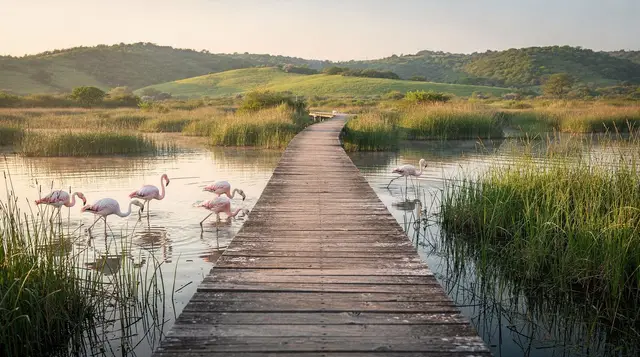
Near Noto and Marzamemi and Vendicari, the Vendicari reserve pairs flat, easy coastal walking with genuine wildlife interest: seasonal migratory birds, including flamingos at the right time of year, use its brackish lagoons as a stopover, and the reserve’s beaches stay noticeably quieter than the more developed coastline further north.
A former tonnara — a historic tuna-processing site — adds a layer of industrial and culinary history to what would otherwise be a straightforward beach-and-birdwatching visit. Of all the reserves in this guide, Vendicari is the one best suited to visitors who want the reward without the physical demands of a serious hike. See Vendicari: flamingos, tonnara and empty sand for the fuller route and seasonal detail.
Noto: Guided Trekking and Birdwatching at Vendicari Reserve is a guided option aimed specifically at the birdwatching angle, useful if identifying species is part of the appeal rather than just the walk itself.
Cava Grande del Cassibile: the reserve that demands the most effort
Cava Grande, near Avola and Syracuse, is the outlier in this list — a steep-walled canyon reached by a punishing descent of several hundred steps down to a series of freshwater pools (the laghetti). It is the most physically demanding of Sicily’s well-known reserves, and the one where checking current access status before visiting matters most: the site has closed in the past following accidents on the descent and after wildfire damage to surrounding vegetation.
The reward — swimming in clear, cool freshwater rather than the sea — is unusual enough in Sicily to justify the effort for reasonably fit visitors, but this is not a casual family outing. Full detail on the descent, the risks and timing is in Cava Grande del Cassibile.
Cavagrande Sicily Trekking Among Canyons Waterfalls and Natural Lakes is a guided version of this route, a sensible choice for a first visit given the terrain and the value of a guide’s read on conditions and pacing.
The Madonie and Nebrodi: mountain forest inland
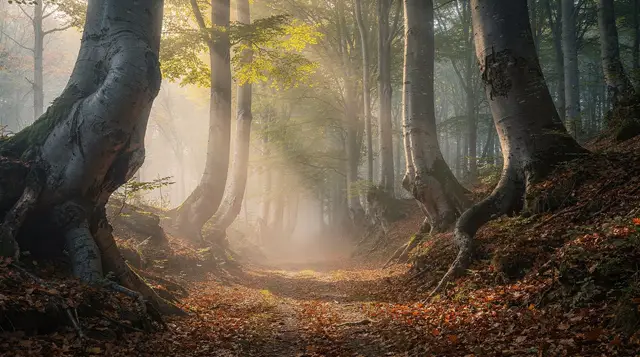
Away from the coast entirely, the Madonie and Nebrodi regional parks cover Sicily’s mountainous interior, holding beech forest recognised by UNESCO as part of Europe’s network of primary beech woodlands, along with Sicily’s second-highest peak, Pizzo Carbonara. These parks feel like a different country from the coastal reserves above — cooler, forested, and considerably less visited, with the Nebrodi in particular remaining wilder and less developed for tourism than the Madonie. Full detail on both, including gateway villages and what to see beyond hiking, is in The Madonie and Nebrodi parks.
Private Trekking in the Madonie Park from Castelbuono covers a guided route into the Madonie’s forest interior from its main gateway village, Castelbuono.
Matching a reserve to your trip
If you have one free day and want the least effort for a genuine payoff, Vendicari or the Zingaro are the safer choices. If you’re building a hiking-focused day and are comfortable with real physical exertion, Cava Grande or a Madonie summit route deliver more drama. If you’re already spending time in a particular region — southeast around Syracuse and Noto, west around Trapani and Scopello, or the north coast near Cefalù — picking the reserve nearest your base usually beats a long detour purely to tick off a “best of” list. For the fuller hiking picture across all of these, including routes not covered by a formal reserve boundary, see Hiking in Sicily: the routes that are worth it.
Practical notes across all of Sicily’s reserves
A rental car is close to essential for reaching most of these sites — public transport serves none of them well, and some, like the Madonie’s interior trailheads, are effectively unreachable without one. Bring more water than feels necessary regardless of which reserve you choose; shade is limited at the Zingaro, Vendicari and Cava Grande alike. April to June and September to October offer the most comfortable conditions across the board, while July and August combine peak heat with the highest risk of fire-related closures, particularly at the Zingaro and Cava Grande. For getting around more broadly, see Getting around Sicily and Renting a car in Sicily.
What each reserve actually demands physically
It’s worth being specific about fitness level, since “nature reserve” covers a huge range in Sicily. Vendicari is flat coastal path, walkable in ordinary shoes by almost anyone, with the main limiting factor being sun exposure rather than terrain. The Zingaro’s main trail is wide and well-graded with modest elevation change, manageable for most reasonably active visitors, though the side paths down to individual coves add short, steeper stretches.
The Madonie and Nebrodi cover everything from an easy valley walk near a gateway village to a genuine mountain day toward Pizzo Carbonara, so the demand here depends entirely on which specific route you choose rather than the park as a whole. Cava Grande stands apart from all of these: several hundred steps down a canyon wall and back up again is a real physical undertaking regardless of overall fitness, and it is the one reserve in this guide that deserves a second thought from anyone with knee problems, a heart condition, or simply limited comfort with sustained stair climbing in heat.
Access and parking at each site
None of these reserves are realistically reachable without a car. The Zingaro has official car parks at both its northern (near San Vito Lo Capo) and southern (near Scopello) entrance gates, which fill up on peak summer days by mid-morning. Vendicari has several marked entrance points along the coast road between Noto and Marzamemi, each with informal roadside or small designated parking areas rather than one central lot.
Cava Grande’s main access point near Avola has a car park at the trailhead itself, though space is limited relative to demand on a hot summer weekend. The Madonie and Nebrodi are large enough that “parking” really means choosing a specific trailhead or gateway village — Castelbuono, Petralia Sottana, or a marked forest car park — rather than a single access point for the whole park.
What to bring, across all of them
A few items are worth packing regardless of which reserve is on the day’s plan: more water than feels necessary, since shade is genuinely limited at the Zingaro, Vendicari and Cava Grande alike; sturdy closed shoes rather than sandals, especially for Cava Grande’s uneven steps and the Madonie’s forest tracks; a hat and reapplied sun protection, since several of these walks run fully exposed for long stretches; and a swimsuit if a reserve with water access — Cava Grande’s laghetti, Vendicari’s beaches, or a Zingaro cove — is part of the plan. Binoculars are worth the extra weight specifically for Vendicari’s birdwatching, where a good pair genuinely changes what you can make out across the lagoons.
Common mistakes visitors make
The most common mistake is treating any of these reserves like a quick roadside stop rather than a half-day or full-day commitment — none of them reward a rushed 20-minute visit, and several (the Zingaro and Cava Grande especially) actively discourage it given the walk required just to reach the interesting parts. A second is underestimating Cava Grande specifically, treating the descent as the hard part and being caught off guard by how much harder the climb back out feels in the afternoon heat after swimming.
A third is visiting the Zingaro or Cava Grande in the height of a July or August heatwave without checking for fire-risk closures first, only to arrive and find access restricted or suspended for the day. And a fourth, specific to Vendicari, is visiting outside the main migration windows and being disappointed by the lack of flamingos — the birds are seasonal visitors, not a year-round guarantee.
What isn’t worth a special trip
Not every corner of every reserve deserves equal billing. Sections of the Madonie and Nebrodi away from the well-known trailheads and gateway villages are genuinely remote and thin on payoff for a casual visitor without a specific hiking goal in mind — worth leaving to travellers with a dedicated interest in mountain hiking rather than a general nature-reserve day out. Similarly, attempting Cava Grande on a day when access is restricted or when you are not confident about the climb back out is not worth pushing through; the reserve authority’s closures exist for real safety reasons, and a missed visit is a far better outcome than an injury or a heat-related emergency partway up a canyon wall with no easy way to call for help.
Building a reserve day around the rest of a trip
Rather than treating a reserve visit as a standalone excursion, most travellers get more value pairing it with wherever they’re already based. A Zingaro morning combines naturally with an afternoon in San Vito Lo Capo or Scopello itself. Vendicari pairs easily with a day otherwise spent on Noto’s Baroque architecture, given how close the two sit to one another.
Cava Grande slots into a southeast-focused day alongside Syracuse, and a Madonie day works well from Cefalù given how short the drive inland is from that base. Building an itinerary this way — one reserve per regional stay rather than a dedicated multi-day nature-reserve tour — respects both the driving distances involved and the fact that most visitors are balancing outdoor time against beaches, ancient sites and towns on the same trip.
Entrance fees and opening hours, honestly
Not every reserve charges the same way, and it’s worth checking specifics rather than assuming a uniform system across the island. The Zingaro charges at its official gates and generally keeps consistent daytime opening hours, extended somewhat in summer. Vendicari’s coastal access points are largely open access without a formal ticket, though some car parking areas nearby charge separately.
Cava Grande and the Madonie/Nebrodi trailheads vary by specific access point, with some free and some ticketed depending on which entrance and which managing authority is responsible for that stretch. None of these fees are large enough to meaningfully affect a trip budget on their own, but checking current hours before driving out — particularly for the Zingaro, which does close outside its daytime window — avoids arriving to a locked gate after a long drive.
Reserves versus Sicily’s other protected coastline
Beyond the four reserves compared here, Sicily protects several smaller marine and coastal areas — around Ustica, the Egadi Islands and stretches of the Aeolian coastline — that function more as marine protected areas for diving and boat access than as walkable land reserves in the sense this guide covers. Visitors specifically interested in marine life and snorkelling rather than hiking should look at those island-based protected areas separately rather than expecting the Zingaro or Cava Grande, both land-based, to deliver a comparable underwater experience.
The honest one-reserve recommendation
If a trip genuinely has room for only one nature reserve and the traveller wants a single, safe recommendation rather than a full comparison: the Zingaro is the strongest all-round choice for most visitors, combining a manageable walk, genuine coastal scenery, swimming coves and a well-organised entrance system, without Cava Grande’s physical demands or Vendicari’s more limited scope beyond birdwatching and beach time. Visitors who already know they want the most demanding, most rewarding option should choose Cava Grande instead; those who want the least physically demanding day should choose Vendicari.
Frequently asked questions about Sicily’s nature reserves
Which Sicilian nature reserve is easiest to visit?
Vendicari, near Noto, has the gentlest terrain — flat coastal paths suitable for most fitness levels, with beaches, birdwatching and a former tonnara (tuna processing site) to explore. The Zingaro reserve is a close second, with a well-graded main path and no serious elevation change.
Do Sicily’s nature reserves charge an entrance fee?
Some do. The Zingaro reserve, for example, charges an entrance fee at its official gates. Others, like sections of the Madonie or Nebrodi parks and stretches of coastline at Vendicari, are open access without a ticket. Check the specific reserve before visiting if cost planning matters.
Can you drive into the Zingaro reserve?
No — the Zingaro is Sicily’s one genuinely car-free stretch of protected coastline, accessible only on foot from its entrance gates. This is part of what makes it distinctive; park at the entrance and walk in.
What wildlife can you see in Sicily’s reserves?
Flamingos and other wading birds at Vendicari during migration seasons, birds of prey over the Madonie and Nebrodi ridgelines, and semi-wild horses in the Nebrodi interior. None of these sightings are guaranteed on a single visit.
Which reserve is best for swimming?
Cava Grande del Cassibile’s freshwater pools (the laghetti) and Vendicari’s beaches are the two standout swimming spots among Sicily’s reserves, though Cava Grande demands a genuinely steep descent and climb to reach the water.
When do Sicilian reserves close for fire risk?
Access can be suspended on days of extreme wildfire danger, most often in July and August, particularly at the Zingaro reserve and around Cava Grande, which has also closed after past wildfire damage. Check current status close to your visit date in peak summer.
Hiking and outdoor activities on GetYourGuide
Verified deep-linked GetYourGuide tours. Book through these links and we earn a small commission at no cost to you.
Photo: our own image of the location, not the operator’s product photo.