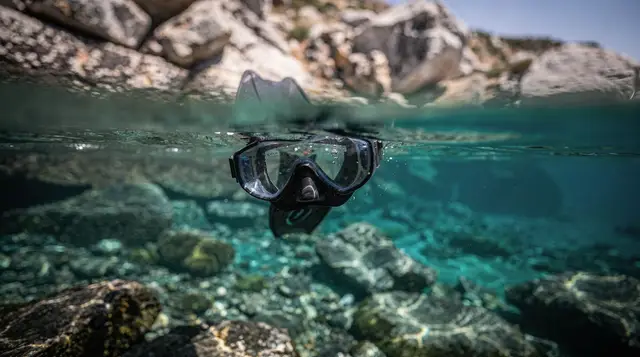
The Zingaro nature reserve on foot
How do you visit the Zingaro nature reserve?
On foot only. A roughly 7 km coastal path runs between a northern entrance near San Vito Lo Capo and a southern entrance near Scopello, with no road inside the reserve and no water sold along the trail, so a visit needs planning rather than a spontaneous stop.
A coastline that was never allowed to be paved
The Zingaro nature reserve protects roughly 7 km of undeveloped coastline between Scopello and San Vito Lo Capo on Sicily’s northwest tip, and it exists in its current wild form largely by accident of history. In the early 1980s, plans for a coastal road connecting the two towns were shelved after sustained local protest, and the strip of coast that would have been paved over was designated a protected nature reserve instead — Sicily’s first.
The result, decades on, is one of the only stretches of Sicilian coast with genuinely no road access at all: no cars, no beach bars, no lidi, nothing except a marked path, a handful of small visitor centres near the entrances, and a series of coves that can only be reached by walking.
That absence of infrastructure is exactly what makes the Zingaro worth the effort. The coves inside are among the clearest water anywhere on this part of the coast, precisely because nothing has been built to service them, and the walk itself, along dry Mediterranean scrubland with the sea constantly in view, is one of the better short coastal hikes in Sicily. It is also, precisely because of that same lack of infrastructure, a place that punishes poor planning more than most Sicilian beach days do.
The protest that led to the reserve’s creation is still told locally as one of the few genuine grassroots environmental victories in Sicily’s modern history: residents from Scopello and San Vito Lo Capo physically blocked construction machinery rather than accept a road cut into the cliffside, and the government of the day eventually backed down and designated the land protected instead. It is a detail worth knowing before you set out, if only because it explains why a stretch of coast this scenic, sitting between two well-developed tourist towns, was never built up the way almost everywhere else on this coastline eventually was.
What the landscape actually looks like
Away from the coves themselves, the reserve is dry Mediterranean scrubland — wild carob and dwarf fan palm, aromatic herbs that scent the air in the summer heat, and pale limestone cliffs dropping steeply to the water in places, gentler elsewhere where the trail runs closer to sea level. It is a landscape built for looking rather than lounging for most of its length: shade is scarce, the ground is often stony rather than soft, and the reward for the walking is less about the trail itself than about the coves it eventually delivers you to. Photographers tend to find the early morning light, before the haze of a hot afternoon sets in, gives the clearest, most saturated views back along the coast toward Monte Monaco and San Vito Lo Capo.
Two entrances, no road between them
The reserve has two gated entrances, both with car parks just outside the protected area, and no vehicle access whatsoever once you are inside.
The southern entrance, near Scopello, is the shorter approach to the reserve’s best-known and most visited coves, making it the more popular starting point for visitors who mainly want a swim rather than a long walk. The first cove, a short walk in, is manageable for most fitness levels and families, which is why it tends to be the busiest point in the reserve on a summer day.
The northern entrance, near San Vito Lo Capo, is the better starting point for anyone planning to walk further into the reserve or attempt the full coastal path between the two gates. It is quieter on arrival than the Scopello side, though the balance evens out somewhere in the middle of the trail as visitors from both ends converge on the same well-known coves.
Protected Natural Area Riserva Dello Zingaro from Palermo is a guided option for a first visit from Palermo, useful if you would rather not work out entrance logistics, trail choices and transport on your own for a first trip into the reserve.
No water inside — plan around this
The single most important practical fact about the Zingaro reserve is that there is nothing to buy once you are past the gate. No shops, no cafés, no water fountains along the roughly 7 km of coastal path. Whatever water you carry in is all you will have until you reach the far entrance or return the way you came, and in a Sicilian summer, with little consistent shade along most of the route, this is not a detail to treat casually. Visitors regularly underestimate how much water a few hours of coastal walking in direct sun requires; carrying more than feels necessary, and starting early enough to avoid the hottest hours of the day, both matter more here than on almost any other walk covered in this guide.
Small visitor centres near each entrance have exhibits on the reserve’s flora, fauna and the rural life that existed here before it became protected land, worth a quick stop on the way in, but they are not a substitute for carrying your own supplies once you are on the trail itself.
What the trail actually looks like
The coastal path runs along a lower route close to the water, linking a series of named coves — among them Cala della Capreria, close to the southern entrance and the easiest to reach; Cala Disa and Cala Berretta further along; and Marinella di Mangiapane and the Tonnarella dell’Uzzo cove toward the reserve’s more remote stretches — with a higher, inland alternative trail for hikers who want more elevation and views over the coast rather than direct beach access at every stop. Underfoot is mostly dry, rocky Mediterranean scrub path rather than groomed track, uneven in places, which makes sturdy walking shoes a genuinely better choice than beach sandals despite the swimming at the other end.
The reserve is also a genuine wildlife habitat, not just a scenic backdrop — it is known as nesting territory for birds of prey, including the Bonelli’s eagle, one of the rarer raptors protected across this part of the Mediterranean, alongside a range of typical Mediterranean scrub flora that gives the whole trail its dry, herbal smell in the heat of summer. Peregrine falcons and a range of smaller migratory birds also use the cliffs and scrub as a stopover, which is one reason the reserve draws a steady stream of birdwatchers alongside the hikers and swimmers, particularly outside the peak summer months when migration activity picks up.
Like other protected areas across Sicily, the Zingaro can close temporarily on days of extreme wildfire risk during summer, a precaution rather than a routine occurrence, but worth knowing about if you are planning a visit during an unusually hot, dry stretch of weather — checking ahead on a red-flag fire-risk day avoids a wasted trip to a locked gate.
Trail difficulty: lower path or upper path
The reserve is generally managed with two route options along its length. The lower coastal path stays close to sea level, passing directly by most of the named coves, and is the route almost all first-time visitors and families use — moderate difficulty, uneven underfoot in places, but without serious elevation gain.
The upper inland path climbs higher into the scrub-covered hillside, trading direct beach access along the way for wider views and a noticeably quieter, more solitary walk, suited to hikers who want the landscape more than the swimming stops. Some maps and signage allow combining sections of both, which is a reasonable way to add variety on a longer visit without committing to the full elevation of the upper route for the entire distance.
Neither route is technical in the sense of requiring specialist equipment, but both are unshaded, often uneven, and unforgiving of unsuitable footwear — trainers with real grip are the minimum, and proper hiking shoes are a better choice for anyone planning to cover more than the first cove or two.
Which cove to aim for
Most single-day visitors do not walk the full 7 km through-route; instead, they walk in from one entrance, stop at a cove or two for a swim, and return the way they came. From the southern (Scopello) entrance, Cala della Capreria is the standard choice for a first visit — close enough to reach without a major hike, with clear water that still noticeably outshines anything accessible by car nearby.
Visitors with more time and a reasonable fitness level continuing further toward Cala Disa or Cala Berretta find noticeably quieter water, since the extra 30–45 minutes of walking each way filters out a large share of casual visitors. Attempting the coves toward Marinella di Mangiapane or the Tonnarella dell’Uzzo from either entrance is a half-day commitment rather than a quick stop, and is really only worth it for hikers planning either the full through-route or a genuinely long there-and- back walk with an early start.
From San Vito Lo Capo: Zingaro Nature Reserve and Scopello Snorkeling Tour and Catamaran Excursions to the Zingaro Nature Reserve and Scopello both offer an entirely different way to see these same coves — by boat, with snorkelling stops, avoiding the walk altogether. This trades the reserve’s quiet, on-foot character for convenience, and is a reasonable option for visitors short on time, travelling with anyone who cannot manage the walk, or simply curious to see the coastline from the water rather than the trail. Zingaro Reserve Private Sailing Boat Tour is a slower, more private version of the same idea for a smaller group.
Getting there
Neither entrance is reachable by public transport in any straightforward way; a car is the realistic option for almost all independent visitors, parking just outside whichever gate you plan to use. Both car parks fill up by mid-morning in July and August, and unlike a beach car park with some overflow capacity, there is genuinely nowhere else nearby to leave a vehicle once the official area is full — arriving by 9am in peak season is the practical way to guarantee entry rather than a suggestion to be taken loosely.
Scopello itself, near the southern entrance, is a small former tuna-fishing village worth a stop in its own right, with a historic tonnara — an old tuna-processing complex on the rocks below the village — that predates the reserve by centuries and gives a sense of what this coastline’s economy looked like before conservation and tourism replaced fishing as its main purpose. San Vito Lo Capo: the beach and the couscous covers the northern approach in full, including how to combine a Zingaro visit with a beach day in town.
Combining the Zingaro with the rest of the west
A Zingaro visit pairs naturally with either end of the trail as a base: San Vito Lo Capo for its own beach and the Cous Cous Fest, or Scopello and nearby Castellammare del Golfo for a quieter, less built-up alternative. Western Sicily in 5 days folds a Zingaro walk into a wider route covering Erice, Segesta and Trapani, and Rock climbing at San Vito Lo Capo is worth reading if the limestone cliffs above the reserve’s northern stretches interest you beyond hiking and swimming.
Anyone building a broader hiking-focused trip through Sicily should also see Hiking in Sicily: the routes that are worth it and Sicily’s parks and nature reserves for how the Zingaro compares with the island’s other protected areas, including the Madonie and the Alcantara Gorges further east.
When to go
Spring and early autumn are the most comfortable seasons for walking the Zingaro’s coastal path — warm enough to enjoy a swim at the end, cool enough that the walk itself does not become a heat management exercise. Wildflowers along the trail are at their best in spring, one reason hikers specifically choose that window over high summer.
July and August bring both the hottest conditions on an entirely shade-free trail and the largest crowds at the easiest-to-reach coves, though the reserve never gets as dense with visitors as a road-accessible beach like Mondello or San Vito Lo Capo, simply because the walk itself limits numbers. See Sea temperature in Sicily, month by month for what the water is doing across the calendar, and The best beaches in Sicily, region by region for how the Zingaro’s coves compare with the island’s other well-known stretches of coast.
Etiquette inside a protected reserve
A few rules matter more here than at an ordinary beach, precisely because the Zingaro’s whole reason for existing is the absence of development elsewhere allowed. Stick to the marked trail rather than cutting across scrubland, since the vegetation is part of what the reserve protects and off-trail walking damages it. Fires and barbecues are not permitted anywhere inside the gates, for obvious wildfire reasons in dry Mediterranean scrub.
Take all rubbish out with you, since there are no bins along the trail, and give any nesting birds of prey a wide berth if you happen to spot one rather than approaching for a closer photograph. None of this is unusual for a protected natural area, but it is worth stating plainly, since the Zingaro’s popularity as a swimming destination sometimes overshadows the fact that it is, first and foremost, a conservation project.
What to actually pack
Beyond the obvious swimwear, pack more water than feels reasonable, sturdy shoes rather than beach sandals for the uneven path, a hat and real sun protection given the almost complete lack of shade, and snacks, since nothing is sold inside the gates. A lightweight daypack that can also carry wet swimwear on the way back is more useful here than anywhere else covered in this guide, given how much farther you may end up walking from your starting point than initially planned once a good cove convinces you to continue further along the trail.
The honest bottom line
The Zingaro reserve delivers something genuinely rare on Sicily’s coast: water and scenery untouched by the road access, lidi and beach bars that shape almost every other well-known beach on the island. The cost of that is real planning — no water inside, no shortcuts by car, and a walk that is more demanding in midsummer heat than its short distance on a map suggests. Visitors who come prepared, start early, and pick an entrance and a cove distance that matches their fitness rather than their ambition tend to rate it among the best half-days of a Sicily trip.
Visitors who treat it like any other beach — arriving at midday with a single bottle of water and flip-flops — tend to cut the visit short for exactly the reasons this guide spells out in advance. Whichever entrance you choose and however far you end up walking, the underlying trade-off stays the same throughout the reserve: every extra kilometre on foot buys noticeably clearer water and a quieter cove, in a part of Sicily where almost everywhere else, that same clarity and quiet would already have been built over.
Beach and coastal trips on GetYourGuide
Verified deep-linked GetYourGuide tours. Book through these links and we earn a small commission at no cost to you.
Photo: our own image of the location, not the operator’s product photo.