Sea temperature in Sicily, month by month
What is the sea temperature in Sicily in summer?
Roughly 26-27°C at the peak in August, the warmest point of the year. It cools gradually from there, staying swimmable into October at around 24°C, and drops to its coldest, around 14-15°C, in February and March.
The sea moves on its own calendar
Air temperature and sea temperature in Sicily do not move together, and travellers planning a beach trip around a weather forecast alone are working from the wrong data. Water warms and cools far more slowly than air, lagging the season by roughly a month in each direction — which is why a hot, sunny day in April does not mean warm swimming, and why the sea in September and even October often still feels better than the falling air temperature would suggest. Knowing where the water actually sits through the year, rather than assuming it tracks the daytime heat, is the single most useful piece of planning information for anyone building a trip around The best beaches in Sicily, region by region.
Mediterranean sea temperatures have generally trended a little warmer over recent decades across the region, in line with broader patterns observed across the world’s seas, though year-to-year variation from wind, currents and short-term weather still matters more for planning a specific trip than any long-term average shift. The figures below reflect the kind of realistic range a visitor can expect in a typical year, rather than a precise forecast for any single date.
Sicily’s sea temperature, month by month
The figures below are realistic seasonal ranges rather than exact readings for any single year or beach — actual conditions vary with wind, currents and short-term weather, but the broad pattern holds consistently across most of Sicily’s coastline. Think of them as a planning baseline rather than a guarantee: useful for deciding which month to book a beach-focused trip in, less useful as a promise about the exact conditions you will find on any single specific day once you arrive.
January and February: the coldest point of the year, generally in the low-to-mid teens Celsius, roughly 14-15°C at the lowest. Swimming is limited to a small number of dedicated cold-water swimmers; most visitors would find this uncomfortably cold for anything beyond a very brief dip.
March: still close to the winter low, with only the beginnings of spring warming setting in toward the end of the month. Comparable to February for most practical swimming purposes.
April: a noticeable step up begins, though the water is still cool by summer standards. Confident swimmers and anyone used to cooler seas may find a short swim comfortable on a calm, sunny day, but this is not yet a beach-holiday temperature for most visitors.
May: a genuine transition month. The sea warms steadily and becomes swimmable for most people by the second half of the month, particularly on the south coast, though a wetsuit or a shorter dip remains the more comfortable choice for anyone sensitive to cooler water.
June: the sea reaches a temperature most visitors consider genuinely comfortable, warming quickly through the month toward summer levels. This is the first month that reliably supports a full beach holiday built around swimming, with meaningfully smaller crowds than July or August.
July: close to the summer peak, warm and comfortable for extended swimming across virtually all of Sicily’s coast, coinciding with the island’s busiest and hottest month for air temperature as well.
August: the warmest point of the year, typically around 26-27°C at its peak. This is also, not coincidentally, the most crowded month at every well-known beach on the island — see Sicily in August for why the combination of warm water and the Ferragosto holiday period brings the heaviest demand of the year to Sicily’s coast.
September: still warm and comfortable, cooling only gradually from August’s peak, while crowds at most beaches thin out considerably once the main summer holiday period ends. Widely considered one of the best all-round months for a Sicilian beach trip for exactly this combination of warm water and lighter crowds.
October: the water stays swimmable for most of the month, typically still around 24°C in early October before cooling further as the month progresses. A genuinely underused window for visitors comfortable swimming in slightly cooler conditions than peak summer.
November and December: the sea cools steadily back toward its winter range, and by December swimming is largely limited to the same small group of cold-water enthusiasts who swim through the depths of winter as well. Even so, a mild, sunny December day on the coast can still be a pleasant walk along the sand at somewhere like Cefalù or Mondello, just not one most visitors would choose to end with a swim.
How this compares to other Mediterranean beach destinations
Sicily’s more southerly position means its sea generally runs slightly warmer through most of the year than destinations further north on the Italian mainland or in the northern Mediterranean. Travellers weighing Sicily against other classic Mediterranean beach trips should note that this slight edge in water temperature is one real, if modest, factor in the comparison; see Sicily or Sardinia and Sicily or the Amalfi Coast for the fuller picture covering accommodation, crowds and overall trip logistics rather than sea temperature alone.
Why the water lags the air
Water has a far higher heat capacity than air, meaning it takes much longer to warm up in spring and much longer to cool down in autumn. This is why Sicily’s warmest sea temperatures arrive in August rather than at the summer solstice in June, when air temperature and daylight both peak but the sea is still catching up from its spring warming.
The same lag works in reverse in autumn: air temperature can drop noticeably in October while the sea, having spent all summer accumulating heat, stays comfortable for weeks longer than the cooling air alone would suggest. Understanding this lag is the practical takeaway for trip planning — checking a specific sea-temperature forecast close to your travel dates, rather than assuming from the season alone, avoids planning a beach-heavy trip around water that has not caught up yet, or missing a genuinely good late-season swimming window in October.
Regional differences around the island
Sicily’s coastline does not warm and cool completely uniformly. The south coast, facing toward North Africa and generally more sheltered, tends to warm slightly earlier in spring and stays a touch warmer into autumn than the more exposed north coast. The Aeolian and Egadi Islands, and other outlying spots with stronger currents or deeper surrounding water, can run a degree or two cooler than sheltered bays on the mainland coast at the same point in the season — a detail worth knowing if you are planning an island-hopping trip and expecting identical water conditions everywhere.
None of these differences are large enough to change the overall seasonal pattern described above, but they can matter at the margins — a swim in early June at a sheltered south-coast bay like San Vito Lo Capo may feel noticeably more comfortable than the same week at a more exposed spot further out to sea.
Sicily’s outlying islands each have their own local character worth noting. The Aeolian Islands, being volcanic and often surrounded by deeper water close to shore, can feel cooler in the shoulder months than sheltered mainland bays, even though peak summer temperatures converge closely with the rest of the island.
The Egadi Islands, closer to the Sicilian mainland and generally shallower around their best-known beaches, tend to track mainland temperatures more closely. Further south, Pantelleria and Lampedusa, both closer to North Africa than to mainland Sicily, generally run at least as warm as the south coast and sometimes noticeably warmer in the shoulder months, one reason both islands support a slightly longer practical swimming season than the mainland’s north coast.
Boat Excursions in San Vito lo Capo and Palermo: Mondello Boat Tour Con Snack e Snorkeling both put you directly in the water at two of Sicily’s best-known swimming spots, a reasonable way to test conditions for yourself on a shoulder-season trip if the numbers above leave you undecided about whether to pack a wetsuit.
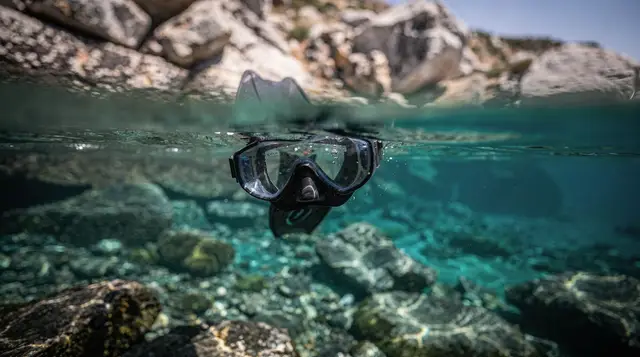
Wetsuits, snorkelling and diving outside peak season
For swimmers comfortable in cooler water, a wetsuit extends the practical swimming season meaningfully in both directions — a shorty or a thin full suit makes May and late October considerably more comfortable than swimming without one, and opens up snorkelling and diving trips in conditions that would otherwise feel marginal.
Snorkelling and diving in Sicily covers this in more detail, including how visibility and marine life activity shift with the seasons alongside the water temperature itself, and divers in particular should note that some operators run a shorter season than casual swimmers might expect, scaling back trips once water temperature drops into less comfortable territory for repeated dives.
Repeated immersion changes the calculation, too: a single quick swim in cooler water is manageable for most people without a wetsuit, but a full day of snorkelling, or multiple dives spread across several hours, exposes you to sustained cold in a way a five-minute dip does not. Anyone planning a water-sports-heavy day at a spot like the Zingaro reserve or around Ustica outside the core June-to-September window should factor this in when deciding whether to rent or bring a wetsuit, rather than judging purely from how the water feels on first entry.
Practical tips for checking conditions before you travel
Given how much local wind and short-term weather can shift the picture described above, checking a current sea-temperature reading for your specific destination in the days before travel is worth doing if a swim-focused trip is riding on it, rather than relying purely on seasonal averages months in advance. This matters most at the edges of the season — late May, early June, late September and October — when a single windy week can shift how the water feels by a noticeable margin, whereas in the settled heart of summer, from mid-June through August, day-to-day variation is smaller and the seasonal averages above are a more reliable guide on their own.
Local tourist information, recent visitor reports, and forecasts specific to marine conditions rather than general weather forecasts all give a more accurate picture than an air-temperature forecast alone, which, as covered above, tells you comparatively little about what the sea itself is actually doing on a given week.
Currents, depth and why the same beach can feel different day to day
Beyond the seasonal pattern, local conditions can shift how warm the water feels on any given day. Wind direction matters more than most visitors expect: a strong wind blowing offshore can pull warmer surface water away from the coast and draw up cooler water from below, a phenomenon that can make a bay feel noticeably colder for a day or two even in the middle of August, before conditions settle back to the seasonal norm.
Sheltered, shallow bays — Mondello and San Vito Lo Capo among them — tend to warm faster and hold that warmth more consistently than deeper, more exposed stretches of coast, which is part of why these bays are often recommended as reliable early-season swimming spots.
Children, sensitivity to cold water, and family planning
Children and anyone particularly sensitive to cooler water generally need the sea a degree or two warmer than an average adult swimmer would tolerate comfortably, which is worth factoring in if you are travelling with young children and considering a May or October swim based on the ranges above. For family trips built specifically around beach time, June through early September is the safer planning window, with the shoulder months better reserved for sightseeing, walking and the kind of activities covered in Sicily with kids rather than a swimming-focused day. A Sicilian beach week is built around the reliable heart of the swimming season for exactly this reason.
When lidi open and close for the season
Sea temperature also shapes when Sicily’s lido infrastructure operates. Most lidi at well-known beaches open for the season sometime in late spring and wind down operations by early-to-mid autumn, tracking demand for sunbeds and umbrellas that follows swimming comfort rather than any fixed calendar date. Visiting outside this window, even on a warm, sunny day, may mean a beach with clear sand and water but no lido services available at all — worth checking ahead if your trip falls in April, or in November, when Lidi or free beach: how Sicilian beaches work assumptions about paid sunbed rental may not hold.
How this affects planning a trip
For most travellers building a beach-focused Sicily trip, June through September is the practical swimming season, with June and September offering the best trade-off between warm water and manageable crowds, and July and August delivering the warmest water alongside the heaviest demand for beaches, accommodation and rental cars. October is worth serious consideration for visitors who prioritise avoiding crowds over having the absolute warmest possible water, since the sea holds enough of its summer heat to stay comfortable for most swimmers well into the month.
See The best time to visit Sicily and Sicily weather month by month for how sea temperature fits into the broader picture of air temperature, rainfall and crowd levels across the year, and Sicily in spring and Sicily in autumn for a fuller look at the shoulder seasons specifically, when the gap between comfortable air temperature and comfortable sea temperature is at its widest and most worth understanding before you pack.
The honest bottom line
Sicily’s sea genuinely does get warm — comfortably so from June through September, and still respectably swimmable well into October — but it does not move on the same calendar as the air temperature or the tourist season, and travellers who plan around one without checking the other sometimes arrive expecting a swim that the water is not quite ready to deliver, particularly in May or November. Treat August as the reliable peak, June and September as the best all-round windows, and October as an underused opportunity for anyone who values quiet beaches over the absolute warmest water of the year.
If you take only one planning habit from this guide, make it this: whenever a trip is built around swimming rather than sightseeing, check the sea specifically, separately from the air-temperature forecast that dominates most weather apps and holiday planning. The two numbers tell genuinely different stories in Sicily for a meaningful stretch of the year, and travellers who confuse a warm, sunny forecast for warm swimming conditions in April or November are the ones most often disappointed standing at the water’s edge.
Beach and coastal trips on GetYourGuide
Verified deep-linked GetYourGuide tours. Book through these links and we earn a small commission at no cost to you.
Photo: our own image of the location, not the operator’s product photo.