The White Lotus in Taormina
Where was The White Lotus season two filmed?
Principally at the San Domenico Palace in Taormina, a real luxury hotel built around a former 14th-century Dominican convent, with additional scenes shot around Taormina town and in Cefalù, Noto and Palermo. The hotel operates as normal outside filming, at rates among the highest in Sicily.
A working hotel, not a set built for the cameras
Unlike Savoca’s Bar Vitelli or the fictional geography built into the Montalbano series, the second season of The White Lotus filmed largely inside a hotel that has been receiving paying guests for decades before and after the cameras arrived. The San Domenico Palace, run under the Four Seasons brand, occupies a former 14th-century Dominican convent on the hillside above Taormina’s old town, its cloisters and gardens converted into hotel spaces generations before the show existed. This guide covers what is genuinely visitable in Taormina in connection with the series, what is not, and how the town’s screen visibility compares with its long-standing reputation as one of Sicily’s most expensive resorts.
The San Domenico Palace: what you can and cannot see
The hotel itself provided much of the series’ interior and courtyard filming, its cloistered gardens and terraces overlooking the Ionian coast doing a great deal of the visual work the show became known for. It remains a fully operating luxury property, and access for anyone not staying there depends entirely on the hotel’s own current policy - some high-end hotels welcome outside visitors for a meal or a drink at published rates, others restrict access strictly to registered guests. Rather than assume either, contact the hotel directly before planning a visit around seeing the interior, and do not expect casual sightseeing access to guest floors or private terraces regardless of policy.
What is reliably viewable without any booking is the hotel’s exterior and its position within Taormina’s townscape - visible from several points along the town’s upper streets and from paths around the old town walls. Taormina: the White Lotus Sicilian Glamour Private Tour is built around exactly this distinction: a guided walk through Taormina pointing out the hotel’s exterior, the streets used in filming, and the town’s other landmarks, without promising entry to the hotel’s private spaces. If seeing inside the hotel specifically is your goal, treat that as contingent on securing a stay or a reservation there directly, not on any third-party tour.
Taormina beyond the hotel
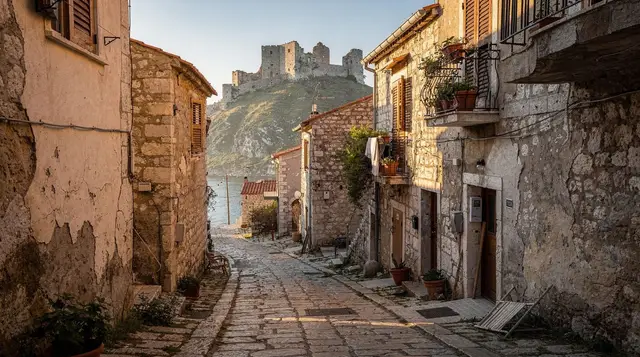
Much of the show’s Taormina footage uses the town’s existing streetscape rather than dressed sets - Corso Umberto, the belvederes overlooking the coast, and glimpses of the ancient Greek theatre that predate the series by over two thousand years. None of this required special access to film and none of it requires special access to see today; it is simply Taormina as it has looked for visitors long before the show arrived. Taormina covers the town as a destination in its own right, and the ancient theatre of Taormina covers its best-known landmark specifically.
The coastline below town, including Isola Bella, appears in wider shots and establishing footage across the series; Isola Bella and the Taormina beaches covers that stretch of coast as a beach destination independent of any screen connection. Taormina: Boat Tour with Stop for a Swim and Aperitif covers this same coastline from the water, which gives a different vantage point on the same headline and hotel grounds than a street-level walk provides.
Cefalù, Noto and Palermo: the supporting locations
Beyond Taormina, the series used Cefalù, Noto and Palermo for additional scenes across the season - established Sicilian towns in their own right, each with a substantial visitor base that predates the show by decades. None of the three has a single, identifiable “White Lotus site” comparable to the San Domenico Palace; the footage instead uses each town’s existing streets, piazzas or coastline as general backdrop rather than a fixed location a visitor can seek out and photograph on arrival.
Travellers interested in these towns are better served treating them as destinations in their own right - Cefalù, Noto: a walking guide to the Corso and Arab-Norman Palermo: the UNESCO route all cover what is genuinely there to see, independent of any brief on-screen appearance.
A town that was already expensive
It is worth being direct about something the show’s visibility tends to obscure: Taormina was already Sicily’s most expensive town for both accommodation and dining well before the series aired, a position built over more than a century as the island’s most established upmarket resort.
Increased visibility from the show has likely added further pressure to an already high baseline rather than creating the town’s cost level from nothing, and travellers comparing prices here against elsewhere in Sicily should expect Taormina to sit well above towns of similar size. Taormina or Cefalù addresses this comparison directly for travellers weighing the two as alternative bases, and What a week in Sicily actually costs gives the wider budget context.
Getting around Taormina
Taormina’s old town is largely pedestrian, and the ZTL restrictions covering vehicle access into the historic centre are strictly enforced, covered in ZTL zones and parking in Sicilian cities - drivers should plan to park at one of the town’s peripheral car parks rather than attempt to drive into the centre. 3 Hour Taormina Segway Tour is one practical way to cover the town’s steep streets and belvederes without the walking effort a hillside town otherwise demands, useful given how much of the terrain slopes sharply between the upper town and the coast below.
A convent turned hotel, and what that history means for visitors
The San Domenico Palace’s identity as a converted Dominican convent is not simply a marketing detail
- the building’s cloisters, chapels and thick stone walls date to the 14th century, and much of the hotel’s structure follows the footprint of the original monastic complex rather than a purpose-built hotel layout.
This history is part of why the property reads so differently on screen from a conventional resort hotel: the cloistered courtyards and narrow internal passages that the show used repeatedly for its interior scenes are load-bearing pieces of centuries-old architecture, not set dressing added for filming. Travellers who do secure a meal or a stay there are, in effect, visiting one of Taormina’s more significant historic buildings alongside a hotel experience.
Only the second season used Sicily
Worth stating plainly for anyone planning a trip around the show specifically: only the second season of The White Lotus filmed in Sicily. The first season was shot in Hawaii and the third moved to Thailand, so a Sicily-based itinerary connects to one season of the series, not the franchise as a whole. This matters for expectation-setting - a visit to Taormina engages with a specific, relatively short stretch of the show’s run, not a recurring Sicilian setting across multiple seasons.
Where to see the hotel from, without booking anything
For travellers not staying at or dining at the San Domenico Palace, several public vantage points around Taormina’s upper town give a reasonable view of the property’s gardens and facade from a respectful distance - along Via Roma and from some of the belvederes that line the town’s western edge. None of these require a booking or a fee, and combined with a walk down Corso Umberto, they give a realistic sense of the hotel’s setting within the town without needing to justify a visit around securing an actual reservation there.
Fitting this into a wider trip
A day or two in Taormina, covering the ancient theatre, Corso Umberto and a look at the San Domenico Palace’s exterior, fits naturally alongside a half-day trip to Savoca and Forza d’Agrò for travellers also interested in the Godfather’s real filming locations, or a look at Day trips from Taormina for the wider range of options from the same base.
For the full picture of Sicily’s screen-tourism landscape - Montalbano’s Val di Noto, Cinema Paradiso’s Palazzo Adriano, and the Godfather’s Savoca alongside Taormina’s own moment in the spotlight - see Sicilian film tours compared, which sets out how much time each circuit realistically needs.
Film location tours on GetYourGuide
Verified deep-linked GetYourGuide tours. Book through these links and we earn a small commission at no cost to you.
Photo: our own image of the location, not the operator’s product photo.