Hiking to the Etna summit craters
How hard is the hike to Etna's summit craters?
Demanding rather than technical. Expect several hours of walking on loose volcanic scree above 2,500 m, thin air, and constant wind. No climbing skills are needed, but reasonable fitness and proper footwear are non-negotiable.
What “hiking to the summit” actually means
Every listing that mentions Etna’s summit craters is describing a guided walk on the upper slopes of an active volcano, not a stroll to a fixed viewpoint. The route, the maximum altitude reached and whether the hike happens at all on a given day depend on current volcanic activity, decided by the guide cooperatives and the Parco dell’Etna authority, not by the tour operator’s marketing copy. This guide covers what the hike is really like for someone who has never done it: how far you get, how hard it is, what to wear, and how the north and south routes compare. For the wider picture on visiting Etna generally, start with Mount Etna: the complete visitor guide.
How high you can actually go
Above roughly 2,900 m, Italian regulation requires a licensed Etna guide for anyone continuing uphill, and guides themselves are restricted from taking groups into the current summit craters — above 3,300 m — when activity makes it unsafe. In practice, most guided hikes advertised as “summit craters” bring visitors to somewhere in the 2,900-3,000 m range, occasionally further on a calm day with a favourable route.
Etna: Summit Craters Trekking with Volcano Guide 3350mtis one of the more direct options aiming for the higher end of that range with a certified guide included throughout. Treat any specific altitude figure in a listing title as the best-case, not a guarantee — see Etna eruptions, ash and safety for how access rules actually shift with activity.
The two starting points
The route you hike depends entirely on which side of the mountain you start from.
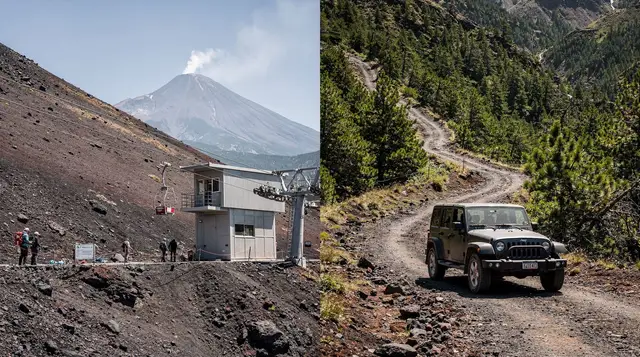
South side (Rifugio Sapienza). The Funivia dell’Etna cable car lifts you to around 2,500 m in about 15 minutes, cutting out the lower slog through scrubland and pine. From the upper cable car station, a 4x4 continues part of the remaining ascent before the guided walking section begins. Etna: Sud Trekking to the Summit Craters follows this format and is the more time-efficient option if your day is limited. It is also the busier route — expect to share the trail with other groups, especially from mid-morning onward.
North side (Piano Provenzana). There is no cable car here, so the walk covers more vertical distance on foot, generally making for a longer and more physically involved day. In exchange, the trail sees a fraction of the south side’s foot traffic, and the pine forest approach is genuinely scenic before the terrain turns to open volcanic scree. Etna: North Etna Summit Craters Hike to 3400 Meters is built around this route. For the full comparison of which side suits which traveller, see Etna north side or south side.
What the walking is actually like
Forget images of a technical mountaineering ascent — there are no ropes, harnesses or scrambling involved on the standard guided routes. What you will encounter instead is loose volcanic ash and scree that shifts underfoot with every step, meaning the walking is tiring in a different way than a normal hiking trail: less about steepness, more about the ground constantly giving slightly beneath you. Above 2,500 m the air is noticeably thinner, which slows most visitors regardless of general fitness, and the wind rarely lets up. Guides set a deliberately slow, steady pace for exactly these reasons, and groups that move too fast early on tend to struggle later.
Several guided trek listings build in rest stops and a guide who explains the geology as you go, which in practice also serves as built-in pacing rather than a race to the top. If you have already done a standard cable car visit and want a quieter alternative that avoids the most-walked paths near Rifugio Sapienza, Catania: Mount Etna Trekking Tour Beyond the Tourist Trails routes around the crowds while covering similar terrain.
Fitness and who should think twice
You do not need to be an athlete, but you should be someone who can walk continuously for two to three hours on uneven ground without stopping every few minutes. Guides will assess the group at the start and have the authority to turn back anyone who is clearly struggling or wearing unsuitable footwear — this is a safety call, not a customer service failure, and it happens more often to visitors in trainers or sandals than to anyone else. If you have a heart or respiratory condition, the combination of altitude and exertion is worth discussing with a doctor before booking. Families with young children should look at the gentler alternatives covered in Visiting Etna with children rather than the full summit hike.
Gear that actually matters
- Footwear. Closed hiking shoes or boots with ankle support and good grip. This is the one item guides check, and the one most visitors get wrong by assuming Sicilian summer means sandals weather everywhere.
- A windproof outer layer. Even in August, wind at 2,900 m is cold enough to matter. Bring it even if the forecast for Catania shows 35°C.
- Sunglasses. High-altitude sun on pale volcanic ground is glare-heavy.
- Water and a small snack. There is no shop or shelter once you are past the lower stations.
Booking the right level
Not every “Etna trek” listing reaches the same altitude or covers the same terrain, and titles are not always a reliable guide to difficulty — a “3,000m” tour and a “3,350m” tour from the same starting point can involve very similar walking with a different final stretch depending on conditions that day. For a structured comparison of what different operators actually include — group size, whether lunch or wine tasting is bundled in, how long the walking portion runs — see Etna tours compared. If you are unsure whether the summit hike is the right choice compared to the shorter cable-car-and-jeep format, read The Etna cable car and 4x4 jeeps explained first.
Timing your hike
Early morning departures generally mean calmer wind and better visibility before afternoon cloud tends to build around the summit, which is common on Etna regardless of season. Summer offers the most reliable access windows overall, though also the most crowded trails on the south side; shoulder season (spring and autumn) often combines decent weather with noticeably thinner crowds. Whatever the season, check with your operator in the days before your visit — conditions on an active volcano change faster than a seasonal generalisation can account for.
Combining the hike with the rest of your day
Most visitors treat the summit hike as a half-day commitment and pair it with something lower-key afterward. Etna’s lower slopes produce a serious wine region, and several operators combine a hike with a tasting stop — worth considering if a long guided walk followed by sitting down with a glass of Etna Rosso sounds like the right way to end the day; see The Etna wine road: Contrade and cantine. Based in Catania or Taormina, you can realistically fit the hike into a single day trip — see Day trips from Catania and Etna in a day: the realistic options for the logistics of getting there and back without an overnight stay.
What a guide actually does on the ground
It is worth understanding why the guide requirement is not a formality. Certified Etna guides are in daily contact with the park authority and often with the geophysics monitoring bodies that track the volcano’s behaviour, which means they know which specific sections are open that morning before your group even arrives at the upper station.
On the walk itself, they set the pace deliberately slow to account for altitude, point out features that are easy to misread as dangerous when they are not (steam vents, sulphur deposits, cooling lava crust that looks solid but can still be warm underneath), and make the real-time call on how much further the group can safely go that day. A good guide will also explain honestly when the group has reached the maximum permitted point, rather than letting visitors assume the tour underdelivered.
A typical hike, hour by hour
To make the abstract description concrete: a standard south-side guided trek usually starts with transport to Rifugio Sapienza, followed by the cable car ascent (about 15 minutes) to the upper station at roughly 2,500 m. From there, a 4x4 vehicle covers a further stretch of altitude before the group sets out on foot, walking steadily uphill on volcanic scree for anywhere from 45 minutes to just over an hour to reach the highest permitted point that day.
Time is then spent at altitude for photos and explanation from the guide, before a somewhat quicker descent back to the vehicle pickup point. Door to door, including transport from Catania or Taormina, a full day built around this hike commonly runs seven to eight hours, even though the walking itself is a smaller fraction of that total.
How the summit hike differs from the standard cable car visit
It is easy to assume “cable car tour” and “summit hike” are simply cheaper and more expensive versions of the same product, but they are built around different goals. The standard cable-car-and- jeep format, covered in The Etna cable car and 4x4 jeeps explained, is designed to minimise walking and maximise the altitude reached per hour spent.
The dedicated summit hike deliberately trades convenience for a longer, closer, more physically involved experience, generally reaching a comparable or slightly higher final altitude but by foot rather than by vehicle for most of the ascent. Neither is a lesser version of the other — they suit different travellers, a distinction covered more fully across all Etna tour formats in Etna tours compared.
Photography and what to expect visually
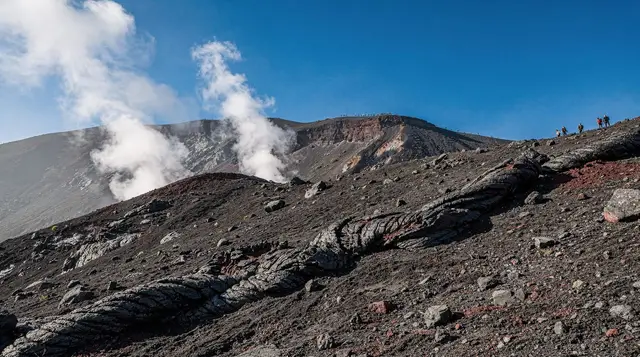
Visitors expecting a single dramatic crater image should recalibrate: much of what you see on the standard permitted route is expansive volcanic terrain — grey and black scree fields, older solidified lava flows in ropey or blocky formations, occasional steam venting from fissures — rather than an open, glowing crater, which is rarely visible even on days when the guide reaches the highest permitted point. The scale and starkness of the landscape, and the view back down over Catania and the Ionian coast on a clear day, are usually what visitors remember most, alongside the sense of being on ground that is geologically very young by any normal standard.
Alternatives if the full hike is not right for you
Not every visitor wants or needs the full guided trek. If your priority is seeing Etna rather than specifically hiking it, the standard cable car and jeep format reaches similar altitude with far less physical effort — see Mount Etna: the complete visitor guide for the overview. Families and travellers with children should look at the format built specifically for them in Visiting Etna with children rather than adapting the standard summit hike downward. And if wine or food matters as much as the hike itself, several tours combine a shorter crater walk with a cellar stop afterward, covered in The Etna wine road: Contrade and cantine.
Booking timing and group size
Guided summit treks generally run in fixed daily departures rather than on demand, since they depend on coordinating cable car slots, 4x4 availability and a certified guide’s schedule. In peak summer, popular departure times can sell out a few days ahead, particularly early morning and late afternoon slots that offer the most comfortable temperatures. Group sizes vary by operator — some run larger standard groups, others cap numbers deliberately smaller for a more personal pace. If a slower, more flexible pace matters to you, check the advertised group size before booking rather than assuming all “guided trek” listings work the same way.
What happens if the weather turns
Etna’s upper slopes generate their own weather to some extent, and cloud, wind or sudden temperature drops can arrive with little warning even on a day that looked clear from the coast. Guides carry the authority to shorten or reroute a hike if conditions deteriorate partway through, which is a safety decision rather than a service failure. Layering your clothing so you can add or remove warmth quickly, rather than packing a single heavy jacket, deals with this better than most alternatives — mountain weather on Etna can shift within the same walking session in a way that catches out visitors who dressed for a single, static forecast.
Combining the hike with an overnight stay nearby
Because a full summit hike day tends to run long once transport and altitude time are both included, some visitors prefer to base themselves for a night near Etna rather than making the round trip from Catania or Taormina in a single day.
Towns in the Bronte and Randazzo area, on the wine-growing north and east slopes, offer a quieter base within easier reach of the mountain than the coastal cities, and let you start the hike earlier in the morning without an hour or more of transfer time beforehand. This also opens up pairing the hike with a wine cellar visit the same evening rather than needing a separate day for it — see The Etna wine road: Contrade and cantine for that pairing in more detail.
Comparing the north and south hiking routes directly
Both sides of the mountain offer a version of the guided summit hike, but the experience differs more than the shared name suggests. The south-side route benefits from the cable car cutting out a large chunk of the ascent, meaning more of your energy and time budget goes toward the higher, more dramatic stretch near the current craters — at the cost of sharing the trail with considerably more people.
The north-side route from Piano Provenzana covers more vertical distance entirely on foot from a lower starting altitude, making for a longer and more physically demanding day overall, but one spent almost entirely without the crowds that build up around Rifugio Sapienza from mid-morning. Fit hikers who want the quietest possible version of the summit trek should lean north; those working with a tighter schedule should lean south. See Etna north side or south side for the wider comparison beyond just the hiking route.
After the hike: recovering and what to do next
Most visitors underestimate how tired the combination of altitude, wind and several hours of walking on shifting ground actually leaves them. Build in a genuinely restful evening rather than planning a second demanding activity the same day — a slow dinner and an early night serve you better than trying to see Catania’s nightlife straight off the mountain. If you are staying in Catania, the drive back gives a natural buffer; if you based yourself closer to Etna itself, an easy walk around a nearby town the next morning is a gentler way to ease back into the rest of your trip.
The honest verdict
The summit craters hike is the most physically demanding and most rewarding way to experience Etna, but it is not a guaranteed bucket-list tick. Altitude, weather and volcanic activity all have a vote in how far your specific group gets on your specific day, and a guide who turns the group back early for safety reasons is doing their job correctly, not failing to deliver what you paid for. Book with realistic expectations about the final altitude, dress for genuine mountain cold, and treat the trek itself — not just the summit number in the listing title — as the experience you are paying for.
Etna and volcano tours on GetYourGuide
Verified deep-linked GetYourGuide tours. Book through these links and we earn a small commission at no cost to you.
Photo: our own image of the location, not the operator’s product photo.