The Etna cable car and 4x4 jeeps explained
How does the Etna cable car work with the jeep tour?
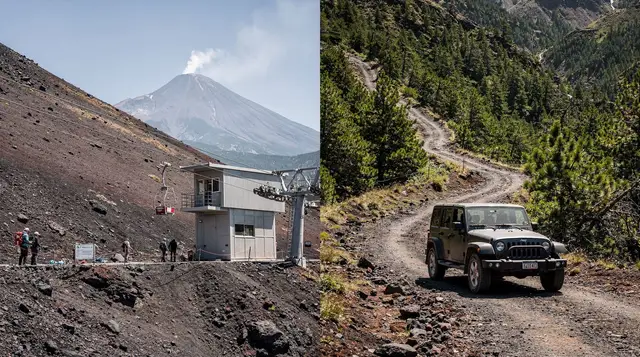
The Funivia dell'Etna cable car lifts visitors from Rifugio Sapienza (about 1,900 m) to roughly 2,500 m in 15 minutes. From the upper station, a 4x4 jeep and guide continue the ascent toward 2,900-3,000 m. Most visitors buy both stages as one combined ticket.
Two separate stages, one mountain
Visitors often talk about “the Etna cable car tour” as a single thing, but it is really two distinct stages that happen to be sold together most of the time: a mechanical cable car lift, and a separate 4x4 jeep-and-guide segment that continues from where the cable car stops. Understanding the difference helps you choose the right ticket and know what you are actually paying for at each stage. For the broader mountain overview, see Mount Etna: the complete visitor guide.
Stage one: the Funivia dell’Etna cable car
The cable car operates only from Rifugio Sapienza, on Etna’s south side, at around 1,900 m. It lifts visitors to the upper station at roughly 2,500 m in about 15 minutes — a genuine shortcut past the lower slopes that would otherwise take a couple of hours to walk. Mount Etna: Return Funivia dell'Etna Cable Car Ticket is the standalone return ticket for this stage alone, useful if you want to reach the upper station, take in the views and walk the immediate area without committing to the jeep segment or a guide.
The cable car is a fixed-infrastructure lift, not weather-dependent in the way the higher trails are, though it does occasionally close for maintenance or in high wind. If it is closed on the day you visit, operators typically substitute a longer 4x4-only ascent from a lower station instead of cancelling outright.
Stage two: the 4x4 jeep and guide
From the cable car’s upper station, continuing further up the mountain requires a 4x4 vehicle segment, run by the guide cooperative that manages access to this part of the park, followed by a guided walk on foot toward the current craters. This is where a licensed guide becomes mandatory — above roughly 2,900 m, Italian regulation requires it, both for visitor safety and because the guides are the ones with up-to-date knowledge of which sections are open on a given day.
Mount Etna: Southsummit Craters Tour in Cable Car 4X4 Jeep bundles cable car, jeep and guide into one combined ticket, which is how most visitors actually book — buying the two stages separately on site is possible but adds waiting time and uncertainty about jeep availability. Other operators sell an equivalent combined ticket reaching the central crater area around 3,340 m. Etna: Excursion from Catania with Cable Car 4X4 to 3340 Mt additionally includes transport from Catania, removing the need to arrange your own transfer or rental car to Rifugio Sapienza.
Why the jeep segment exists at all
You might reasonably ask why the cable car does not simply continue higher. The answer is that the terrain above 2,500 m changes too frequently — new lava flows, ash deposits and shifting ground from recent activity — for fixed cable car infrastructure to operate safely or reliably at that altitude. 4x4 vehicles can adapt to changing surface conditions in a way a fixed cable line cannot, which is also why the specific jeep route sometimes changes from one month to the next depending on the state of the mountain.
What you actually see and do at the top
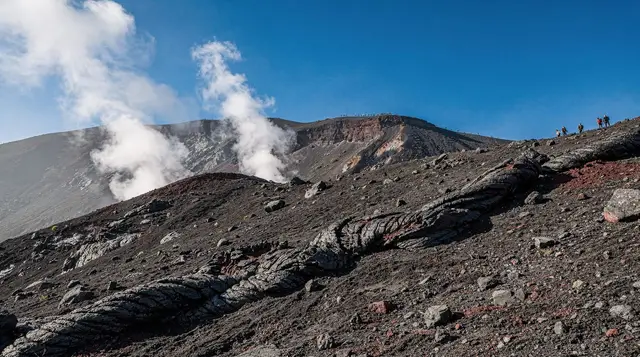
Once the jeep segment ends, a guide leads a walk of generally 30 minutes to two hours, depending on the specific tour and the day’s conditions, toward viewpoints over the current active craters — not necessarily the true summit craters above 3,300 m, which remain restricted to specific guided ascents when conditions allow (see Hiking to the Etna summit craters for that more demanding version). What you see at this stage is still genuinely striking: fresh lava fields, steam vents, and close-up views of a landscape that is actively being reshaped by the volcano, guided by someone who can explain what you are looking at and when it last erupted.
Jeep-only options
Not every jeep tour starts from the cable car’s upper station. Standalone jeep tours exist that cover different routes or start from lower points on the mountain, sometimes combined with wine tasting or other lower-slope stops. Catania: Mount Etna Morning Jeep Tour is one such option. For the full range of jeep, quad and buggy formats beyond the cable-car-linked version, see Quad, buggy and jeep tours on Etna.
Booking sense: combined ticket versus buying separately
For nearly all visitors, a combined ticket covering cable car, jeep and guide in one booking is the simpler and generally better-value choice — it locks in a jeep slot rather than leaving it to availability on the day, and it removes the logistics of coordinating two separate queues at Rifugio Sapienza. The standalone cable car ticket makes sense mainly for visitors on a tighter budget, or those who genuinely just want the upper-station views without continuing further, perhaps because of limited time, mobility or interest in the guided walk.
What it costs, roughly
Standalone cable car tickets sit at the lower end of Etna excursion pricing. Combined cable car, jeep and guide tickets cost meaningfully more, reflecting the 4x4 vehicle and mandatory guide. Transport-included versions from Catania or Taormina add further to the price but remove the need to drive or arrange a transfer yourself. For how this compares against other Etna tour formats — hiking, wine-focused days, family versions — see Etna tours compared.
North side note
None of this applies on Etna’s north side, at Piano Provenzana — there is no cable car there at all, and the ascent is entirely by 4x4 and guided walking from a lower starting altitude. If you are deciding between the two access points generally, see Etna north side or south side.
What can disrupt the plan
Because this is an active volcano, both stages are subject to closure at short notice depending on activity levels, weather or high wind at altitude. Reputable operators will rebook or refund rather than push ahead in unsafe conditions — see Etna eruptions, ash and safety for what actually triggers a closure and how often it happens in practice.
The mechanics of the cable car itself
The Funivia dell’Etna operates as a two-cabin system, with cabins moving continuously along the cable rather than waiting to fill up, so waiting times at the base station are generally short outside the busiest midday period in peak season. Each cabin holds a modest group of passengers standing, similar to a ski gondola, and the ride itself climbs steeply over changing terrain — pine forest giving way to sparser vegetation and then bare volcanic ground as you gain altitude. It is a comfortable, low-effort few minutes that contrasts sharply with the terrain and effort of the stages that follow.
What the 4x4 vehicles actually look like
The jeeps used for the upper segment are specialised off-road vehicles, not standard rental cars, built to handle loose volcanic gravel and steep, unpaved tracks that change from month to month as new material shifts on the mountain. They typically carry a small group along with a driver, covering ground that would otherwise take considerably longer on foot, before stopping at a point from which the guided walking segment begins. The ride itself is bumpy by design — a comfortable sedan simply could not handle this terrain — and is part of what visitors often remember as vividly as the walk itself.
Why you cannot simply drive up in a rental car
A reasonable question from visitors used to driving themselves everywhere in Sicily: why not just drive a rental car to the top rather than paying for the jeep segment? The answer is that the track beyond the cable car’s upper station is not a public road, is not maintained to a standard any ordinary rental vehicle could handle, and is legally restricted to the licensed jeep operators and guides who manage this part of the park.
This is a safety and conservation measure as much as a practical one, given how quickly the surface changes after any new volcanic activity. If you are comfortable driving yourself in Sicily generally, see Renting a car in Sicily for what does and does not apply once you reach protected sections of the park like this one.
Timing your ascent within the day
Morning departures generally offer the calmest conditions and the clearest views before afternoon cloud, common around Etna’s summit, has a chance to build. Midday departures coincide with the busiest crowds at Rifugio Sapienza, particularly in July and August when coach tours converge around similar hours. Late-afternoon and sunset departures, covered in more detail in Etna tours compared, trade a later return for cooler temperatures and better light. None of these timing choices affects the mechanics of the cable car and jeep stages themselves — only the crowds and lighting you will experience along the way.
What happens at the very top of the jeep route
Once the 4x4 segment ends, most tours proceed on foot for a final stretch led by a certified guide, typically walking across open volcanic ground toward a viewpoint over more recent lava flows and, conditions permitting, the current active vents. This stretch varies in length and difficulty depending on the specific tour and the day’s access restrictions — some visitors reach a relatively flat viewing area within a short walk, while others cover more demanding terrain over a longer distance.
If you specifically want the longest, highest version of this walking segment, the dedicated Hiking to the Etna summit craters guide covers that more demanding format directly, distinct from the shorter walk most cable-car-and-jeep tours include.
Combining the cable car with other stops nearby
Because the cable car and jeep segment together typically take a half day once transport is included, many visitors pair the visit with something else nearby rather than heading straight back. The Alcantara Gorges, a striking basalt canyon a reasonable drive from Rifugio Sapienza, is a common pairing for visitors coming from Taormina; wine tasting on the lower slopes, covered in The Etna wine road: Contrade and cantine, suits those approaching from the north or east. Building either into the same day is realistic if you start early and keep the Etna segment itself to the standard half-day format rather than the longer summit hike.
What can go wrong, and how operators handle it
The two most common disruptions are cable car closures due to maintenance or high wind, and jeep route restrictions due to volcanic activity. In the first case, operators generally substitute a longer 4x4-only ascent from a lower station, extending the vehicle portion to compensate for the lost mechanical lift — this adds time but rarely cancels the visit outright. In the second case, the route and maximum altitude simply adjust to whatever the guides can safely reach that day, which is why no listing can promise a fixed final altitude regardless of season or ticket type.
A smaller number of visitors experience a full-day cancellation, almost always due to severe weather or genuinely restricted access, in which case reputable operators rebook or refund rather than sending a group up into unsafe conditions. See Etna eruptions, ash and safety for the fuller picture on how these decisions are actually made.
Booking through the operator versus buying tickets independently
Some visitors prefer to buy the cable car ticket directly at Rifugio Sapienza and decide about the jeep segment once there, rather than booking a full package in advance. This works, but carries the risk of the jeep segment selling out on a busy day, particularly in July and August, leaving you with only the cable car ride and no continuation. Booking a combined ticket in advance removes that uncertainty at the cost of slightly less flexibility about timing. For most visitors, especially those travelling in peak season or with a tight schedule that day, booking ahead is the safer choice; independent, flexible travellers visiting in a quieter season have more room to decide on the day.
A note on altitude sickness
Rifugio Sapienza and Piano Provenzana both sit below altitudes where altitude sickness is a common concern, and the cable car’s upper station at around 2,500 m rarely causes problems for otherwise healthy visitors. Some people do notice mild breathlessness or light-headedness on the jeep-and-walk segment above that point, simply from thinner air combined with physical exertion, rather than any serious medical concern. If you have a pre-existing respiratory or cardiac condition, mention it to your guide before setting out, and pace yourself deliberately on the walking segment rather than rushing to keep up with a faster group member.
Comparing the cable-car-and-jeep format to other Etna experiences
It helps to see this format in context against the rest of Etna’s offerings. Against the dedicated summit crater hike (see Hiking to the Etna summit craters), the cable car and jeep combination trades a longer, more demanding walk for a shorter, easier ascent that still reaches meaningful altitude.
Against a family-oriented tour (see Visiting Etna with children), the standard combined ticket generally goes somewhat further and faster than a pace built around younger children, though many families do book it successfully with older kids or teenagers. Against a north-side visit from Piano Provenzana (see Etna north side or south side), the south side’s cable car remains the single biggest structural difference between the two routes — there is simply no equivalent mechanical shortcut on the north side.
Practical tips from repeat visitors
A few small details make a noticeable difference to how the day goes. Arrive at Rifugio Sapienza with some buffer before your booked slot, since parking during peak season can take longer than expected to arrange. Use the bathroom facilities at the base station before ascending, since options higher up are limited. If you are prone to cold hands, pack thin gloves — a detail easy to overlook when leaving a warm coastal town, but genuinely useful standing at an exposed viewpoint at 2,500 m or higher. And keep your phone or camera battery in mind: cold temperatures at altitude drain batteries faster than most visitors expect, worth having a portable charger for anyone planning extensive photography.
Who this format suits best
Put simply, the combined cable car and jeep ticket suits the majority of visitors: enough altitude and genuine volcanic landscape to feel like a proper Etna visit, without the extended physical demand of the full summit trek. It suits couples, families with older children, first-time visitors short on time, and anyone who would rather spend their energy on the rest of a Sicily trip than on a demanding mountain hike. It suits less well anyone chasing the highest possible legal altitude, dedicated hikers who find a short guided walk unsatisfying, or budget travellers for whom the combined ticket’s price feels steep relative to the standalone cable car alone.
The bottom line
Think of the cable car as the efficient, weatherproof-ish first half of the ascent, and the jeep-plus- guide segment as the part that adapts to the mountain’s current state and legally requires expert supervision. Book the combined ticket unless you have a specific reason to stop at the upper station, and build a half-day into your schedule once transport to and from Rifugio Sapienza is factored in.
Etna and volcano tours on GetYourGuide
Verified deep-linked GetYourGuide tours. Book through these links and we earn a small commission at no cost to you.
Photo: our own image of the location, not the operator’s product photo.