Cava Grande del Cassibile
What is Cava Grande del Cassibile?
A steep limestone canyon near Avola and Syracuse, cut by the Cassibile river into a series of freshwater pools known as the laghetti. It's reached by a punishing descent of hundreds of steps, and access has been closed in the past after accidents and wildfires — always check current status before driving out.
A canyon that punishes on the way down and worse on the way up
Cava Grande del Cassibile sits inland from Avola, not far from Syracuse and Noto, and it is one of the more physically demanding short excursions in southeastern Sicily — which is exactly why it stays less crowded than the region’s Baroque towns and ancient sites even though the reward at the bottom, a series of clear freshwater pools cut into pale limestone, is genuinely spectacular. This guide is deliberately blunt about the effort and the risk involved, because the honest version of this hike is more useful than a glossy one.
What the canyon actually is
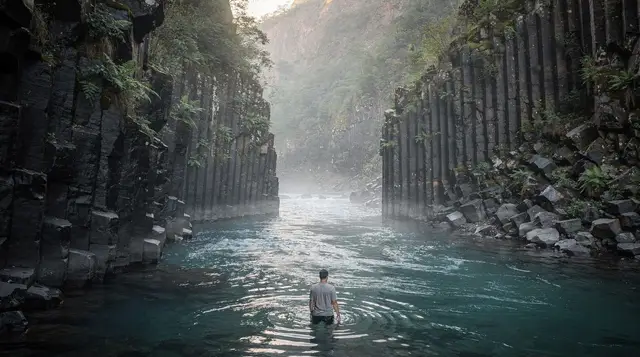
The Cassibile river has cut a deep, steep-walled canyon through limestone over a long stretch inland from the coast, leaving a series of natural pools — the laghetti — connected by short stretches of river and small waterfalls. The setting is dramatic: pale rock walls rising well above the water, greenery clinging to the canyon sides, and pools clear enough to see the bottom in most conditions. It reads as one of the more “unspoiled” natural sites in this part of Sicily precisely because reaching it requires real effort, which keeps casual visitor numbers down compared to somewhere with a car park at the water’s edge.
The descent: the actual difficulty of this hike
There is no easy way into Cava Grande. The main access route descends several hundred steps and switchbacks down the canyon wall, losing significant elevation over a relatively short horizontal distance. Going down is manageable for most reasonably fit visitors, if slow and knee-taxing; coming back up, in the heat, after swimming, is where most people underestimate the day. A meaningful stretch of the route has little to no shade, which turns a demanding climb into a genuinely risky one on a hot afternoon without enough water.
Cavagrande Sicily Trekking Among Canyons Waterfalls and Natural Lakes is a guided version of this route, worth considering for a first visit — a guide sets a sensible pace, knows where the shaded rest points are, and takes the guesswork out of timing the descent and return around the day’s heat.
Why access has closed before, and why you should check first
Cava Grande is not a fixed, always-open attraction. Access has been suspended in the past following accidents on the steep descent — falls on the loose, uneven steps are the recurring cause — and following wildfires that damaged vegetation along the trail, sometimes closing sections for an extended period while the reserve authority assesses safety. Neither risk is exotic or unique to this canyon, but the consequences here are more serious than on a flat coastal path, given the terrain and the distance from help partway down a canyon wall.
The practical takeaway: check the current access status close to your actual visit date, particularly in July and August when wildfire risk across inland Sicily peaks and closures are most likely. Don’t rely on an old blog post or a photo from a previous summer as proof the trail is currently open.
From Syracuse: Cavagrande Natural Reserve Guided Trek departs from Syracuse and, like the option above, puts the logistics and safety judgment in a guide’s hands rather than yours — a reasonable trade for a canyon with this profile.
What the pools are like once you’re down
The laghetti themselves are the payoff: clear, cool freshwater pools set among smoothed rock, with enough variation along the canyon that visitors spread out rather than crowding a single swimming spot. Water levels and clarity shift with the season and with how much rain has fallen upstream, so the canyon can look markedly different in May versus a dry September. There are essentially no facilities once you’re past the trailhead — no shop, no lifeguard, no shaded café — so treat the descent as a self-sufficient outing rather than a beach day with amenities.
Timing your visit
Morning starts beat afternoon ones here more than almost anywhere else in this guide’s coverage, because the return climb in early afternoon heat is the single worst-timed version of this hike. Spring and early autumn bring more comfortable temperatures for the exertion involved; peak summer (July–August) combines the worst heat with the highest wildfire-closure risk, making it the least forgiving season to attempt Cava Grande, even though it’s also when demand for a swim is highest.
Getting there and combining it with the region
Cava Grande sits close enough to Syracuse and Noto to combine with a day otherwise spent on Baroque architecture and ancient sites — a genuinely different kind of morning or afternoon compared to walking Ortigia’s streets or Noto’s Corso. A rental car is the practical way to reach the trailhead; public transport does not serve it usefully.
For the wider Baroque towns nearby, see The Val di Noto: eight Baroque towns, one earthquake, and for beaches in the same region as an easier alternative on a hot day, see The best beaches in Sicily, region by region or Vendicari: flamingos, tonnara and empty sand, both considerably less demanding than the descent into Cava Grande.
If a full day in the southeast is the plan, pair Cava Grande with Ortigia on foot: a half-day route or a stop in Marzamemi and Vendicari for a swim that doesn’t require the same physical commitment. Travellers building a longer route through the region can see how it fits into Syracuse and the Val di Noto in 4 days.
For the wider hiking picture across Sicily and how Cava Grande compares to the island’s other canyon and reserve hikes, see Hiking in Sicily: the routes that are worth it and Sicily’s parks and nature reserves.
What to pack for a self-sufficient canyon day
Because nothing is waiting for you at the bottom, the packing list matters more here than on most outings in this guide. Start with footwear: shoes with a grippy sole and some ankle support earn their place on loose, uneven steps, and the same shoes are the ones you will be glad to have on the climb out. Flip-flops and smooth-soled sandals are the classic mistake. Carry water in more than one container so a leaking bottle doesn’t end your day, and bring food that survives heat without refrigeration. A hat, sun cream and a light long-sleeved layer for the shadeless stretches are worth the little space they take.
For the swim itself, a quick-drying towel and a dry bag for your phone and keys are far more useful than a big beach bag you will resent carrying back up. Water shoes make the smoothed rock around the pools kinder on your feet. Our general Sicily packing list covers the wider kit for the island, and if you want a sense of how the water compares with the coast at different times of year, the sea temperature guide is a useful point of reference, even though freshwater pools behave differently from the open sea.
Pacing the climb back out
Most of the difficulty is mental. The descent feels easy, you swim, you linger, and then the climb starts with tired legs and a full stomach. Build in a deliberate turnaround time before you go down rather than deciding at the bottom, and treat the first part of the ascent as a warm-up: short, steady steps and regular pauses in whatever shade you can find beat a heroic push that ends in cramps. Drink before you feel thirsty, not after. If anyone in the group feels dizzy, nauseous or unusually exhausted, stop, cool down and rest rather than pressing on; the canyon wall is a poor place to discover that someone has overdone it.
Swimming right before the climb is pleasant but cools you only briefly, and a wet swimsuit under a hot sun is not the comfort it seems. Many walkers find it easier to swim, dry off properly, eat something light and start the climb while there is still plenty of day left. Travel insurance and basic first-aid awareness are not a formality in a place like this, so it is worth reading our notes on health and insurance in Sicily and the broader safety guide before you set out.
Choosing between going alone and booking a guide
Going independently suits experienced walkers who are comfortable with steep terrain, who can check access status themselves and who have a car. It costs less and lets you choose your own pace and your own swimming spot. A guided trek suits first-timers, people travelling alone who prefer company on a demanding route, and anyone who simply doesn’t want to be the one making the call about heat and timing. A guide can also explain the geology and the river’s course in a way a signpost cannot, which turns the outing from a sweaty walk into something more memorable.
If you’re weighing the cost of the whole trip, the Sicily budget guide shows where a guided excursion fits against car hire, meals and accommodation. Whichever route you choose, remember that a closed trail closes for everyone, so keep a flexible plan for the day rather than building the whole itinerary around one canyon.
Reaching the trailhead without stress
Driving is the realistic option, and the last part of the approach is the kind of country road where an unhurried pace pays off. Read our advice on driving in Sicily and car rental in Sicily before you collect the keys, and if you are staying in a historic centre, check the ZTL and parking guide so that leaving town in the morning doesn’t produce a fine in the post months later. If you are still deciding whether to hire a car at all, car or public transport in Sicily lays out the trade-offs, and getting around Sicily gives the wider picture. For people who would rather leave the driving to someone else, a private driver can be arranged; see private drivers in Sicily.
Building a day around the canyon
The canyon works best as a morning activity, which leaves the afternoon for something gentler and flatter. After the climb, a long lunch in Noto is a pleasant reward, and the Noto walking guide suggests an easy route once your legs have recovered. Another option is to drive back toward Syracuse and spend the late afternoon at the archaeological park described in the Neapolis park guide, where the shade of the old quarries is welcome after a morning in the sun. Our day trips from Syracuse page shows other ways to combine the area’s sights.
If you have more time and want to continue south and west, the hill towns of Ragusa Ibla and the Baroque streets of Modica and Scicli make a natural second day. Travellers moving through the region without a fixed base can also use the Sicily food and wine itinerary for ideas on where to eat after a physical day.
Which season suits you
Each season changes the canyon’s character. In spring, greenery is at its best and the pools tend to look fuller, though the water can feel properly cold. Early autumn offers more bearable heat for the climb, with the trade-off that the river may be lower after a dry summer. Summer is the season everyone wants a swim, but it is the hardest for the exertion, and the notes on Sicily in August explain why that month is especially unforgiving. For a month-by-month sense of temperatures and rain, see the weather guide. After heavy rain the trail and the water can both change character, so a wet-weather plan is sensible; rainy day activities in Sicily lists indoor alternatives for when the canyon is not the right call.
If your group includes children or swimmers who prefer easy water
Families should be realistic about this one. The steps are long, the climb is hard and there is no place to bail out halfway, so only older children who enjoy walking should be considered, and even then a calm, early start is essential. For younger travellers, the Sicily with kids guide and family beaches suggest more forgiving places to swim. Confident swimmers who enjoy the water more than the walking may prefer the sea; our guide to snorkelling and diving in Sicily points to coastal options where entering the water needs no canyon descent at all.
A short honesty check before you go
Cava Grande rewards people who arrive prepared and punishes those who treat it as a casual swim stop. If you have a heart or knee condition, if the forecast is very hot, or if you have only a small window of daylight, choose a different outing and come back another time. Skipping it on a bad day is not a failure; the canyon will still be there, and a well-chosen morning in cooler weather will always give you a better experience than a rushed, overheated one.
Frequently asked questions about Cava Grande del Cassibile
How hard is the hike into Cava Grande?
Hard enough to take seriously — the main descent involves several hundred steps down a steep canyon wall, hot and largely shadeless for a significant stretch. It is not technical, but it is physically demanding, especially on the climb back out.
Is Cava Grande dangerous?
The reserve has closed access in the past following accidents on the steep descent and after wildfires damaged the surrounding vegetation. It is not inherently more dangerous than any steep, hot trail, but the consequences of a fall or heat exhaustion here are serious, which is why checking current conditions and access status before visiting matters.
Can you swim in the Cava Grande pools?
Yes — the laghetti are the main reason people make the descent, and swimming in the cool, clear freshwater pools is the reward at the bottom. Conditions and water levels vary seasonally, so the pools can be fuller or shallower depending on when you visit.
How do I check if Cava Grande is open?
Access has been suspended before after accidents and forest fires, sometimes for extended periods while the reserve’s authority assesses the trail. Check current status close to your visit date rather than assuming access based on older information, particularly in high summer when fire risk is at its peak.
How far is Cava Grande from Syracuse?
Around 30–40 minutes by car from Syracuse, near the town of Avola, making it a realistic half-day or full-day trip combined with time in Syracuse or Noto.
What should I bring to Cava Grande?
Sturdy shoes rather than sandals, far more water than the distance suggests you’ll need, sun protection, and a swimsuit and towel for the pools at the bottom. There are few facilities inside the reserve itself, so bring what you need before starting the descent.
Is Cava Grande suitable for children?
Only for older, physically capable children comfortable with a long, steep descent and climb — this is not a stroller-friendly or casual family walk. For families wanting swimming without the demanding hike, other beaches and reserves along the southeast coast are a gentler choice.
Hiking and outdoor activities on GetYourGuide
Verified deep-linked GetYourGuide tours. Book through these links and we earn a small commission at no cost to you.
Photo: our own image of the location, not the operator’s product photo.