What to bring back from Sicily
What is the single best souvenir to bring back from Sicily?
For something that captures the island's craft tradition, a small piece of genuine Caltagirone ceramic bought directly from a workshop. For food that travels well and is hard to find outside Sicily at the same quality, Modica chocolate or Bronte pistachio products are the more reliable choice, since both have protected origin status tied to specific towns rather than being generic Italian products relabeled.
Buying something that actually says Sicily
Sicily produces a genuinely wide range of distinctive, regionally specific goods, from painted ceramics to protected-origin chocolate and world-class pistachios, and the honest challenge for a visitor is separating those genuine products from the generic tourist-shop merchandise sold identically in every historic center on the island. This guide covers what is worth prioritizing, what travels well, and what to skip.
Ceramics: Caltagirone, and how to buy them properly
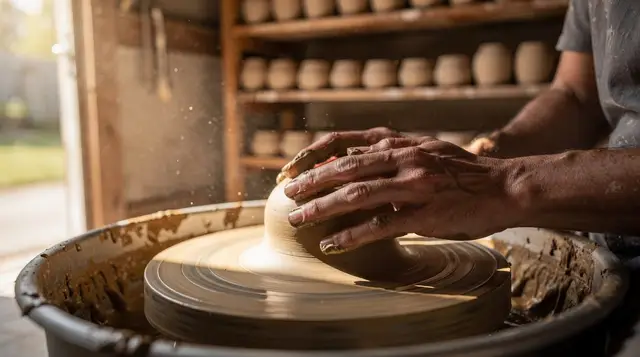
Caltagirone’s majolica ceramic tradition, covered in full in the dedicated Caltagirone ceramics guide, is Sicily’s most historically significant craft export, and buying directly from a workshop in the town itself, rather than a generic souvenir shop elsewhere on the island, is the more reliable way to ensure a piece is genuinely locally made rather than imported and relabeled — a real issue given how many ceramic-style souvenirs circulate more broadly without any actual connection to Caltagirone’s workshops.
A ceramic workshop experience in Caltagirone combines a purchase opportunity with a hands-on understanding of how much work goes into a single hand-painted piece, which makes the eventual price tag easier to evaluate fairly. For a different regional style, a ceramic jewelry workshop in Mazara del Vallo produces smaller, wearable ceramic pieces distinct from Caltagirone’s tableware and decorative tradition.
Food souvenirs that actually travel well
Sicily’s food exports offer some of the most genuinely satisfying souvenirs precisely because several carry protected origin status tied to specific towns rather than being generic Italian products with a Sicilian label slapped on. Modica chocolate, made using a distinctive cold-processing method that leaves the sugar crystals only partially dissolved for a grainy texture unlike smooth commercial chocolate, is covered in the dedicated Modica chocolate guide and travels well as sealed, shelf-stable bars.
Bronte pistachio products — the paste, cream, and shelled nuts themselves — carry PDO (protected designation of origin) status, meaning genuine Bronte pistachio is legally restricted to product actually grown on Etna’s slopes around the town, covered in more depth in the Bronte pistachio guide; a small jar of pistachio cream is compact, shelf-stable, and a genuinely distinctive product hard to find at the same quality outside Sicily.
Frutta martorana, the realistic marzipan fruit sculptures covered in the cannoli and Sicilian pastry guide, makes an excellent, non-perishable sweet souvenir given how well marzipan holds up compared to fresh pastry, which does not travel at all. Marsala wine, discussed in the Marsala wine guide, deserves better recognition abroad than its common reputation as only a cooking ingredient — a quality sipping Marsala is a genuinely serious wine, though liquids require checked luggage and count against standard airline weight allowances, worth factoring in before buying more than a bottle or two.
Coral and jewelry from Sciacca
Sciacca, on Sicily’s southern coast, maintains a historic coral-working tradition alongside its ceramic craft, and a coral workshop and museum visit in Sciacca covers both the history of the trade and a hands-on introduction to the craft itself, making genuine coral jewelry or decorative pieces a distinctive, less commonly seen souvenir category compared to the ceramics more associated with Caltagirone and other towns.
Teste di Moro and other distinctive ceramic figures
Teste di Moro, the painted ceramic head sculptures found throughout Sicily and tied to a well-known local legend, are covered in full in the dedicated Teste di Moro guide, and smaller versions make a distinctive, genuinely Sicilian decorative souvenir beyond generic tableware, though larger pieces carry the same fragility and shipping considerations as any substantial ceramic purchase.
Puppets, and other craft-adjacent souvenirs
A small traditional puppet or puppet-inspired decorative item, connected to the Opera dei Pupi tradition covered in the dedicated puppet theatre guide, makes a distinctive souvenir for visitors who have attended or want to reference a performance, though a genuine, well-made pupo from an established workshop runs considerably more than a simplified tourist-shop version, and it is worth understanding that price gap before committing to one as a keepsake versus a genuinely collectible piece.
A short list, by region
Sicily’s souvenir landscape genuinely changes as the island’s regions do, and building a shopping list around wherever a trip is actually heading is more efficient than searching broadly in one city for everything. In and around Palermo, ceramics from nearby workshops, frutta martorana, and puppet-related items are the strongest local options, alongside the wider market culture covered in the Palermo markets guide.
In the east, Catania and the area around Etna offer Bronte pistachio products and Etna wine, covered in the Etna DOC wine guide, as the standout regional specialties. In the southeast, Modica’s chocolate and Ragusa’s own ceramic workshops both deserve a look, and Caltagirone, sitting between the two regions, remains the single best stop for ceramics specifically. Along the western and southern coasts, Marsala wine, Trapani’s sea salt production, and Sciacca’s coral work round out a genuinely distinct set of regional products worth seeking out rather than assuming any single city covers the full range.
Budgeting for souvenirs across a longer trip
For a typical one- or two-week Sicily trip, setting aside somewhere in the range of 50 to 150 euros total for souvenirs and food gifts is a reasonable working budget for a visitor buying a handful of smaller items — chocolate, pistachio products, marzipan, perhaps one modest ceramic piece — without committing to a large decorative purchase.
Visitors planning to buy a significant ceramic piece, a genuine puppet, or several bottles of wine should expect that single-item costs can meaningfully exceed this range on their own, and it is worth deciding in advance whether the trip includes a deliberate “one larger purchase” budget separate from the smaller, cumulative food and craft souvenirs picked up along the way. This kind of planning also helps avoid the common trap of spending steadily on small items throughout a trip and then feeling squeezed out of a genuinely worthwhile larger purchase discovered on a later day.
What to actively skip
Generic “Sicilia” or “Sicily” branded merchandise — magnets, keychains, printed t-shirts and shot glasses sold identically across nearly every tourist-facing shop on the island — carries essentially no genuine connection to Sicilian craft or culture beyond a printed graphic, and is worth skipping in favor of literally anything covered above with an actual regional origin. A useful practical test: if an identical item, at a similar price, is visible in five unrelated shops across three different towns, it is very likely imported, mass-produced stock rather than a locally made product, regardless of how it is marketed on a shelf card or sign.
Outlet and mainstream shopping, for a different kind of trip
For visitors more interested in conventional retail shopping than craft souvenirs specifically, a shopping trip to a Sicilian outlet village from Palermo covers mainstream and designer retail rather than regional craft, a genuinely different kind of shopping experience worth knowing about for travelers who want both options within one trip rather than choosing exclusively between craft souvenirs and standard retail.
Shipping and getting purchases home safely
For anything larger or more fragile than a small jar or bar — ceramics, coral pieces, a full-size traditional puppet — checking whether the workshop or shop offers international shipping is worth doing before committing to hand-carrying a purchase across a flight home. Shipping costs add to the total but remove the genuine risk of breakage that comes with packing fragile items into checked luggage, and most established craft workshops that regularly sell to visiting travelers are set up to handle this routinely.
Markets and antiques as an alternative souvenir source
Beyond craft workshops and food shops, Sicily’s flea markets and antique dealers offer a genuinely different kind of souvenir hunting, covered in the dedicated flea markets and antiques guide, for visitors interested in vintage and secondhand finds rather than newly made craft items specifically.
Timing purchases for the end of a trip, not the start
A practical, easy-to-overlook piece of planning: buying fragile or bulky souvenirs early in a multi-stop trip means carrying them through every subsequent stop, which raises the odds of breakage and simply adds dead weight to a bag being repacked repeatedly. Where the itinerary allows, holding off on ceramics, wine and other breakable or heavy purchases until the final day or two before departure — or arranging shipping directly from the point of purchase, as many workshops offer — avoids this problem entirely.
For visitors renting a car, this is somewhat less of a concern, since souvenirs can simply live in the trunk rather than a shared suitcase, but flyers moving between cities by train, covered in the Sicilian trains guide, should weigh this more carefully.
Combining souvenir shopping with the rest of a Sicily trip
Souvenir shopping fits naturally into a day already built around Caltagirone’s ceramics or Sciacca’s coral tradition, and travelers wanting a broader hands-on craft experience across multiple disciplines should see the craft workshops guide. For food-specific souvenirs beyond what is covered here, see Modica chocolate and Bronte pistachios directly, and for the wider question of what a Sicily trip costs overall, including a reasonable souvenir budget, see the Sicily budget guide.
Frequently asked questions about Sicilian souvenirs
Can I bring Sicilian food products home on a flight?
Sealed, shelf-stable products are generally fine in checked luggage and often in carry-on. Liquids like olive oil and wine must go in checked luggage due to standard airport security limits on carry-on liquids, and customs rules on bringing food into the destination country should be checked in advance, particularly for countries outside the EU.
Is it worth buying ceramics if I have to fly home?
Small pieces travel reasonably well wrapped carefully in checked luggage or a padded carry-on. For larger or more fragile pieces, most established workshops in Caltagirone and elsewhere offer international shipping, which is generally safer and not prohibitively expensive relative to the cost of the piece itself.
How do I know if a “Sicilian” souvenir is actually made in Sicily?
Look for a clear statement of origin on the product itself, buy from the specific town associated with the craft when possible, and be skeptical of identical-looking items sold at similar prices across many unrelated shops, a common sign of imported, mass-produced stock rather than local production.
What is a good, inexpensive souvenir if I have a tight budget?
A small jar of Bronte pistachio cream or spread, a bar of Modica chocolate, or a small piece of frutta martorana marzipan all run a few euros and genuinely represent Sicilian food culture without the cost or fragility risk of ceramics or larger purchases.
Is Marsala wine worth buying as a souvenir?
Yes, though check airline liquid and weight allowances before committing to more than one or two bottles, and consider that Marsala’s reputation abroad is sometimes limited to cooking wine, when quality Marsala is a genuinely serious sipping wine worth better recognition.
Are there souvenirs to actively avoid?
Mass-produced items with no genuine connection to Sicily beyond a printed label — generic branded magnets, keychains and t-shirts sold identically across every tourist strip — are the clearest category to skip in favor of something with an actual regional origin.
Ceramics and craft tours on GetYourGuide
Verified deep-linked GetYourGuide tours. Book through these links and we earn a small commission at no cost to you.
Photo: our own image of the location, not the operator’s product photo.