The volcano that has barely stopped in centuries
Stromboli is unusual even among active volcanoes: it has been erupting in a mild, more or less continuous way for a very long time, producing small explosions of ash, gas and glowing rock from its summit craters at fairly regular intervals — visible as puffs of ash by day and, after dark, as a genuinely dramatic display of incandescent material against the night sky. Volcanologists gave this style of eruption its name — “strombolian” — precisely because this mountain is its textbook example.
The island itself is small, steep-sided and largely built around its lower slopes, with the main village clustered near the harbour and a scattering of houses climbing partway up before the terrain becomes too active to build on safely. There is no mistaking, from almost anywhere on the island, that you are standing on the flank of a working volcano rather than a dormant one.
Two ways to experience it: climb it, or watch it from the sea
Most visitors choose between two fundamentally different Stromboli experiences. The first is a guided ascent toward the summit craters, run by authorised local guides who are the only people legally permitted to lead groups above a certain altitude. How high a given ascent is allowed to go depends directly on the volcano’s current activity level — on a day of heightened activity, guides may stop well below the summit rim, and no legitimate operator will promise a guaranteed view of the craters themselves.
A guided hike toward the Stromboli summit craters and a sunset trekking tour on the active volcano are both built around this system, timed so the descent happens after dark when the glow from the craters is most visible from the safe viewing altitude.
The second, lower-effort and more consistently available option is a boat trip after dark to view the Sciara del Fuoco — the deeply scarred slope on the volcano’s northwest flank down which incandescent rock and ash periodically slide into the sea. This does not require the fitness or altitude clearance that the guided ascent does, is not affected by the same activity-dependent altitude restrictions, and gives a genuinely striking view of the volcano’s activity without setting foot on the mountain itself. For the boat-based alternative, see the operators covered on the Stromboli by night guide.
Why nobody can promise you a summit view
It bears repeating, because it is the single most important thing to understand before booking: Stromboli’s activity level is monitored continuously by Italian volcanological authorities, and the altitude guides are permitted to take groups to is adjusted according to current readings — not according to what a tour operator has sold, and not according to a fixed seasonal calendar.
A hike that reaches the crater rim in one week might be capped several hundred metres lower the next, if activity has increased. This is a safety measure, not an inconvenience engineered to sell you an upgrade, and any operator implying otherwise is not being straight with potential customers. Building flexibility into expectations — rather than a fixed image of standing at the rim — is the honest way to plan a Stromboli visit.
The village, and what there is beyond the volcano
Stromboli’s main settlement, split loosely between the areas known as Scari, Ficogrande and San Vincenzo, is compact, car-free in its older lanes, and built almost entirely around servicing volcano visitors — guides, boat operators, a handful of restaurants and guesthouses. It has real charm despite, or perhaps because of, its single-purpose economy: black volcanic beaches right in the village, whitewashed houses climbing the lower slopes, and views out to the offshore islet of Strombolicchio, a sheer volcanic plug that is what remains of a much older, now-eroded eruptive centre.
There is comparatively little to do here beyond the volcano itself and the coastline — no old town to speak of in the way Lipari has one, no significant archaeological sites, and a narrower restaurant and accommodation scene than the larger islands offer. This is exactly why most visitors treat Stromboli as a focused, volcano-centred trip rather than a multi-day base, unlike Lipari or Salina.
A village that has lived alongside an eruption for generations
Stromboli’s population is small, and has been for a long time — a combination of the island’s limited flat land, its remoteness even by Aeolian standards, and, historically, periodic evacuations following more serious eruptive episodes than the mild, continuous activity that defines the volcano day to day. The most significant of these in living memory prompted a temporary exodus in the early 2000s, after a period of markedly increased activity produced explosions and a tsunami-triggering landslide that reached the coast.
The island recovered, and the constant background activity that defines Stromboli’s normal state resumed, but the episode is a useful reminder that “continuous mild eruption” is a description of the typical pattern, not an absolute guarantee, which is precisely why the monitoring and access-restriction system exists in the first place.
Day to day, the village functions much like anywhere in the archipelago: small guesthouses, a handful of restaurants serving the same fish-and-caper repertoire found across the Aeolian Islands, and a slower pace than Lipari once the day’s boat traffic has departed. What’s different is the constant, low-grade awareness that the mountain above the village is doing something, even when nothing dramatic is happening — a soft rumble carried on the wind, felt rather than always heard.
Stromboli compared to Vulcano
Both islands are volcano-focused day trips reachable from Lipari, and travellers weighing time against both often ask which to prioritise. Vulcano offers a hands-on encounter — a crater hike when conditions allow it, mud pools, a black-sand swim — concentrated into a half or full day with a shorter crossing.
Stromboli offers a spectacle rather than an interaction: near-continuous eruptions viewed from an ascent or, more reliably, from a boat after dark, at the cost of a longer crossing and, if done as a day trip, a longer day overall. Neither substitutes for the other, and travellers with the time for both generally find them complementary rather than redundant — see the Vulcano page for the fuller comparison from that island’s side.
Common mistakes worth avoiding
The most consequential mistake is booking a rigid schedule that leaves no slack around a Stromboli trip — either for the day itself, in case the crossing is delayed by sea conditions, or for the days either side of it, in case a return sailing is cancelled outright. The second is assuming a guided ascent guarantees a summit view; it does not, and going in expecting flexibility rather than a fixed outcome makes for a far less frustrating day if activity happens to be elevated and the guides cap the route lower than hoped.
The third is underestimating the hike itself — the trail is a genuine multi-hour climb on loose volcanic ground, not a casual stroll, and travellers who arrive under-prepared, in poor footwear or with no warm layer for the cooler summit air after dark, tend to have the least enjoyable version of the experience.
Getting to Stromboli, and why it takes longer than the others
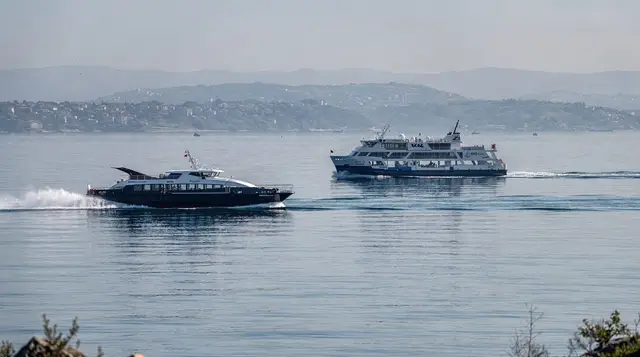
Stromboli sits further from the mainland than Lipari, Vulcano or Salina, and hydrofoil crossings from Milazzo or from Lipari itself take noticeably longer as a result — a meaningful factor when planning a single-day trip, since more of the day is spent in transit compared with a Vulcano day trip from Lipari. Many visitors instead book an evening boat excursion specifically timed around the night viewing, departing from Lipari or Vulcano in the afternoon and returning late, rather than treating Stromboli as a full standalone day trip with independent sightseeing time on the island itself.
A Panarea and Stromboli boat excursion from Lipari combines the crossing with a stop at Panarea along the way, and an Aeolian Islands boat tour from Milazzo with a Stromboli sunset is a longer option for travellers based on the Sicilian mainland rather than already on one of the islands. Full detail on route choices is in the Aeolian Islands guide and boat tours in Sicily compared.
The ferry rule, doubly important here
Every Aeolian crossing is subject to cancellation when the sea is too rough, and because Stromboli sits at the far end of most itineraries — reached last, often as a day or evening trip from a Lipari or Vulcano base — a cancelled return sailing has outsized knock-on effects on the rest of a trip. Travellers who schedule Stromboli for their last full day before a flight home are taking on more risk than the archipelago’s ferry reliability really supports. Building in a spare day, and treating Stromboli as an experience to schedule with room either side of it, is the sensible approach — the same principle covered in more depth on the Aeolian Islands hub page.
Staying overnight versus a day or evening trip
An overnight stay on Stromboli allows for an early-morning or late-evening guided ascent without the added transit time of a same-day return crossing, and gives access to the quieter parts of the island once the day-trip boats have left. It also means accepting Stromboli’s narrower range of accommodation and dining compared with Lipari, and booking well ahead in peak season, since bed numbers are genuinely limited. For most first-time visitors, a well-timed evening boat excursion or a single guided ascent booked as a day trip covers the experience adequately without the logistics of an overnight stay; a longer stay suits those specifically prioritising repeat viewings or a quieter pace once the boats depart.
What to bring
Sturdy closed shoes with real ankle support and grip matter more here than almost anywhere else in the archipelago — see Sicily’s packing list for the full trip checklist this fits into — the summit trail, when open to a given altitude, crosses loose volcanic scree and can be genuinely demanding. A headtorch is essential for any ascent timed to descend after dark, since the trail has no lighting. Warm layers matter even in summer: temperatures drop noticeably at altitude after sunset, a detail easy to underestimate when starting the hike in the day’s heat at sea level. For the boat-based night viewing option, a light jacket against the sea breeze is the main extra beyond normal daytime clothing.
Frequently asked questions about Stromboli
Can I see Stromboli erupt without hiking it?
Yes — a night boat trip to view the Sciara del Fuoco is the more consistently available option and does not depend on the altitude restrictions that affect the guided ascent.
How high can I hike up Stromboli?
It depends entirely on the volcano’s current activity level, decided by local authorities and guides on the day — no operator can guarantee a summit-level view in advance.
Is Stromboli safe to visit?
Yes, under the guided-ascent and monitored-access system that Italian volcanological authorities maintain, which adjusts permitted altitude according to current conditions rather than assuming a fixed level of calm.
Do I need to stay overnight on Stromboli to see the eruptions?
No — evening boat excursions from Lipari, Vulcano or Milazzo are timed specifically to catch the after-dark activity without requiring an overnight stay on the island.
How long does the crossing to Stromboli take?
Noticeably longer than to Vulcano or Lipari, since it sits furthest from Milazzo of the archipelago’s more visited islands — a real factor when planning a single day’s itinerary.
Is the guided ascent physically demanding?
Yes, more so than a casual walk — expect a genuine multi-hour hike on loose volcanic terrain, and go in reasonably fit condition with proper footwear.
What is Strombolicchio?
A sheer volcanic sea stack just offshore from the village, the eroded remnant of an older eruptive centre, visible from Stromboli’s coastline and often passed on boat excursions.
What happens if my Stromboli boat trip is cancelled by weather?
You wait for a rescheduled sailing once conditions allow, which is exactly why booking Stromboli for a day with no flexibility either side of it is a risk worth avoiding.
Did people ever have to leave Stromboli because of the volcano?
Yes — a period of markedly increased activity in the early 2000s prompted a temporary evacuation, though the island’s normal state is the much milder, continuous activity most visitors come to see.
Is Stromboli a good base for a multi-night stay?
Only for travellers specifically prioritising repeated volcano viewing or a quiet pace once day-trip boats leave — its range of restaurants, accommodation and non-volcano sightseeing is narrower than Lipari’s or Salina’s.