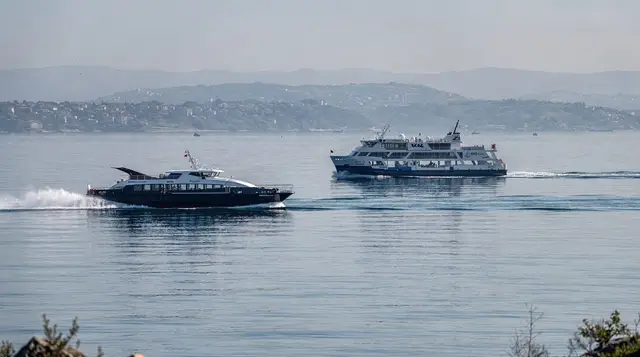
Seven islands, not one destination
The Aeolian Islands (Isole Eolie) are a curved chain of volcanic islands rising out of the Tyrrhenian Sea off Sicily’s north coast: Lipari, Vulcano, Stromboli, Salina, Panarea, Filicudi and Alicudi. They are a UNESCO World Heritage site for good reason — this is one of the few places on the planet where you can watch a volcano erupt from a boat at night, walk across sulfur-crusted mud, and eat dinner in a fishing village that has barely changed in decades, all within the same week.
Treating “the Aeolian Islands” as a single trip is the most common planning mistake. Each island has a different character, a different amount of infrastructure and a different reason to visit. Lipari is the practical base — the largest island, with the most beds, restaurants and ferry connections. Vulcano is a half-day or overnight trip built around one crater.
Stromboli is the volcano that never really stops, and the one island where most visitors plan their whole itinerary around a single evening. Salina is greener, quieter and increasingly the choice for people who want the scenery without the crowds. Panarea is smaller and more fashionable, with the yachts to match. Filicudi and Alicudi, further out, see a fraction of the traffic and have almost no nightlife — worth knowing if remoteness is the point.
None of this works without ferries, and the ferries do not always run.
Milazzo is the gateway, not the only one
Milazzo, on Sicily’s north coast, is the main departure port for the Aeolian Islands and the one with the widest choice of sailings. Both slow ferries (traghetti) and fast hydrofoils (aliscafi) leave from here throughout the year, with the schedule thinning out considerably outside the summer months. Messina, further east, and Palermo, to the west, both run seasonal connections as well, and in summer there are direct sailings from Naples on the mainland — useful if you are combining Sicily with a trip further north rather than flying into Catania or Palermo.
For most itineraries, Milazzo is the sensible choice: it’s a short drive or train ride from Messina and from the Catania and Palermo airport corridors, and it has enough departures per day that missing one sailing rarely wrecks a schedule. Parking near the port is available but fills up in summer, and driving your rental car onto the islands is rarely worth it — most of Lipari, Vulcano and Salina are manageable on foot, by local bus or scooter, and car ferries cost more and take longer than passenger hydrofoils.
A day tour from Milazzo by motorboat is a reasonable way to sample two or three islands if you only have a single day free and are not staying overnight anywhere in the archipelago.
The rule that governs every Aeolian itinerary
Ferries and hydrofoils in the Aeolian Islands are cancelled or delayed when the sea is too rough, and this is not a rare event — it happens several times a year, more often in autumn and winter, and occasionally even in summer when a sudden squall blows through. Operators cancel for safety, not for convenience, and there is no way to appeal it. If your flight home is the same day as your last island crossing, you are gambling with that flight.
The practical response is to build slack into the plan: leave the last full day before departure free of anything you cannot afford to lose, and if you are visiting Stromboli specifically for the night eruption-watching boat trip, do it on your second-to-last evening on the islands rather than your last one. Nobody who has been stranded an extra day on Lipari because the aliscafo to Milazzo was cancelled regrets having built in that buffer.
Lipari: the base that makes the rest possible
Lipari is both the name of the largest island and its main town, and it is where most people staying in the archipelago actually sleep. It has the widest choice of hotels and rented rooms, a proper old town with a hilltop castle and archaeological museum, and — crucially — the most frequent onward connections to every other island in the chain. If you are unsure where to base yourself for a multi-island trip, Lipari is very rarely the wrong answer.
The town itself rewards an afternoon of wandering: the citadel above the port, the cathedral inside it, and a scatter of black-sand and pumice-white coves within walking or short-bus distance. A guided walking tour of Lipari’s old town is a good first orientation before island-hopping further out. Full detail on the town, its beaches and its ferry timetables is in the dedicated Lipari page.
Vulcano: one crater, one smell, one rule
Vulcano is close enough to Lipari that some ferries and hydrofoils stop at both on the same run, and it is usually visited as a day trip or a single overnight stay rather than a full base. The island takes its name from the Roman god of fire, and the crater above Vulcano Porto — Gran Cratere della Fossa — still vents sulfurous gas, which is exactly why the smell hits you before the boat has finished docking.
Access to the crater trail is regulated and depends on current gas readings; the path has been closed or restricted at times when emissions rise, so anyone planning a trip specifically to hike it should check current conditions before committing rather than assuming it will be open. The mud pools (fanghi) near the port, where visitors coat themselves in warm sulfurous mud, are a lower-effort and more reliably open alternative, though the smell and staining on clothes and jewellery are exactly as bad as their reputation suggests. Full practical detail is on the Vulcano page, and on the Vulcano island guide.
Stromboli: the volcano that never stops
Stromboli is unusual even by volcanic standards: it has been in a state of near-continuous mild eruption for centuries, producing small explosions from its summit craters at fairly regular intervals — visible glow and ash by day, and a genuinely striking show of incandescent material by night. Most visitors experience this in one of two ways: a guided ascent, or a boat trip after dark.
Guided ascents toward the summit craters are the only legal way up above a certain altitude, run by authorised local guides, and how high the group is allowed to go depends on the volcano’s current activity level — on a more active day the guides may stop well below the summit rim. Nobody sells a guaranteed summit view, and any operator who promises one is not being straight with you. The lower-effort and more consistently available option is a boat trip after dark to view the Sciara del Fuoco, the scarred slope down which incandescent rock periodically tumbles into the sea — visible from the water without the climb, and without depending on a guide’s decision about altitude on the day.
A guided hike toward the Stromboli summit craters and boat-based night trips are both covered in more depth on the Stromboli page, the Stromboli volcano guide, and specifically for the after-dark option, Stromboli by night.
Salina, Panarea and the quieter islands
Salina is the second-largest of the seven and noticeably greener than its neighbours, thanks to the extinct volcanic cones that trap more rainfall. It is known for Malvasia delle Lipari, a sweet dessert wine made from grapes grown on its slopes, and for Pollara, the crater-rim village used as a filming location for Il Postino — a small, quiet, genuinely beautiful spot rather than a manufactured attraction. Salina has grown into the preferred base for travellers who want the archipelago’s scenery without Lipari’s crowds or Panarea’s price tags; see the Salina page for specifics.
Panarea is the smallest inhabited island and the most fashionable — narrow car-free lanes, whitewashed houses, and in high summer, more yachts moored offshore than the harbour was really built for. It makes an easy day trip from Lipari or Milazzo, and the nearby islet of Basiluzzo adds a good boat-trip detour. Full detail is on the Panarea page.
Filicudi and Alicudi, the two westernmost islands, are considerably harder to reach, have the least accommodation and nightlife of the seven, and are visited mainly by people who have already done Lipari, Vulcano and Stromboli and specifically want somewhere quieter still. Neither has a dedicated page on this site, but both come up as add-on stops on some of the longer boat tours out of Lipari.
How to see more than one island without wasting a day on transfers
Rather than booking every hydrofoil leg separately, a multi-island boat tour bundles several stops into a single day and removes the guesswork over which hydrofoil connects where. A boat tour covering Lipari, Vulcano, Panarea and Stromboli is a realistic way to see four of the seven islands without booking four separate crossings.
A lighter version, taking in just Panarea and Stromboli from a Lipari base, suits travellers who prefer a single overnight base over a longer combined day, and a scheduled point-to-point hydrofoil ticket between Milazzo and Lipari covers the most common single leg for anyone building their own itinerary leg by leg.
More detail on choosing between operators and route combinations is in the Aeolian Islands guide, island hopping around Sicily, and boat tours in Sicily compared. For the wider ferry network beyond just the Aeolians, see the ferries and hydrofoils guide, and for a sense of what these trips actually cost, what a Sicilian boat tour actually costs.
Deciding how many days, and for which islands
A single day, taken as a guided tour from Milazzo, gives a taste of two or three islands but no real time on any of them — fine as a add-on to a Sicily trip that is mostly based elsewhere, not as the main event. Two to three nights based on Lipari, with a day trip to Vulcano and an evening boat trip to see Stromboli, is the minimum for a proper visit. Four to six nights allows a second base — usually Salina, for a quieter final stretch — and a real (rather than rushed) look at Vulcano’s crater trail when conditions allow it.
If the Aeolian Islands are one stop on a longer Sicily itinerary rather than the whole trip, Sicily and the Aeolian Islands in 10 days sets out a realistic split between the mainland and the archipelago. If you are trying to decide between this archipelago and the Egadi Islands off the west coast instead, Aeolian or Egadi islands lays out the trade-offs directly, and the Egadi Islands hub covers the alternative in full.
Practical notes worth knowing before you book
Accommodation on Lipari, Vulcano and Panarea books out well ahead for July and August, and prices climb accordingly; Salina and the smaller islands have more headroom. Cash is still preferred by some smaller operators and family-run guesthouses, particularly on the less-touristed islands, so carrying some is sensible even though card acceptance has improved. Mobile signal is generally fine on Lipari, Vulcano, Salina and Panarea, and weaker on Stromboli’s more exposed stretches and on Filicudi and Alicudi.
Finally, remember the volcanoes are not props. Stromboli’s activity level genuinely changes week to week, and the authorities close the summit trail or lower the permitted altitude when the volcano warrants it. That is a safety measure, not a bureaucratic inconvenience, and it is worth building your expectations — and your itinerary’s flexibility — around it rather than against it.
Frequently asked questions about the Aeolian Islands
Which Aeolian island should I base myself on?
Lipari, for most first-time visitors — it has the most beds, the most restaurants, and the most frequent onward ferries to every other island. Salina is the better choice if a quieter, greener base matters more than convenience.
Can I visit the Aeolian Islands as a day trip from Sicily’s north coast?
Yes, from Milazzo, and it is a realistic way to see two or three islands if you cannot spare an overnight stay. It will not, however, come close to covering all seven, or give proper time on any single one.
Do I need to see Stromboli erupt to make the trip worthwhile?
No. Stromboli’s activity is the archipelago’s signature experience but not its only one — Lipari’s old town, Vulcano’s crater and mud pools, and Salina’s vineyards and quiet villages stand on their own.
What happens if my ferry back to the mainland is cancelled?
You wait for the next available sailing once the sea calms, which can be later the same day or, in a bad spell, the next one. This is why building a spare day before any onward flight is worth the inconvenience.
Is it worth renting a car on the islands?
Rarely. Lipari, Vulcano and Salina are manageable by scooter, local bus or on foot, and bringing a car over by ferry costs more and takes longer than travelling as a foot passenger.
How rough does the sea have to be for sailings to stop?
There is no single published threshold — it is an operator and coastguard judgement call based on conditions on the day, which is exactly why it cannot be predicted from a forecast alone.
Are the Aeolian Islands suitable for a short stopover of one or two nights?
Only if you are picking one island and accepting you will not see the others. Lipari, with a day trip to Vulcano, is the most efficient version of that compromise.
Is Stromboli safe to visit?
Yes, under the guided-ascent system and with the boat-based night viewing option, both of which are designed around the volcano’s current activity level rather than a fixed assumption of calm conditions.