Quad, buggy and jeep tours on Etna
Do Etna quad and jeep tours reach the summit craters?
No. They cover the volcano's lower and middle slopes — lava flows, the Silvestri craters area and forested terrain, generally up to around 1,900–2,500 m — but the true summit zone above roughly 2,900 m stays restricted to guided walking with a licensed volcano guide, regardless of what vehicle brought you up the mountain.
A faster way to cover Etna’s lower slopes
Not every visitor to Mount Etna wants to walk. Quad bikes, buggies and 4x4 jeeps offer a faster, less physically demanding way to cover the volcano’s lower and middle slopes — lava flows from past eruptions, forested stretches, and the dormant Silvestri craters near Rifugio Sapienza — while still getting close enough to the terrain to appreciate its scale. This guide covers what these tours actually include, where they stop short, and how to pick between the formats on offer.
What altitude these tours actually reach
This is the detail most marketing photos gloss over: quad, buggy and jeep tours operate on regulated tracks across Etna’s lower and middle slopes, generally up to somewhere in the range of 1,900 to 2,500 m depending on the specific route and operator. They do not reach the true summit crater zone. Above roughly 2,900 m, access is restricted by law to guided walking with a certified Etna volcano guide, and even then only when the volcano’s current activity level permits it.
A vehicle tour, however capable the vehicle, does not change this rule — nobody can drive you to the summit craters, and any listing implying otherwise is overselling what it delivers. For the full picture on why this restriction exists and how it’s enforced, see Mount Etna: the complete visitor guide and Etna eruptions, ash and safety.
Quad tours: driving yourself over volcanic terrain
Quad tours put you in control of your own vehicle, following a guide along regulated off-road tracks through lava fields and forest. Most operators require a valid driving licence to pilot a quad, since it’s treated as a genuine off-road vehicle rather than a novelty ride, and a helmet is mandatory. The terrain itself — loose volcanic scree, dust, uneven ground — makes this a more physical experience than it might look from photos; expect to actively manage the bike rather than just sit on it.
Etna: Quad Tour Through Lava and Woods with an Expert Local Guide is a representative guided quad route through lava flows and woodland with a local guide setting the pace and stopping for context along the way.
Mount Etna: Quad Tour Among Craters Lava Flows and a Lava Cave goes further, incorporating a lava cave visit alongside the crater-adjacent terrain — a good option if you want more variety within a single quad excursion.
Jeep and buggy tours: let someone else drive
For visitors who’d rather focus on the scenery than the driving, 4x4 jeep and buggy tours cover similar ground with a guide or driver handling the vehicle. This format suits families with children too young to drive a quad themselves, travellers without a valid licence, or anyone who simply prefers to sit back and take in the landscape and commentary rather than concentrate on steering over rough ground — see Visiting Etna with children for a fuller family-focused take on the mountain.
Jeep tours in particular often combine the drive with a stop at a lava tube or cave — a volcanic feature formed when the outer surface of a lava flow cools and solidifies while molten rock continues flowing beneath it, leaving a hollow tunnel behind once the flow subsides.
4X4 Jeep Tour of Mount Etna with Lava Tube and Alcantara includes exactly this kind of lava tube stop alongside the main drive, and also touches the Alcantara area — worth pairing with The Alcantara Gorges: body rafting and basalt if you have a full day rather than a half-day available.
Ascent on Mt Etna to the Summit by 4X4 pushes as high as a 4x4 route is permitted to go, for visitors who want to get as close to altitude as a vehicle allows before any onward hiking with a guide.
Why the guide’s read of the day matters more than the itinerary
Etna is an active stratovolcano, and its access rules are not a fixed schedule — they shift with the mountain’s current activity, sometimes with very little notice. A reputable quad, buggy or jeep operator adjusts the day’s route based on that day’s conditions rather than following a rigid, pre-printed plan regardless of circumstances.
This means the exact route and altitude reached can vary between two otherwise identical bookings a week apart, and a good operator will explain why rather than simply apologising for a shorter route. Treat any operator promising a fixed, unconditional itinerary to a specific altitude with some scepticism — see Etna tours compared for a broader look at how different operators and formats stack up.
Comparing the vehicle options to hiking and the cable car
Quad, buggy and jeep tours are one of several ways to experience Etna’s lower slopes, alongside the Funivia dell’Etna cable car and guided hiking. The cable car and its connecting jeep-plus-guide package, covered in The Etna cable car and 4x4 jeeps explained, is the standard route for visitors headed toward the summit zone with a guide for the final stretch.
Quad and buggy tours instead prioritise ground-level terrain — lava fields, forest, lava tubes — over altitude, which makes them a better fit for visitors more interested in the volcanic landscape itself than in reaching the highest point access rules allow that day. For those who want the altitude and the walking, Hiking in Sicily: the routes that are worth it and Hiking to the Etna summit craters cover that route in detail.
Practical notes: clothing, timing and getting there
Bring layers regardless of the season — Etna’s slopes sit 1,500 m or more above the coast, and temperatures drop noticeably with altitude even in the height of an August heatwave on the beach below. Closed shoes are essential; volcanic dust and grit get into open footwear fast. Most tours depart from Catania or Taormina with transport included, or meet at Rifugio Sapienza (south side) or Piano Provenzana (north side) for those driving themselves — see Etna north side or south side for which base suits your plans better. Ash from more significant eruptions can occasionally disrupt Catania Fontanarossa airport for hours or a full day, worth knowing if your travel dates fall close to a departure.
Choosing between quad, buggy and jeep
The decision mostly comes down to one question: do you want to drive, or do you want to look? A quad rewards people who enjoy the physical side of an off-road ride and who are happy to concentrate on the track in front of them. You will see the lava fields, but you will see them in short glances between corrections of the handlebars. A jeep or buggy flips that balance. Someone else deals with the ruts and the loose scree, and you are free to watch the landscape change from forest to black volcanic desert, ask the guide questions, and take photographs without worrying about the vehicle.
Group dynamics matter too. A mixed party, with one confident driver and others who would rather not drive, often ends up happier in a jeep where everybody shares the same experience. A group of friends who all want to drive will usually have more fun on quads, where each person controls their own pace within the guide’s convoy. If you are travelling as a couple and only one of you holds a licence, check how the operator handles passengers on quads before booking, because policies differ from one company to the next.
Think about the weather as well. Open vehicles such as quads and buggies leave you exposed to dust, wind and the cold that comes with altitude. A closed or covered jeep is more forgiving on a grey, windy day, which can happen on Etna even when the coast is sunny.
What a typical outing feels like
Most tours follow a similar rhythm. You meet your guide, receive a briefing, and are fitted with a helmet if you are riding a quad. There is usually a short practice stretch so that first-timers can get used to the throttle and brakes before the real terrain begins. The convoy then moves onto the regulated tracks, stopping at points where the guide explains how a particular flow formed, which eruption it belongs to, and why vegetation has returned in some places and not in others.
Those stops are where a good guide earns the fee. The black rock looks lifeless at first, but a little commentary turns it into a timeline: older flows softened by lichen and pioneer plants, younger ones still sharp and bare. If the tour includes a lava cave or tube, expect a short walk and a chance to see the inside of a tunnel that once carried molten rock. Wear shoes that grip, because the floor of such a place is uneven.
Between stops, the driving itself is steady rather than fast. These are guided convoys on shared tracks, not races, and the pace is set by the slowest rider. That is reassuring for beginners and slightly frustrating for experienced off-roaders, so set your expectations accordingly.
Who these tours suit, and who should pick something else
Vehicle tours work well for travellers who want a taste of Etna without committing to a long walk, for those with limited mobility on uneven ground, and for visitors short on time who still want to see the volcano up close. They also suit people who simply find the idea of riding across a lava field irresistible, which is a perfectly good reason to book.
They are a weaker fit for anyone whose main goal is to stand near the summit craters. For that, a licensed guide on foot is the only route, and the practical details are in Hiking to the Etna summit craters. Travellers prone to motion sickness or back trouble should also think twice, since the tracks are bumpy. If you are weighing several formats at once, Etna day trip options and Etna: tour or independent lay out the alternatives side by side.
For families, the most important thing is to read the age and passenger rules in the booking details. Etna with kids and Sicily with kids give a wider picture of what works with children on the island.
Making a day of it
A vehicle tour rarely fills a whole day, so it helps to plan what surrounds it. Many visitors base themselves in Catania or Taormina and treat the volcano as one part of a longer excursion. The northern slopes lead naturally toward Bronte and Randazzo, where pistachio country begins; the Bronte pistachio guide explains what to taste there. Wine lovers can combine a morning on the mountain with a vineyard visit, following the advice in the Etna wine guide or the Etna wine road.
If your time on the east coast is short, Day trips from Catania and Day trips from Taormina show how Etna fits alongside other excursions, and Catania and Etna in 3 days offers a ready-made sequence for those who want the volcano without improvising.
Getting the best from your booking
Book according to the season you are travelling in, not only your preferred date. The article on the best time to visit Sicily explains how the island’s seasons feel, and the editorial priority of spring and early autumn applies on the mountain too: mild weather on the coast, cooler air higher up, and fewer crowds than in high summer. In midsummer, the heat at sea level can make the temperature drop on the slopes feel dramatic, so pack with that contrast in mind. What to pack for Sicily covers the basics.
Read the description of each tour carefully. Look at what is included, whether hotel pickup is offered, how long the group is, and whether the operator mentions adjusting the route to conditions. A candid description is a good sign. If something is unclear, ask before paying rather than after.
Finally, keep a margin in your plans. Because access on Etna depends on the volcano’s behaviour, avoid scheduling a tight connection, such as a flight or a ferry, on the same day. Etna eruptions, ash and safety explains why, and the Catania airport guide is worth a look if your departure is close to your tour date. If you plan to drive to the meeting point yourself, driving in Sicily prepares you for the roads, and car rental in Sicily helps you choose a vehicle.
Frequently asked questions about Etna quad and jeep tours
Do you need a licence to drive a quad on Etna?
Most operators require a valid driving licence to pilot a quad yourself, since it’s treated as an off-road vehicle rather than a toy. Buggies and jeeps are typically driven by the guide or an accompanying driver, so passengers don’t need any licence for those formats.
Are quad tours on Etna safe?
With a licensed operator, helmet, briefing and a guide managing the route and pace, quad tours are a mainstream activity suitable for reasonably fit beginners. The terrain is uneven volcanic ground with dust and loose rock, which is exactly why solo, unguided quad access isn’t offered on the regulated park tracks.
Can a quad or jeep tour take you to Etna’s summit craters?
No vehicle tour reaches the true summit craters. Above roughly 2,900 m, access is restricted to guided walking with a certified Etna guide, and depends on the volcano’s current activity level — a rule that applies regardless of how you arrive at the lower slopes.
What should I wear for an Etna quad or jeep tour?
Closed shoes, layers even in summer (temperatures drop noticeably with altitude), and clothes you don’t mind getting dusty — volcanic ash and grit gets everywhere on these routes. Helmets are provided and required for quad driving.
Is quad or jeep the better choice on Etna?
Quad tours suit visitors who want to drive themselves and don’t mind the physical effort of handling the vehicle over rough terrain. Jeep and buggy tours suit those who’d rather sit back, let a guide drive, and focus on the scenery and commentary.
Can children go on Etna quad or jeep tours?
Quad-driving generally requires a licence and a minimum age, ruling out young children as drivers, though many operators allow children as passengers on buggies or jeeps with an adult or the guide driving. Check age and passenger policies with the specific operator before booking.
Etna and volcano tours on GetYourGuide
Verified deep-linked GetYourGuide tours. Book through these links and we earn a small commission at no cost to you.
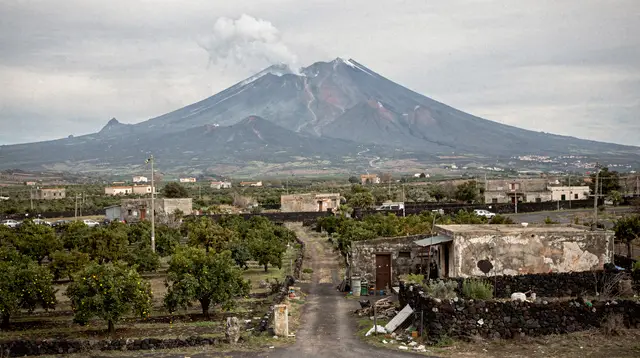
Photo: our own image of the location, not the operator’s product photo.