Three islands, a short crossing, and a lot less drama than the Aeolians
The Egadi Islands (Isole Egadi) sit just off Sicily’s western tip, a short hop from Trapani and Marsala, and offer a genuinely different island experience from the volcanic theatrics of the Aeolian Islands further east. There are three main islands — Favignana, Levanzo and Marettimo — plus a scattering of uninhabited islets, and none of them involves an active crater, a regulated summit trail or a sulfur smell. What they offer instead is clear water, a genuinely shorter and more reliable crossing than the Aeolians’, and three distinct characters packed into a compact, easily combined archipelago.
Favignana is the largest and most developed, built around a former tuna-processing industry and now a popular cycling and swimming destination. Levanzo is the smallest inhabited island, known chiefly for a cave containing some of the oldest rock art in the Mediterranean. Marettimo, furthest out and the wildest of the three, has no real roads, no real nightlife, and is the deliberate choice for travellers who want the quietest possible version of an Egadi trip.
Why the Egadi crossing is easier than the Aeolian one
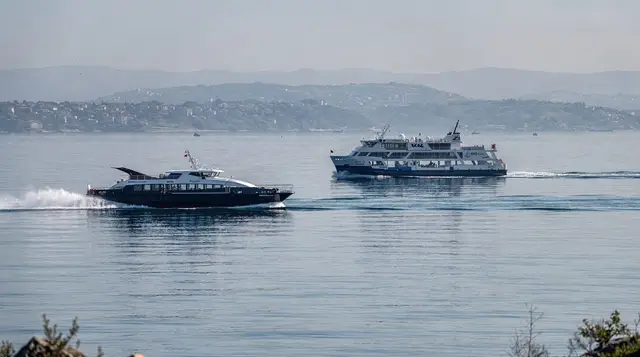
The single biggest practical difference between this archipelago and the Aeolians is distance: Favignana sits only a handful of kilometres from Trapani, and the fastest hydrofoils cover it in well under half an hour — a crossing an order of magnitude shorter and calmer, in typical conditions, than the open-water legs between Milazzo and the Aeolian Islands. This does not mean crossings are never affected by weather — they still are, and the same caution about rough seas cancelling ferries and hydrofoils applies here as everywhere else around Sicily’s islands — but the shorter distance and more sheltered water generally mean fewer disruptions and shorter waits when conditions do turn.
That said, “generally fewer disruptions” is not “never disrupted.” A genuinely stormy day on Sicily’s west coast will still ground sailings, and travellers with an inflexible onward connection — a flight out of Trapani or Palermo, for instance — should still avoid scheduling their last Egadi crossing for the same day.
Favignana: the tuna island
Favignana takes its shape, famously, from a butterfly when viewed from above, and its history from tuna. The island was for centuries a centre of the mattanza, the traditional and now largely discontinued Sicilian tuna-trapping ritual, and the enormous former tonnara (tuna-processing plant) built by the Florio family in the town centre — one of the most significant pieces of industrial archaeology in Sicily — has been restored as a museum documenting that history. Cala Rossa, on the island’s eastern coast, is regularly named among Sicily’s best swimming spots: a dramatic cove of pale limestone cliffs framing startlingly clear water, reached by a short walk or a bike ride from town.
Favignana’s flat terrain and small size make it one of the most genuinely enjoyable Sicilian islands to explore by bicycle — a point worth knowing if cycling is of interest, since bike rental is widely available and the island’s low-traffic roads suit it far better than most of mainland Sicily. A combined Favignana and Levanzo tour is a straightforward way to see both islands in a single day for anyone based on the Sicilian mainland rather than staying overnight. Full detail is on the Favignana page.
Levanzo: a cave older than most of recorded history
Levanzo, the smallest of the three inhabited islands, has a single small village and a population that has always been modest — but it holds one of the most significant prehistoric sites in the Mediterranean. The Grotta del Genovese, on the island’s rugged western coast, contains rock engravings and paintings dating back to the Palaeolithic and Neolithic periods, among the oldest figurative art known in the region. Access is by guided visit only, arranged in advance rather than a casual walk-in, both to protect the site and because reaching the cave itself typically requires a boat or a fairly demanding walk over rough terrain.
Beyond the cave, Levanzo offers little in the way of formal sights — its appeal is largely about a slower pace, clear coves for swimming, and a level of quiet that neither Favignana nor mainland Sicily can really match in high season. Full practical detail on visiting the cave and the rest of the island is on the Levanzo page.
Marettimo: no cars, no crowds, real hiking
Marettimo, furthest from the mainland of the three, is the wildest and least developed — a genuinely car-free island with a small fishing village, a network of hiking trails across largely uninhabited terrain, and a marine reserve along much of its coastline protecting some of the clearest water in the archipelago. It sees considerably fewer visitors than Favignana, partly because of the slightly longer crossing and partly because it offers less in the way of conventional tourist infrastructure — which is precisely the point for the travellers who specifically seek it out.
A cave and cove boat tour of Marettimo is a good way to see the island’s coastline, including sea caves not reachable on foot, and a boat tour of the Marettimo marine reserve covers the protected waters more specifically. Full detail is on the Marettimo page.
The Florio family and how the islands changed hands
For much of the nineteenth and early twentieth centuries, the Egadi Islands were effectively the private domain of the Florio family, the Palermo dynasty who built one of Sicily’s great industrial fortunes on tuna, wine and shipping. The Florio tonnara on Favignana, now a museum, was the centrepiece of that empire’s tuna operations, employing much of the island’s population at its peak and organising the mattanza as both an economic ritual and, by the early twentieth century, a spectacle for visiting dignitaries.
The islands passed out of Florio hands as the family’s fortunes declined through the twentieth century, eventually coming under Italian state and regional ownership, with much of Marettimo’s coastline and interior now protected as a nature reserve rather than private or commercial land. This history is worth knowing before visiting the former tonnara on Favignana — it is not simply an industrial ruin but the physical remnant of one of modern Sicily’s most significant family enterprises.
Diving, snorkelling and the marine reserve
The waters around all three Egadi Islands, and especially around Marettimo, form part of a protected marine reserve — one of the largest in Italy — and the clarity and biodiversity on offer are a genuine step up from much of Sicily’s more built-up coastline. Snorkelling straight off the rocks at Cala Rossa on Favignana requires no special arrangement and rewards even a casual swim, while more serious diving, particularly around Marettimo’s sea caves and reef walls, is better arranged through a local operator familiar with the reserve’s specific sites and any seasonal access rules. Levanzo’s coves, quieter than Favignana’s, offer a middle ground — clear water and relatively few crowds without the logistics of a full boat-based diving trip.
Getting to the Egadi Islands
Trapani is the main departure port for all three islands, with Marsala offering an alternative, generally slightly longer crossing. Both hydrofoils and slower ferries run year-round, with summer bringing significantly more frequent departures. A ferry ticket between Trapani and Favignana covers the most common single crossing, and a boat tour to Favignana and Levanzo is a straightforward way to cover both islands from Trapani in a single day without arranging separate scheduled hydrofoils.
For a longer, more immersive option, a multi-day private trimaran charter around the Egadi Islands covers all three islands and their surrounding waters at a much slower pace than a day-trip itinerary allows. Broader route comparisons across the whole archipelago are in the Egadi Islands guide and boat tours in Sicily compared; for the wider Sicilian ferry network, see the ferries and hydrofoils guide.
How many days, and for which islands
A single day trip from Trapani, most commonly to Favignana alone or Favignana and Levanzo combined, is a realistic way to sample the archipelago without an overnight stay, and works well as an add-on to a longer trip based in western Sicily. Two to three nights based on Favignana, with day trips to Levanzo and Marettimo, is the more complete version, and allows time for Favignana’s own sights — the former tonnara, Cala Rossa, and a cycling loop of the island — alongside the neighbouring islands’ more singular attractions.
If the Egadi Islands are one part of a longer Sicily trip rather than the whole point of it, western Sicily in 5 days sets out a realistic split between the mainland and the archipelago. If you are weighing this archipelago against the Aeolian Islands for a trip that can only include one, Aeolian or Egadi islands lays out the comparison directly, and both the Aeolian Islands hub and this page can be read side by side.
Practical notes
Accommodation on Favignana is the most plentiful of the three islands and books out for July and August well ahead of time; Levanzo and Marettimo have considerably fewer beds, and travellers wanting to stay overnight on either should book early regardless of season. Cycling is genuinely one of the better ways to see Favignana specifically, thanks to its flat terrain, though Levanzo and Marettimo’s more rugged ground suits walking better than riding. As with the rest of Sicily’s islands, cash remains useful for smaller operators even as card acceptance improves, and sun protection matters more than it seems on islands with limited natural shade.
Frequently asked questions about the Egadi Islands
Which Egadi island should I visit if I only have one day?
Favignana, for the widest range of things to see and do in a single visit — the former tonnara, Cala Rossa, and easy cycling around the island.
Is the crossing to the Egadi Islands as unreliable as the Aeolian one?
Generally more reliable, thanks to the shorter, more sheltered crossing from Trapani, though sailings can still be cancelled in genuinely rough weather.
Do I need to book the Levanzo cave visit in advance?
Yes — access to the Grotta del Genovese is by guided visit only, arranged ahead of time rather than on arrival.
Is Marettimo worth visiting if I’ve already done Favignana and Levanzo?
Yes, particularly for travellers drawn to hiking and a quieter, more remote atmosphere — it offers a genuinely different experience from its two more-visited neighbours.
Can I cycle around Favignana in a day?
Comfortably — the island is small and largely flat, and a bike is one of the more enjoyable ways to see it, with rental widely available near the port.
How do the Egadi Islands compare to the Aeolian Islands?
Shorter, calmer crossings and clearer water without an active volcano; less dramatic scenery overall, and a quieter, more low-key atmosphere across all three islands.
Is there tuna fishing still happening on Favignana?
The traditional mattanza has been largely discontinued; the island’s tuna heritage is now preserved mainly through the restored former tonnara and its museum.
Do all three Egadi islands have overnight accommodation?
Yes, though Favignana has considerably more choice than Levanzo or Marettimo, both of which should be booked well ahead if an overnight stay is planned.
Who owned the Egadi Islands historically?
The Florio family, a major Palermo industrial dynasty, effectively controlled the islands’ tuna economy through the nineteenth and into the twentieth century before ownership passed to the Italian state and regional authorities.
Is the marine reserve around Marettimo worth a special trip for divers?
Yes, for anyone with a genuine interest in diving — it’s one of Italy’s larger marine reserves and offers noticeably clearer water and richer marine life than much of Sicily’s mainland coast.
Can I snorkel without a boat trip or diving arrangement?
Yes — Cala Rossa on Favignana in particular rewards snorkelling straight off the rocks with no special arrangement needed.