The largest and easiest Egadi island to enjoy
Favignana is the largest and most visited of the Egadi Islands, and the one most people mean when they talk about a day trip from Trapani. Viewed from above, its outline resembles a butterfly — two wider lobes connected by a narrower central strip where the town and main harbour sit — and its flat, low-lying terrain makes it one of the most genuinely pleasant Sicilian islands to explore by bicycle, in sharp contrast to the steep volcanic slopes that define most of the Aeolian Islands further east.
The island’s modern character is inseparable from tuna. For centuries Favignana was one of the Mediterranean’s most important centres for the mattanza, the traditional method of trapping and harvesting migrating bluefin tuna, and that history still shapes the town’s centre, its economy and its museums today, even though the practice itself has been largely discontinued.
The former tonnara: Sicily’s tuna-industry landmark
The Stabilimento Florio, the enormous former tuna-processing plant built by the Florio family in the town centre in the nineteenth century, is Favignana’s single most significant landmark and one of the most important pieces of industrial archaeology anywhere in Sicily. At its peak it processed and canned tuna on an industrial scale, employing much of the island’s working population, and the mattanza itself — a coordinated, ritualistic method of driving tuna into a chamber of nets for harvest — became something between an economic necessity and a spectacle watched by visiting dignitaries.
The plant has been restored as a museum documenting this history in detail, and a guided walking tour of the village and the former tuna farm is the most useful way to understand what the site actually represents, rather than walking past an impressive but unexplained building.
The tradition has declined sharply since the mid-twentieth century, as tuna stocks and fishing methods changed across the Mediterranean, and the mattanza in its traditional form is now rare rather than a reliable visitor spectacle — worth knowing if that specific experience is the reason for a visit, since it should not be assumed to be running on any given trip.
Cala Rossa and the rest of the coastline
Cala Rossa, on Favignana’s eastern side, regularly features in the best beaches in Sicily — not a stretch of sand but a dramatic inlet of pale limestone cliffs and startlingly clear turquoise water, reached by a short walk or bike ride from town along a scenic coastal path. There is little natural shade at the cove itself, so bringing your own sun protection is essential rather than assuming facilities will cover it. Beyond Cala Rossa, Favignana’s coastline offers a scatter of quieter coves and old quarry pools — some of the island’s beaches sit inside former limestone quarries, cut for building stone and later flooded or opened to the sea, giving swimming spots with a genuinely unusual geometric shape.
A kayak, snorkelling and adventure excursion is a good way to see more of this coastline from the water, and a rib boat tour around the island covers Favignana’s full circumference in a few hours, including coves and cliffs not easily reached on foot or by bike.
Cycling the island
Favignana’s flat terrain and modest size — a full loop of the island is well within reach for a moderately fit cyclist in a single day — make bike rental one of the most popular and sensible ways to get around, and considerably more practical than a car, which adds cost without much benefit on an island this compact.
Roads are generally quiet outside the main town, and the coastal route linking the main beaches and coves is a genuinely enjoyable ride rather than a chore undertaken purely for transport — see cycling in Sicily for how Favignana compares with the mainland’s more demanding terrain. Bike rental shops cluster near the port and town centre, and demand is high enough in peak summer that arranging a bike on arrival, rather than assuming easy last-minute availability, is the safer approach.
The old town, and a walk worth taking properly
Favignana’s town centre, clustered around the harbour and the former tonnara, has a genuine historic character beyond the tuna-industry buildings — a hilltop fort, Forte Santa Caterina, with commanding views over the whole island and out toward Marettimo on a clear day, and a scatter of squares and narrow streets that reward an unhurried walk rather than a rushed pass-through between the ferry and the beach. A guided discovery walk of the historic centre covers this ground with more context than exploring alone, particularly around the tonnara’s history and the fort’s various uses over the centuries.
Favignana compared to Levanzo and Marettimo
Of the three Egadi Islands, Favignana is unambiguously the most developed and the easiest to enjoy without much planning — the widest choice of restaurants, accommodation and rental bikes, and enough sights to fill more than a single day comfortably. Levanzo, a short hop away, trades that convenience for a single genuinely remarkable attraction in its prehistoric cave and a much quieter, more residential atmosphere; it works well as a half-day add-on to a Favignana stay rather than a base in its own right.
Marettimo, furthest out, is a different proposition entirely — car-free, hiking-focused and considerably less developed, better suited to travellers who have already had their fill of Favignana’s relative bustle and want something starker. Most visitors treat Favignana as the base and the other two as day trips from it, which is the sensible default for a first Egadi visit.
Weather and the best time to visit
Favignana’s flat, largely shade-free terrain means the midsummer heat is felt more directly than on a more vegetated island — worth factoring into any plan to cycle around the coastline in July or August, when an early start avoids the worst of the midday sun. Late May through June, and September, offer warm enough water for swimming without the peak crowds, inflated prices and harshest heat of high summer. Winter sees the island revert to a much quieter, largely local rhythm, with many restaurants and rental shops closed until the season picks up again in spring.
Getting to Favignana
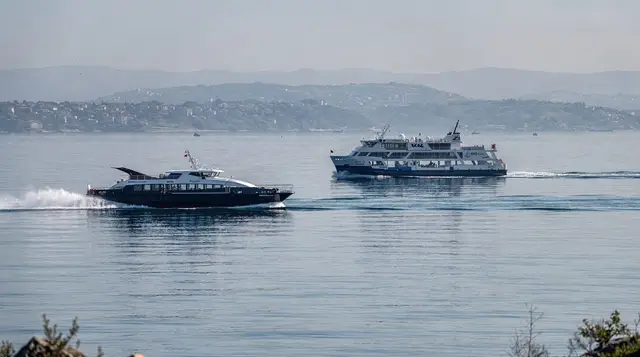
Trapani is the main departure port, with a short, generally reliable hydrofoil crossing — noticeably calmer and faster than the equivalent Aeolian Islands crossings from Milazzo, though the same caution about sea conditions cancelling sailings still applies in genuinely rough weather. Marsala offers an alternative departure point with a slightly longer crossing.
A ferry ticket between Trapani and Favignana covers the standard crossing; for a wider comparison of routes and combined-island options, see the Egadi Islands guide and the ferries and hydrofoils guide.
Combining Favignana with Levanzo or Marettimo
Favignana’s central position and frequent ferry connections make it the natural base for a multi-island Egadi trip, with Levanzo a short hop away for its prehistoric cave art, and Marettimo, further out, for a genuinely quieter, car-free day of hiking and swimming. Most visitors staying overnight on the archipelago choose Favignana precisely because of this — the widest accommodation choice combined with the easiest onward access to its two quieter neighbours.
Where to eat, and what to expect
Restaurants in Favignana’s town lean heavily, unsurprisingly, on tuna — fresh, grilled or in the traditional preserved forms the island is historically known for — alongside the broader Sicilian seafood repertoire. Prices run somewhat above the Sicilian mainland, in line with the rest of the Egadi and Aeolian archipelagos, reflecting the added cost of getting supplies onto an island rather than deliberate overcharging. Booking ahead in peak season is sensible for the more popular spots near the harbour.
Common mistakes worth avoiding
The most frequent misstep is treating Favignana as a beach-only day trip and skipping the former tonnara entirely — it is genuinely one of the more significant historic sites in western Sicily, not an optional add-on. The second is renting a bike without checking the route to Cala Rossa in the day’s heat, since the coastal path has limited shade; an early start avoids the worst of it. The third is assuming the mattanza can still be seen as a tourist spectacle — the practice has declined sharply, and the museum, not a live demonstration, is now the reliable way to engage with that history.
Frequently asked questions about Favignana
Is Favignana good for a day trip from Trapani?
Yes — the crossing is short and reliable enough that a single day covers the former tonnara, a swim at Cala Rossa and a bike ride comfortably.
Do I need to book bike rental in advance?
In peak summer, arranging it soon after arrival rather than assuming last-minute availability is the safer approach, given how popular cycling is on the island.
Can I still see the traditional tuna mattanza on Favignana?
Rarely as a live spectacle — the practice has declined significantly since the mid-twentieth century. The former tonnara museum is the reliable way to engage with this history now.
Is Cala Rossa the best beach on Favignana?
It’s the most famous and most photographed, though the island’s former-quarry swimming pools offer a quieter, differently shaped alternative worth exploring as well.
How long is the ferry crossing from Trapani to Favignana?
Considerably shorter than the equivalent Aeolian Islands crossings — among the quickest and most reliable island hops in Sicily, though still subject to cancellation in rough weather.
Is a car necessary on Favignana?
No — the island’s flat, compact layout makes a bicycle the more practical and more enjoyable way to get around.
Can I visit Levanzo or Marettimo as a day trip from Favignana?
Yes, both are reachable by short hydrofoil hops or combined boat tours, making Favignana a sensible base for exploring the wider Egadi archipelago.
What should I know before visiting the former tonnara?
It was once one of Sicily’s most significant industrial sites, built by the Florio family — worth visiting with the context of that history rather than as an unexplained historic building.
Is Favignana a good base for visiting Levanzo and Marettimo?
Yes — it has the widest accommodation choice of the three Egadi Islands and the most frequent onward hydrofoil connections to both.
Are there former quarry pools I can swim in on Favignana?
Yes, several of the island’s more unusual swimming spots are flooded former limestone quarries, offering a distinctly geometric alternative to Cala Rossa’s natural cove.
Is Favignana crowded in August?
Considerably more so than in shoulder-season months — accommodation books out and beaches like Cala Rossa get busy, so arriving early in the day helps.