Sicily in winter
What is Sicily like in winter?
Mild on the coast (roughly 12-16°C by day) but rainy, with short daylight hours. Many hotels and beach clubs on the Aeolian and Egadi islands close entirely, ferries and hydrofoils can be cancelled by rough seas, and Mount Etna and the Madonie mountains can see snow and skiing.
A quieter, wetter island, not a closed one
Winter in Sicily is often skipped by first-time visitors, and for beach- or island-focused travel that instinct is broadly correct. But for anyone whose trip is built around cities, archaeology and food, winter delivers a genuinely different, often better experience than the crowded summer version: empty sites, lower prices and a slower pace, in exchange for rain, short daylight and closures on the smaller islands. This guide sets out what actually changes so you can decide whether winter suits your specific trip rather than assuming it either “doesn’t work” or “is fine, just like summer but cooler.”
For where winter fits against the rest of the year, see The best time to visit Sicily and Sicily weather month by month for the numbers behind each month.
Coastal weather: milder than you’d expect, wetter than summer
Coastal Sicily in winter — Palermo, Catania, Syracuse — typically runs 12-16°C during the day, dipping cooler at night, which is genuinely mild by northern European standards and comparable to a decent autumn day further north. The catch is rainfall: winter is Sicily’s wettest season, with rain spread across shorter, darker days than any other time of year. Bring a proper waterproof layer rather than relying on the “Mediterranean sunshine” assumption that trips people up. See What to pack for Sicily for a fuller list geared to this.
The islands: partly closed, and weather-dependent
This is where winter changes Sicily’s shape most visibly. Many hotels, beach clubs and restaurants on the Aeolian Islands and Egadi Islands close entirely from roughly November to March, since the local economy on the smaller islands is built almost entirely around the warm-season visitor season. Lipari and Favignana retain more year-round infrastructure than smaller islands like Panarea or Marettimo, which can feel close to shut down outside summer.
Ferries and especially hydrofoils (aliscafi) are also more exposed to winter sea conditions, and cancellations are common during storms — a real risk to build into any winter island itinerary, ideally with a spare day either side of a planned crossing. See Ferries and hydrofoils around Sicily for how the wider network handles this. If island time is central to your trip, Sicily in summer or the shoulder seasons in Sicily in spring and Sicily in autumn are a far more reliable bet than winter.
Mount Etna and the Madonie: snow, and a real ski scene
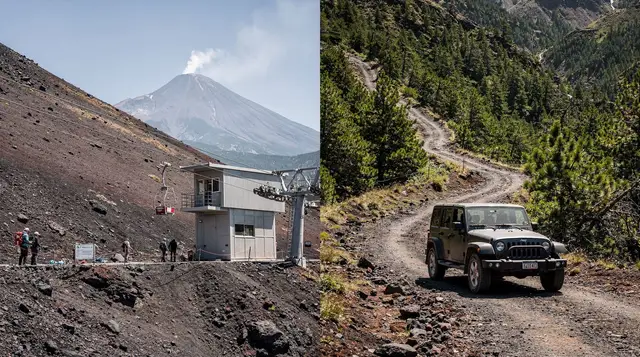
Winter is the one season where Sicily’s mountains genuinely compete with its coast for attention. Mount Etna sees regular snowfall at both its access bases — Rifugio Sapienza on the south side and Piano Provenzana on the north — with basic lift and piste facilities that run in years with sufficient snow cover. Catania: Mt Etna Winter Edition Half Day Tour covers a winter-specific visit format, distinct from the summer cable-car-and-crater routine. The Madonie mountains, particularly around Piano Battaglia, also see winter snow and a smaller ski setup.
None of this changes Etna’s core access rule: routes above roughly 2,900 metres remain regulated by current volcanic activity and require a licensed guide, winter or summer. Dress for genuine cold and wind at altitude — this is a mountain in winter, not a beach destination with a chill.
Cities and archaeology: the strongest winter case
Winter’s best argument is for city- and heritage-focused travel. Sites that require timed entry or long queues in summer — the Cappella Palatina, Valley of the Temples, the Neapolis park in Syracuse — are typically walk-in and near-empty in winter, letting you move at your own pace rather than around tour-bus schedules.
Cappella Palatina e Palazzo Reale Patrimonio UNESCO and Best of Catania Private Walking Tour with a Local both work well in this quieter window, and prices on guided formats often drop slightly outside peak season too. See Arab-Norman Palermo: the UNESCO route and Every UNESCO site in Sicily, ranked by worth for a wider heritage itinerary that suits this season particularly well.
Markets and street food culture continue largely as normal — see Palermo street food and Ballarò, Capo and Vucciria: Palermo’s markets — though outdoor seating and evening activity shrink with the shorter, cooler days.
Prices and practicalities
Accommodation and car rental both drop noticeably outside the summer peak, part of why winter appeals to budget-conscious travellers; see What a week in Sicily actually costs for how this plays out. Short daylight hours mean building in more buffer than in summer if your plan involves driving between towns — winter sunset can arrive well before 6pm, and inland and mountain roads are less forgiving after dark. Driving in Sicily and Getting around Sicily cover the wider transport picture, including ZTL restricted zones, which apply exactly as they do year-round.
Who winter suits, and who it does not
Winter suits travellers prioritising cities, archaeology, food culture and low prices, who are comfortable with rain and shorter days, and who are not building their trip around beach or island time. It is a poor match for anyone whose Sicily trip is primarily a beach holiday, or who wants guaranteed access to the smaller Aeolian or Egadi islands, since closures and cancelled crossings are genuine risks rather than edge cases. For travellers wanting a middle ground — cooler crowds without winter’s closures — Sicily in autumn and Sicily in spring sit between the two extremes.
Christmas, New Year and the winter calendar
Winter is not a dead season culturally. December brings Christmas markets and nativity displays to several towns, and cities keep a full calendar of concerts and opera through the colder months — see Teatro Massimo and opera in Sicily for what runs in Palermo’s main opera house across the season. The New Year period sees a short spike in domestic travel and prices around the holiday itself, distinct from the rest of the winter low season, so a trip planned for late December or early January should treat that specific window differently from, say, a quiet February city break.
Food in winter: a different table
Sicilian food culture shifts with the season as much as anything else. Citrus is at its best through winter, and heartier, slow-cooked dishes appear on menus alongside the seafood and lighter fare more associated with summer. Markets in Palermo and Catania run their normal schedules through winter, with smaller crowds making them considerably easier to browse than during the tourist season.
If food is a central part of your trip, Cooking classes in Sicily and Where to eat in Sicily, city by city are worth reading regardless of season, but winter’s quiet markets make them a genuinely pleasant addition to a city break rather than a queue-heavy add-on.
Regional contrast: coast, cities and the interior
Winter sharpens the contrast between Sicily’s regions more than any other season. The coast stays milder, if wetter, while inland towns around Enna and the Madonie can feel genuinely cold, particularly at altitude, and occasionally see their own snow independent of Etna. Cities like Palermo and Catania retain the most going on day to day, since much of the museum, market and restaurant infrastructure runs year-round regardless of tourist numbers, unlike the more seasonal economy of the smaller islands.
Packing for a Sicilian winter
Layering matters more in winter than any other season, since a mild midday can still bracket a cold morning and evening, and rain is a real possibility on any given day rather than an occasional inconvenience. A waterproof jacket, layers rather than a single heavy coat, and sturdy, weather-resistant shoes cover most winter days on the coast and in cities. If Mount Etna or the Madonie are part of your plan, add proper winter gear on top of that — gloves, a warm hat and boots suited to snow, since the mountain climate has little in common with the mild coastal winter below it. See What to pack for Sicily for the fuller list across all seasons.
A realistic winter itinerary
A winter trip built around Palermo, Catania, Syracuse and the Val di Noto plays to the season’s strengths: indoor and covered sites, short driving distances between cities, and an itinerary that does not depend on beach weather or island ferries running on schedule.
See Palermo in 3 days, Catania and Etna in 3 days and Syracuse and the Val di Noto in 4 days for three itineraries that work well in this season without needing significant adaptation for winter conditions. Anyone determined to include island time in a winter trip should treat it as optional and weather-dependent, with a mainland backup plan for the days it does not work out.
Winter for solo and budget travellers
Winter’s low prices and quiet sites make it a strong season for solo travellers and anyone working to a tighter budget, since accommodation and car rental costs both ease well below their peak-season levels and popular attractions rarely require advance booking to avoid a queue. The main adjustment compared with a summer solo trip is around evenings, which wind down earlier and quieter outside the main city squares — see Solo travel in Sicily for how this plays out in practice, and What a week in Sicily actually costs for how far a given budget stretches across the seasons.
Health, driving and short daylight
Short winter daylight hours mean building more buffer into any day that involves driving between towns, since sunset can arrive well before 6pm and rural and mountain roads are considerably less forgiving after dark, especially in rain. If your itinerary includes any hiking or time in the Madonie or on Etna’s slopes, plan to be back at a lower altitude well before dusk. See Health, pharmacies and insurance in Sicily for practical notes that apply particularly to a winter trip, including how pharmacies and basic medical access work outside the tourist season’s extended hours.
Winter versus a “sun escape” expectation
A common mismatch for winter visitors is expecting Sicily to function as a guaranteed sun escape from a colder northern winter. It is milder than most of northern Europe, but it is not reliably sunny, and travellers arriving with beach-holiday expectations are often disappointed by a week of grey, rainy days.
Setting expectations around cities, food and heritage rather than sunshine and swimming avoids this mismatch entirely, and travellers who do this tend to rate a winter Sicily trip highly precisely because they were not comparing it unfavourably to a summer holiday it was never going to be. If guaranteed sun is the actual priority, Sicily in summer or the shoulder seasons are a more honest match for that goal than winter.
Accessibility notes for a winter visit
Wet weather and shorter days add a layer of consideration for travellers with mobility needs or accessibility requirements, since uneven historic-centre paving becomes more hazardous when wet, and tighter daylight windows leave less margin for a slower pace between sites. None of this rules out a winter trip, but it is worth building extra time into each day’s plan and checking specific site accessibility ahead of a visit rather than assuming summer-level facilities year-round. See Accessible travel in Sicily for the fuller picture, most of which applies across all seasons but carries slightly more weight in winter’s wetter conditions.
Language, tipping and small practicalities in the quiet season
Winter’s thinner tourist crowds mean you are more likely to be dealing with staff and locals in settings where English is spoken less consistently than in the peak-season tourist infrastructure of summer. A handful of basic Italian phrases go further in winter than in July, simply because you are interacting with a higher proportion of year-round residents rather than seasonal staff hired specifically for the tourist rush. See Italian and Sicilian: the words that help and Tipping and etiquette in Sicily for the practical basics, both of which apply regardless of season but are worth brushing up on before a quieter winter trip specifically.
A quick reference for a winter trip
If your dates are fixed to winter, treat this as a checklist rather than a discouragement: build a city- and heritage-led itinerary rather than a beach one, pack proper waterproofs and layers rather than a single coat, treat any island crossing as provisional until confirmed close to travel, add a separate cold-weather kit if Etna or the Madonie feature in your plans, and expect lower prices and smaller crowds as the clear upside running through all of the above. Read alongside The best time to visit Sicily if you still have flexibility over your dates and want to weigh winter against the alternatives properly.
Photography in winter light
Winter’s lower sun angle and clearer air after rain can produce some of the sharpest light of the year at coastal viewpoints and Baroque facades, even if the overall number of sunny days is lower than in summer. A break in the rain often brings dramatically clear visibility, worth watching for if photography is part of your trip rather than assuming grey skies dominate every day.
Frequently asked questions about Sicily in winter
Does it snow in Sicily?
Yes, on high ground. Mount Etna gets regular winter snow at both Rifugio Sapienza and Piano Provenzana, and the Madonie mountains, particularly around Piano Battaglia, also see snow most winters, with basic ski facilities at both areas.
Are the Aeolian and Egadi islands open in winter?
Partially. Many hotels, beach clubs and restaurants on the smaller islands close from November through March, since the visitor base and much of the local economy is seasonal. Lipari and Favignana keep more year-round services than the smaller islands like Panarea or Marettimo.
Can ferries to the islands be cancelled in winter?
Yes, regularly. Hydrofoils (aliscafi) in particular are sensitive to sea conditions and are cancelled more often in winter storms than the larger, slower car ferries. Build a buffer day into any winter island itinerary.
Is it worth visiting Sicily in winter for the low prices?
Yes, if your priority is cities, archaeology and cost rather than beaches or islands. Accommodation and car rental prices drop noticeably, and major sites are close to empty, but plan around rain and short days rather than assuming Mediterranean sunshine.
Can you ski on Mount Etna?
Yes, at Rifugio Sapienza (south side) and Piano Provenzana (north side), both of which run basic lift and slope facilities in years with sufficient snow. It is a modest, low-key ski scene rather than a major resort, and conditions vary year to year with the volcano’s activity and snowfall.
Do archaeological sites and museums stay open in winter?
Yes, generally, though some run reduced hours compared with summer. The advantage is far smaller crowds — sites like the Valley of the Temples or the Cappella Palatina that require timed slots or long queues in summer are usually walk-in and quiet in winter.
The bottom line
Winter suits a specific kind of Sicily trip: cities, heritage sites, food, low prices and quiet — not beaches or reliable island-hopping. If that is your travel style, it is arguably an underrated season rather than a compromise. If your trip depends on the smaller islands or beach time, shift to Sicily in summer or the shoulder seasons instead, and treat any winter island plan as provisional until you can check current ferry schedules and sea conditions close to travel.
Seasonal experiences on GetYourGuide
Verified deep-linked GetYourGuide tours. Book through these links and we earn a small commission at no cost to you.
Photo: our own image of the location, not the operator’s product photo.